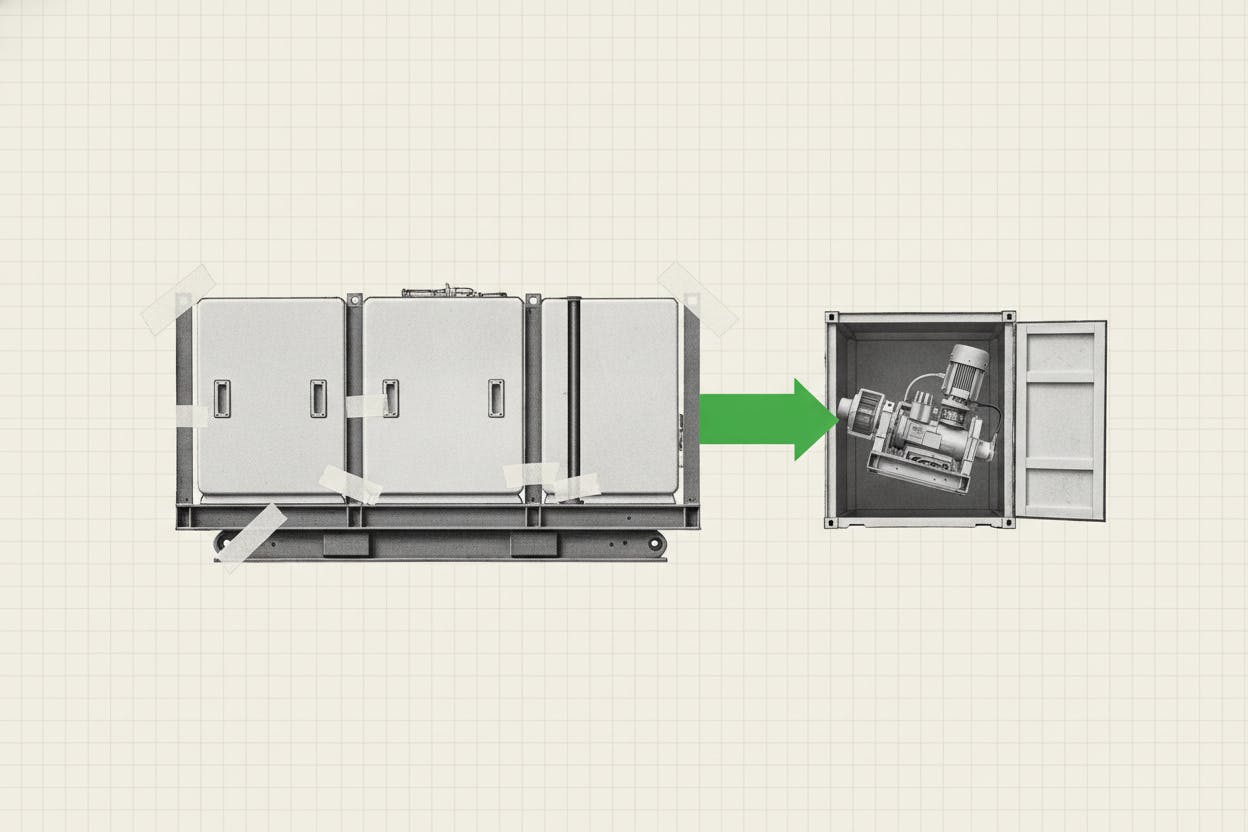
Canadian lithium developer EMP Metals has reached a key milestone at its Project Aurora demonstration plant in Saskatchewan: all major process equipment is now on site. The final shipment arrived from partner Saltworks Technologies, and the company says installation is underway, with commissioning—the step-by-step process of testing equipment and bringing it online—already started on earlier deliveries.
The update sent shares up roughly 10% to around C$0.56-0.57, reflecting investor relief that a common source of project delays—long-lead manufacturing and shipping—has been cleared. The company is still targeting a late Q3/Q4 2026 start-up.
What Project Aurora Is and Why It Matters
Project Aurora is a demonstration-scale lithium processing plant designed to test and validate EMP Metals' extraction technology before a potential full-scale commercial facility. Lithium is a critical mineral used in batteries for electric vehicles and energy storage, and Saskatchewan has emerged as a promising jurisdiction for lithium development due to its brine deposits and existing mining infrastructure.
EMP Metals is one of several Canadian companies racing to develop domestic lithium supply chains, as governments and automakers push for alternatives to Chinese-dominated processing. The company's approach uses direct lithium extraction (DLE) technology, which aims to be faster and more environmentally friendly than traditional evaporation ponds.
The demonstration plant is a crucial step: it allows EMP to prove its process works at a meaningful scale, generate data for engineering a larger plant, and attract potential offtake partners or project financing. Getting equipment to site is a tangible sign of progress, especially for a company that does not yet have producing assets.
De-Risking the Timeline
For early-stage mining and processing projects, the gap between announcing a plan and actually producing material is filled with risk. Equipment delivery is one of the biggest bottlenecks—specialized components often have lead times of many months, and a single missing part can push a start-up date by a quarter or more.
By confirming that all major gear is now on the ground, EMP Metals has removed one layer of uncertainty. The shift from procurement to installation and commissioning means the project's fate now depends on execution: whether the equipment integrates smoothly, hits performance targets, and stays on budget. That is a different kind of risk, but one that investors typically view as more controllable.
The stock's 10% jump shows how much schedule risk can move early-stage development companies. Unlike established miners that trade on earnings and cash flow, junior developers like EMP Metals trade on changing probabilities. Each milestone that reduces the chance of a delay or cost overrun can trigger a re-rating.
This dynamic is not unique to lithium. Other resource developers in Saskatchewan, such as Buffalo Potash, have also seen their stocks react to project updates. Similarly, AbraSilver's Diablillos project in Argentina received a key environmental approval this year, highlighting how regulatory and logistical milestones can drive sentiment in the sector.
What It Means for Investors
For everyday investors, the EMP Metals update is a case study in how early-stage resource stocks work. These companies have no revenue from production—their value is based on the expected future cash flow from a project that does not yet exist. Every piece of news that makes that future more likely (or less likely) can move the stock sharply.
The completion of equipment delivery is a positive signal, but it is not the finish line. From here, the market's focus will shift to commissioning updates: whether the plant starts up on time, whether it produces lithium at the expected purity and cost, and whether the company can secure financing for a commercial-scale facility. Those updates can drive sharper day-to-day moves than another 'delivery completed' headline.
Investors should also consider the broader backdrop. Lithium prices have been volatile, falling sharply in 2023 and early 2024 as supply growth outpaced demand, before stabilizing. A lower price environment can make it harder for developers to secure financing or offtake agreements. However, long-term demand forecasts remain strong, driven by electric vehicle adoption and grid-scale battery storage.
EMP Metals' ability to hit its late 2026 start-up target will depend on smooth commissioning, cost control, and ultimately, market conditions for lithium. For now, the equipment is on site—and that is one less thing to worry about.