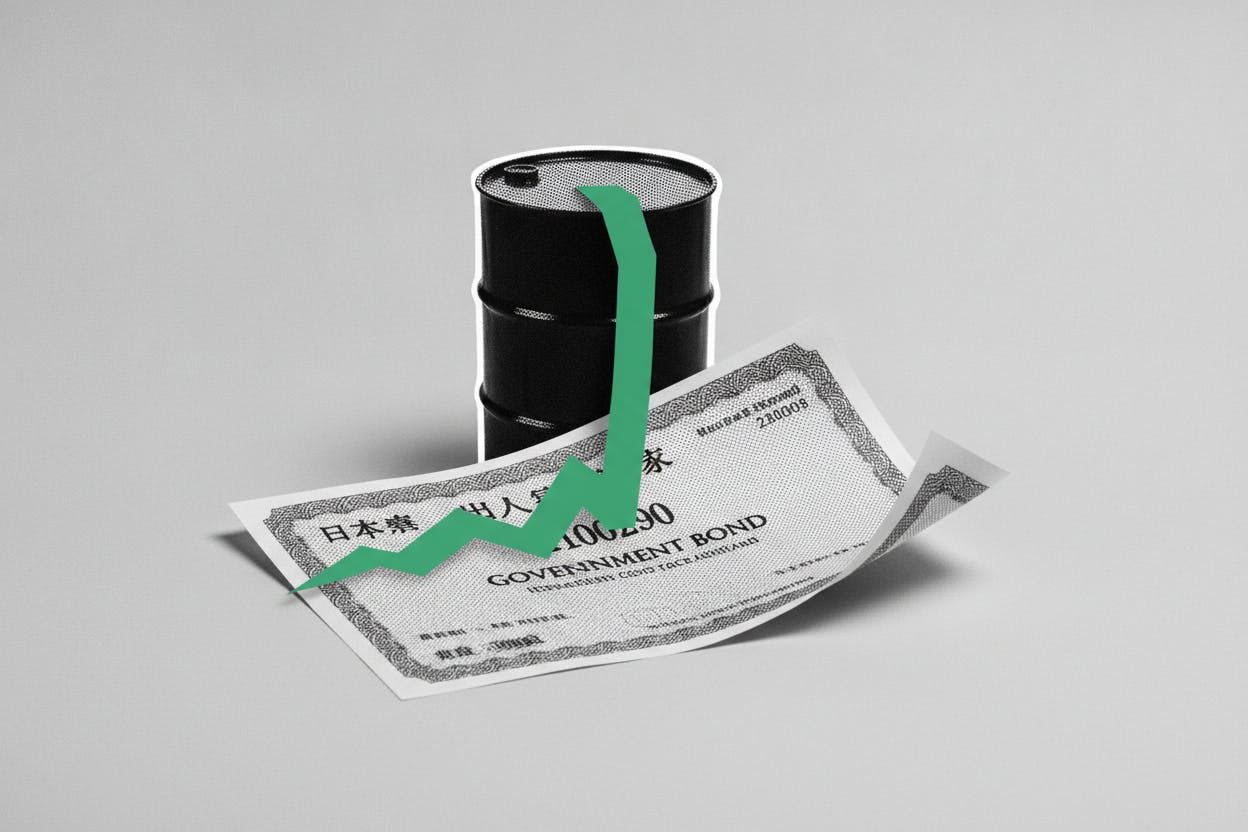
Japanese government bond yields climbed on Monday, with short-dated debt hitting levels not seen in three decades, as a rebound in oil prices and a softer yen rekindled inflation concerns and put a possible Bank of Japan rate hike in September back on the table.
The move was most pronounced at the short end of the curve. The 2-year Japanese government bond (JGB) yield rose to 1.615%, its highest level since May 1995, while the benchmark 10-year yield edged up to around 2.81%. For everyday investors, this is a clear signal that the market is increasingly pricing in tighter monetary policy from the BOJ.
Why oil and the yen matter for Japanese inflation
Japan is a major importer of energy and raw materials, so when global oil prices climb, the cost of everything from fuel to plastics tends to follow. A weaker yen compounds the problem: it makes those imports more expensive in local currency terms. Together, higher energy costs and a softer currency can push inflation higher and keep it stickier than the central bank would like.
That dynamic is exactly what traders are focused on now. Oil prices have bounced recently, and the yen has been under pressure, reviving fears that inflation in Japan may not cool as quickly as hoped. The BOJ has been gradually moving away from its ultra-loose monetary policy, and any sign that inflation is staying elevated increases the likelihood of another rate increase.
According to Reuters, a summary of the BOJ's July meeting showed more policymakers leaning toward further rate hikes. That report added fuel to the market's expectations, with many traders now seeing a real chance of a move in September.
What higher JGB yields mean for investors
For investors holding Japanese bonds, rising yields mean falling prices, since bond prices move inversely to yields. But for those looking to buy, higher yields offer better income. The 2-year JGB yield at 1.615% is a far cry from the near-zero or negative yields that dominated Japan for years.
For global investors, the move in JGB yields is worth watching because it can affect everything from currency markets to global borrowing costs. Japan is the world's largest creditor nation, and its bond market is a key part of the global financial system. When Japanese yields rise, it can attract capital back to Japan, potentially strengthening the yen and putting pressure on other markets.
The yen's weakness has already been a major theme this year, and it has clouded the earnings outlook for many Japanese companies. As we noted in our coverage of yen volatility's impact on corporate earnings, a softer currency is a double-edged sword: it boosts exporters' profits but raises costs for importers and squeezes households.
What to watch next
The key question for markets is whether the BOJ will actually deliver a rate hike in September. The central bank has been cautious, but the combination of higher oil prices, a weak yen, and rising inflation expectations may force its hand.
Investors will also be watching upcoming inflation data, both in Japan and abroad. The US inflation report due this week could influence global bond markets, including JGBs. And with oil prices edging up amid shipping risks in the Strait of Hormuz, energy costs remain a wildcard for inflation everywhere.
For now, the message from the bond market is clear: Japan's era of ultra-cheap money is fading, and investors are bracing for a more normal, and potentially more volatile, interest rate environment.