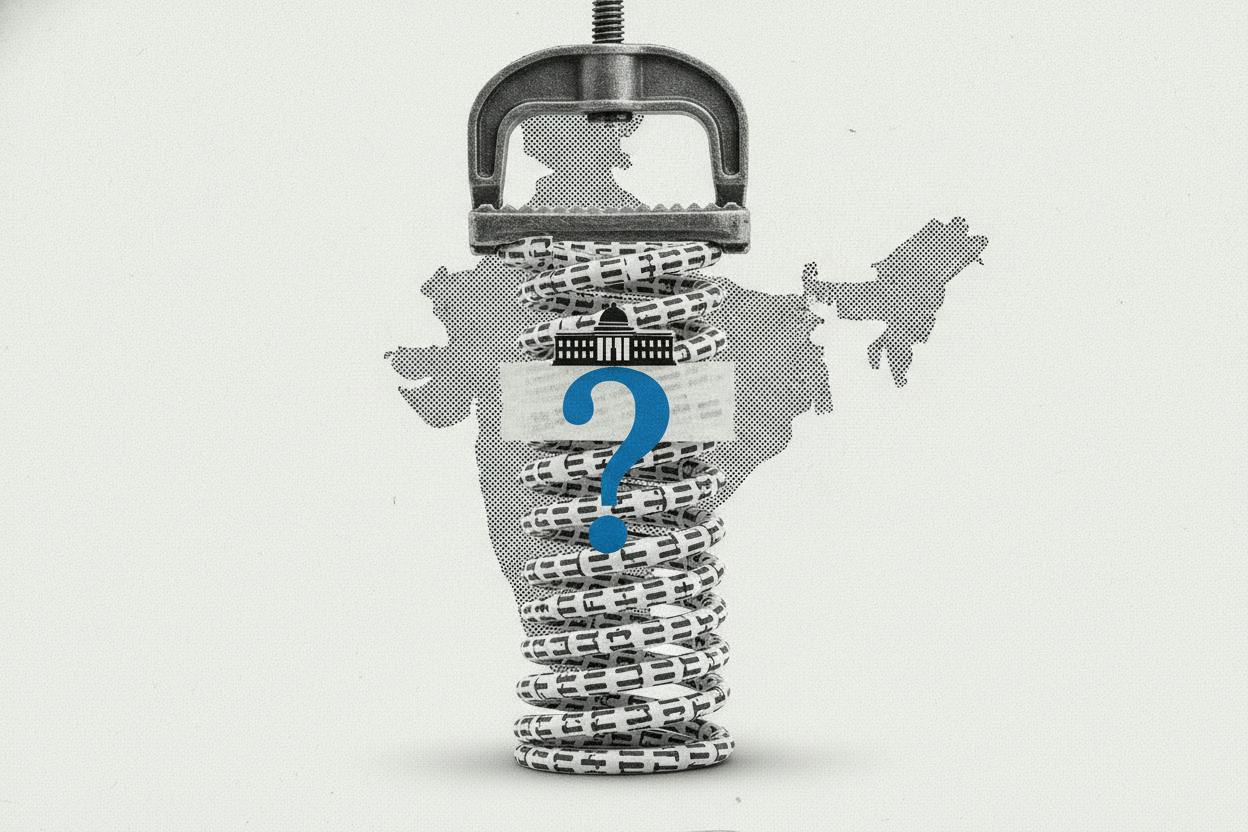
India's National Stock Exchange (NSE) finally made its public market debut on Thursday, ending a decade-long wait for investors. Shares climbed as much as 5% in a 225.6 billion-rupee ($2.3 billion) initial public offering, a strong start for the country's largest exchange. But the celebration comes with a caveat: the bulk of NSE's revenue still flows from derivatives trading, a business that regulators are increasingly scrutinizing.
A long-awaited listing
The NSE is the dominant player in India's stock market, handling about 93% of the country's cash stock trading and nearly 75% of options trading, according to Reuters. That dominance helped the IPO value the exchange at roughly 4.56 trillion rupees ($47.55 billion), placing it among the world's biggest listed exchanges. For context, that puts it in the same league as major global exchanges like the London Stock Exchange and Deutsche Börse.
The listing is a milestone for the NSE, which had been trying to go public for years. It also gives everyday Indian investors a chance to own a piece of the country's financial infrastructure. The IPO was widely anticipated, and the initial pop in shares reflects strong demand from both institutional and retail buyers.
The derivatives question
While the debut was smooth, the long-term story is more complicated. In the June quarter, derivatives transaction charges accounted for about 68% of NSE's operating revenue, according to Reuters. That means the exchange's financial health is heavily tied to the health of India's derivatives market.
But regulators are tightening the screws. India's market regulator has been introducing measures to cool down retail trading in derivatives, which has surged in recent years. These include higher margin requirements and other curbs designed to reduce speculation. The concern is that such rules could dampen trading volumes, directly hitting NSE's revenue.
This isn't just an NSE issue. Exchanges globally rely on trading volumes, and any regulatory shift that reduces activity can hurt their earnings. For NSE, the challenge is balancing its dominant market position with the need to diversify revenue streams beyond derivatives.
What it means for investors
For investors who bought into the IPO, the initial gains are a positive sign, but the real test will be how NSE navigates the regulatory environment. If derivatives volumes shrink, the exchange's growth could slow, which would put pressure on its valuation.
That said, NSE is not just a derivatives play. It also earns from listing fees, data services, and other segments, though these are smaller compared to derivatives. The exchange's near-monopoly in cash equities gives it a stable base, but the derivatives business is where the growth—and the risk—lies.
Investors should also consider the broader context. India's economy is growing, and the stock market has been a key beneficiary. The OECD recently lifted its 2026 growth forecast for India to 7.1%, though it warned of rising inflation. A strong economy typically supports more trading activity, which could help NSE even if regulators tighten rules.
However, there are other headwinds. For instance, Indian stocks have slid recently as oil prices climb and insurance regulation fears hit banks. Such market volatility can affect trading volumes, though it can also boost derivatives activity as investors hedge.
Looking ahead
The NSE's listing is a landmark event for India's capital markets, but the road ahead is not without bumps. Investors will be watching how the exchange adapts to regulatory changes and whether it can grow its non-derivatives businesses. The company's ability to maintain its market share while diversifying will be key to its long-term success.
For now, the IPO's strong debut shows that investors are optimistic about NSE's future. But as with any investment, it's important to weigh the risks. The derivatives question is not going away, and how NSE answers it will determine whether this debut is a one-day pop or the start of a sustained run.