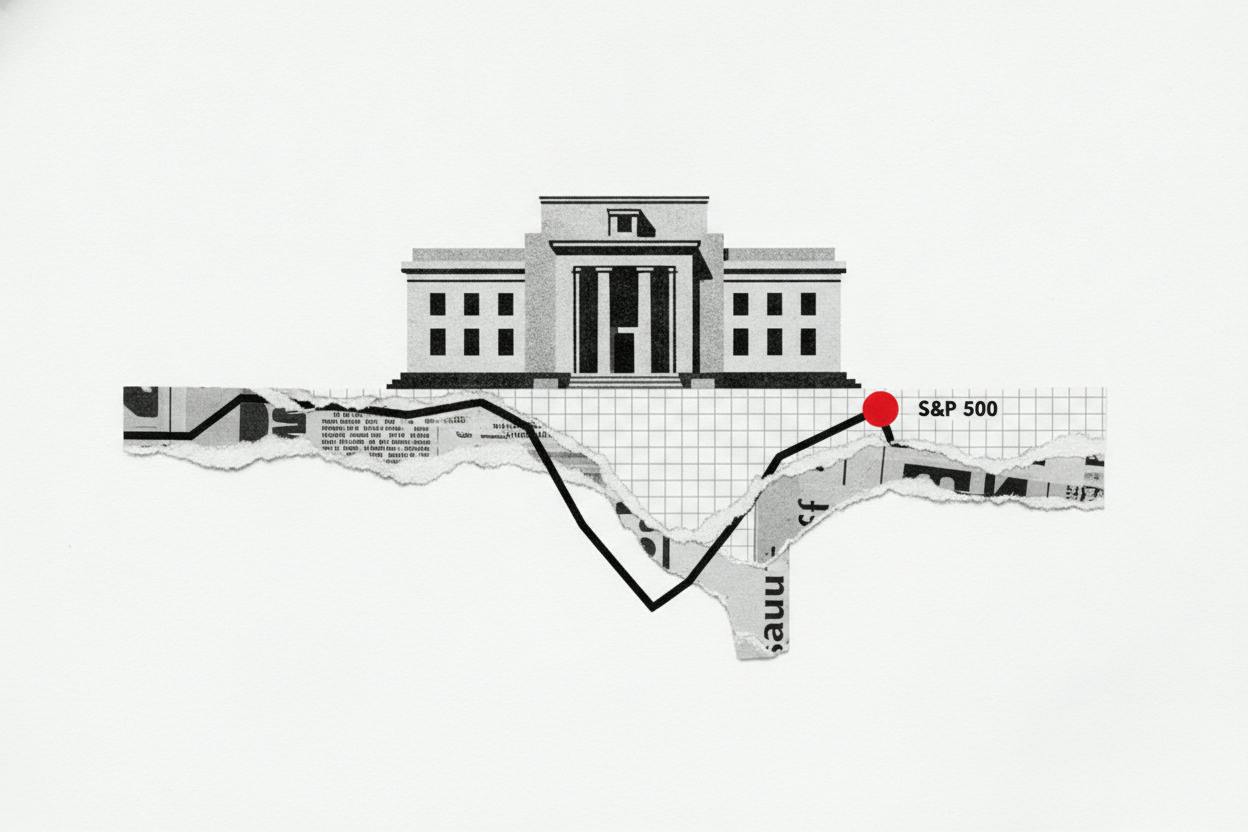
US stocks have entered a new Federal Reserve rate-hike cycle, and investors are bracing for a familiar pattern: a rocky start. History shows that the S&P 500 often dips in the first three months after the central bank's first rate increase, even if the market eventually finishes the year higher. The question now is whether this time will be different—and how much pain the market might have to absorb before it recovers.
What just happened
Last week, the Federal Reserve raised its benchmark interest rate by a quarter of a percentage point—its first increase since 2023. The move is aimed at cooling inflation, which remains above the central bank's 2% target. While a quarter-point hike is modest by historical standards, it signals a shift in policy that ripples through the economy.
Higher rates tend to filter into everyday borrowing costs. Mortgages become more expensive, credit card interest charges climb, and business loans cost more. That can slow spending and investment, which is exactly what the Fed wants when it's trying to tame price increases. But it also puts pressure on corporate profits and stock valuations.
The market's reaction so far has been cautious. The S&P 500 is up more than 12% this year and was near record levels just before the announcement, leaving little room for error. When stocks are already expensive, any negative surprise can trigger a pullback.
What history says
Looking back at previous rate-hike cycles, the pattern is clear: the first few months after liftoff are often bumpy. In many past episodes, the S&P 500 has stumbled in the immediate aftermath of the first hike, only to recover later in the year. The dip is often driven by uncertainty—investors aren't sure how far the Fed will go or how the economy will respond.
But the historical record also shows that a weak start doesn't necessarily doom the year. In several cycles, stocks ended higher despite an early wobble. The key variable is not the first hike itself, but the overall path of rates. If the Fed moves gradually and inflation cools, markets can adapt. If the central bank is forced to tighten aggressively, the damage can be deeper and longer-lasting.
That's why attention has shifted from “are hikes coming?” to “how high, and how fast?” The Fed has signaled that more increases are on the table, but the pace and ultimate destination remain uncertain. That uncertainty is what makes the current moment so tricky for investors.
What it means for investors
For everyday investors, the takeaway is not to panic over short-term dips. Market pullbacks are normal, especially during policy transitions. But it's also wise to understand that higher rates change the calculus for many investments.
Bonds, for example, become more attractive when yields rise, offering income that competes with stocks. Growth stocks—especially in tech—tend to be more sensitive to rate increases because their valuations rely on future earnings, which are discounted more heavily when rates go up. Value stocks and sectors like financials, which benefit from higher interest margins, may fare better.
It's also worth remembering that the Fed's actions are designed to cool the economy, not crash it. A gradual tightening that brings inflation down without triggering a recession would be a positive outcome for markets in the long run. But that outcome is far from guaranteed.
Investors should keep an eye on upcoming inflation data and Fed communications for clues about the pace of future hikes. If inflation shows signs of easing, the Fed may slow down, which could ease pressure on stocks. If inflation stays hot, more aggressive action could be needed, and the market may have to adjust to a higher-for-longer rate environment.
In the meantime, the best approach for most people is to stay diversified and avoid making big bets based on short-term market moves. History suggests that the first few months after a rate hike can be volatile, but it also shows that markets have a way of adapting over time.
As always, the key is to focus on your own financial goals and time horizon, rather than trying to time the market. The Fed's moves are important, but they're just one factor in a complex investing landscape.