Italy's state-controlled energy group Eni is rewarding shareholders with an extra €1.3 billion after a bumper third quarter. The company announced a one-off dividend and a bigger share buyback program, following a surge in quarterly profit that more than doubled from a year earlier.
Strong quarter, stronger cash flow
Eni reported adjusted net profit of €2.8 billion for the July-to-September period, up from €1.25 billion in the same quarter last year. That beat the average analyst forecast compiled by the company. The jump was driven by firmer oil and gas prices and better refining margins in Europe, which also boosted cash generation.
On the back of that performance, Eni raised its forecast for underlying cash flow from operations (CFFO) to €16.5 billion, up from a previous estimate of €15 billion. CFFO is a key measure of how much cash a company generates from its day-to-day business, and it's what funds dividends and buybacks.
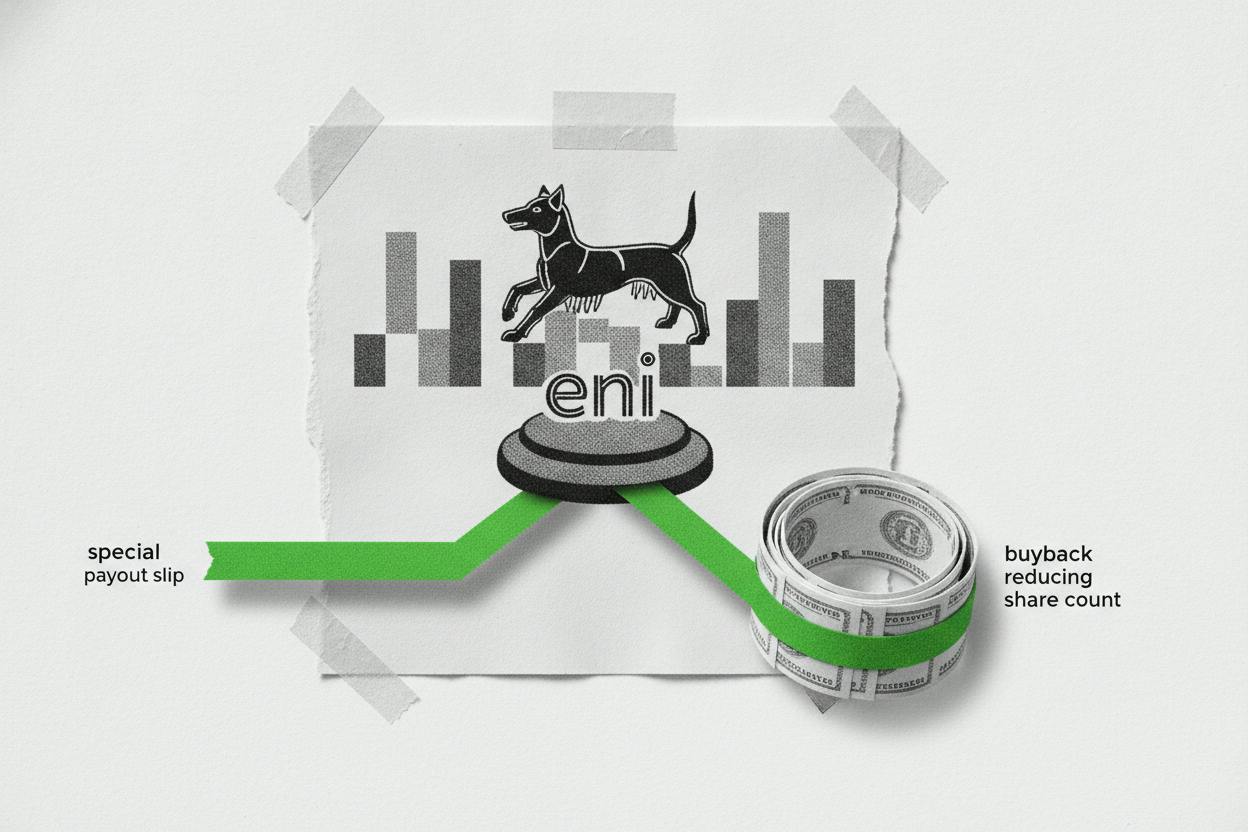
CEO Claudio Descalzi said the "upside" from the stronger cash flow would go to investors. The company declared an extraordinary dividend of €0.46 per share, payable in the fourth quarter, and increased its share repurchase plan to €3.8 billion.
Production growth adds to the picture
Eni also flagged stronger-than-expected output. Underlying hydrocarbon production rose 7% year-on-year to 1.83 million barrels of oil equivalent per day. That growth was helped by project ramp-ups in West Africa, Mexico, and Norway, as well as its Searah joint venture with Malaysia's Petronas.
Higher production is important because it means Eni can sell more oil and gas at current prices, which supports both revenue and cash flow. It also gives the company more flexibility to return money to shareholders without stretching its balance sheet.
What it means for investors
Eni's move to tie a fixed-euro buyback and a one-off dividend directly to higher CFFO guidance is a signal. The company is steering attention away from a single quarter's profit and toward how much cash it can reliably produce over time.
Buybacks matter because they reduce the number of shares outstanding. That means future dividends and cash flows get spread across fewer shares, lifting per-share metrics even if total profits cool. For investors, a higher buyback can be a sign that management believes the stock is undervalued or that it has more cash than it needs for operations and investments.
The trade-off is that when management frames payouts as "sharing upside," expectations for distributions can swing with the drivers of CFFO — especially oil and gas prices and refining margins. That makes the stock more sensitive to commodity moves than the headline earnings beat alone might suggest.
For everyday investors, the key takeaway is that Eni is returning a lot of cash to shareholders right now, but that cash flow is tied to energy prices, which can be volatile. If oil and gas prices fall, or refining margins shrink, the company may not be able to sustain this level of payouts.
Eni's announcement comes as energy stocks have been rallying with oil prices near $100, though refiners face a different set of challenges. The sector's earnings have been strong, but investors are watching how long the boom lasts.
In Europe, earnings have beaten forecasts, but energy is masking a slower core. That means Eni's performance is helping the overall picture, but other sectors may not be as robust.
For those looking at the broader Italian market, Italy has been ramping up bond sales, which could affect investor sentiment. But Eni's payout boost is a company-specific story that stands on its own.
As always, it's worth remembering that past performance isn't a guarantee of future results. Energy prices can turn quickly, and a company's ability to keep rewarding shareholders depends on its cash flow holding up. Investors should weigh the potential rewards against the risks of commodity price swings.