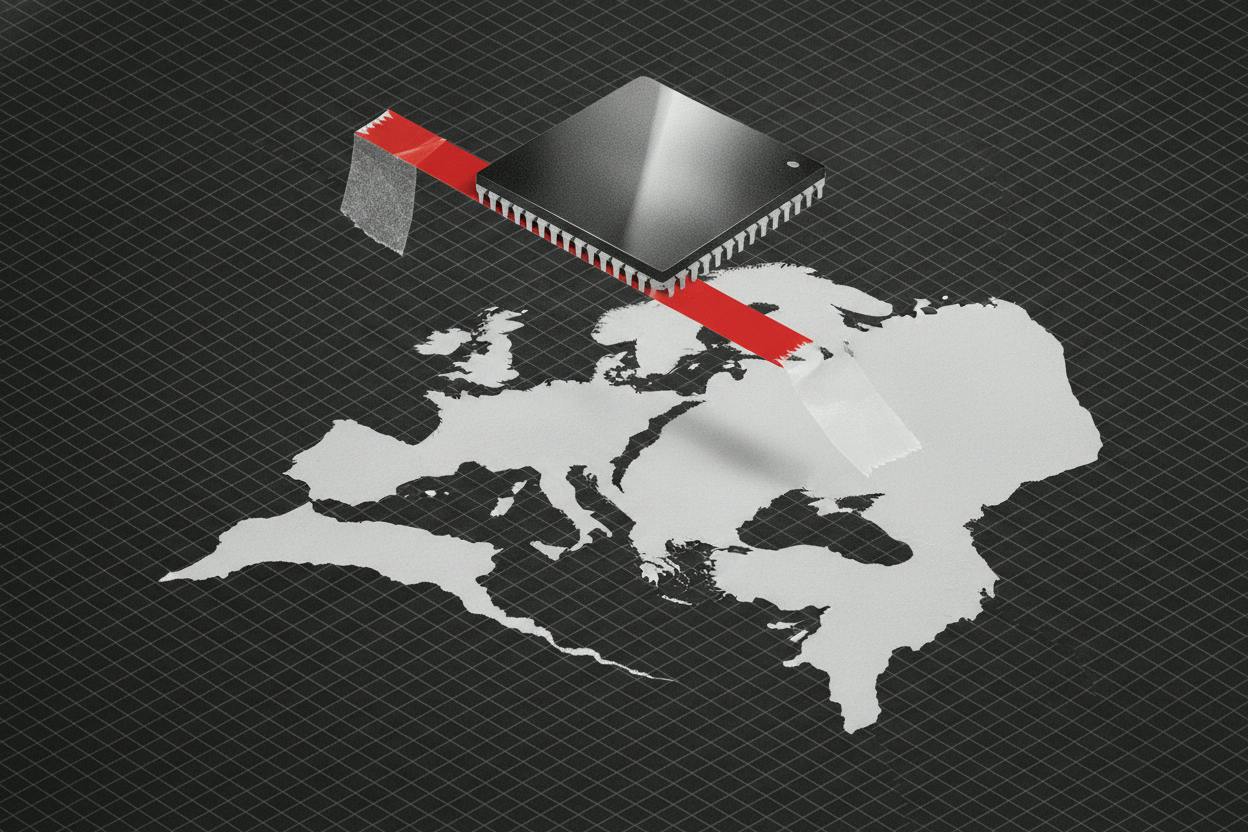
European stocks edged lower on Tuesday as investors weighed the shock resignation of Nvidia CEO Jensen Huang, a figure synonymous with the artificial intelligence boom. The pan-European STOXX 600 index slipped 0.2% to 662.64 in early trading, pulling back from recent record highs as markets reassessed the outlook for AI-driven growth.
The immediate impact was felt most in the technology sector, which dropped 0.6%. Chip-related names such as Siltronic and Aixtron fell more than 1%, while electrical equipment groups often seen as AI beneficiaries, including Schneider Electric and Legrand, were also slightly lower. The moves reflect a broader unease about what Huang's departure means for the pace of AI investment and innovation.
Luxury stocks add to the drag
Luxury goods also weighed on the index. Richemont, the Swiss owner of Cartier, tumbled 7% even after reporting 13% sales growth for the three months ending in September. That was a clear slowdown from the 20% pace seen in the prior quarter, and investors focused on the deceleration rather than the headline growth.
The luxury sector has been a key driver of European market performance in recent years, but it has become more sensitive to signs of softening demand, particularly from key markets like China. Richemont's slide highlights how even strong results can disappoint when expectations are high.
What the Nvidia CEO exit means for the AI trade
Nvidia is one of the most valuable companies in the world and a bellwether for the AI industry. Its chips power many of the large language models and data centers that have fueled a global rally in tech stocks. Huang's resignation introduces uncertainty about the company's strategic direction and the broader AI ecosystem.
Markets often respond to such leadership changes by demanding a higher equity risk premium—essentially, investors want more return for holding riskier assets. This can pressure the valuations of growth stocks, especially those whose profits are expected far in the future. That's why AI-adjacent names in Europe, even those with no direct link to Nvidia, can see sharper daily moves than the broader index.
However, Europe has fewer mega-cap AI bellwethers than the United States, which has helped the benchmark hold up relatively well this year. The region's tech sector is more diversified, with a mix of industrial, healthcare, and financial stocks that are less directly tied to the AI narrative.
Goldman raises its target, but upside looks limited
In a sign of underlying confidence, Goldman Sachs nudged up its 12-month target for the STOXX 600 to 700 from 695. The bank cited easing energy costs and a resilient earnings backdrop. With the index at 662.64, that target implies about 6% upside—modest but positive.
Still, the relatively small gap between the current level and the target means short-term sentiment shocks can have an outsized impact. A high-profile CEO exit, like Huang's, can trigger a repricing of risk across the market, even if the fundamental outlook remains intact.
Investors will be watching for any further fallout from Nvidia's leadership change, as well as upcoming earnings reports from European companies. The region is coming off its strongest earnings quarter in four years, according to recent data, which has supported the market's upward trajectory.
What it means for everyday investors
For ordinary investors, the key takeaway is that leadership changes at major companies can create short-term volatility, but they rarely change the long-term fundamentals. The AI trade is still in its early stages, and the demand for computing power and data infrastructure is likely to persist regardless of who leads Nvidia.
That said, the market's reaction underscores how sensitive valuations are to sentiment. When a benchmark like the STOXX 600 is trading near record highs, there is less room for error. A 6% upside target from Goldman suggests that the market is pricing in a fairly optimistic scenario, and any disappointment could lead to a sharper pullback.
Diversification remains a useful tool for managing such risks. European investors who are heavily concentrated in tech or luxury stocks may want to consider how their portfolios would fare if the AI trade cools further. The broader index's resilience, partly due to its lower direct exposure to the most crowded AI winners, offers a reminder that not all markets move in lockstep.
As the day progresses, attention will turn to how other global markets react. In Asia, the response has been mixed, with some chip stocks rallying despite the news, while others have slipped. The dollar has firmed as investors seek safety, and the coming sessions will show whether the AI trade can regain its footing or if this marks a turning point.