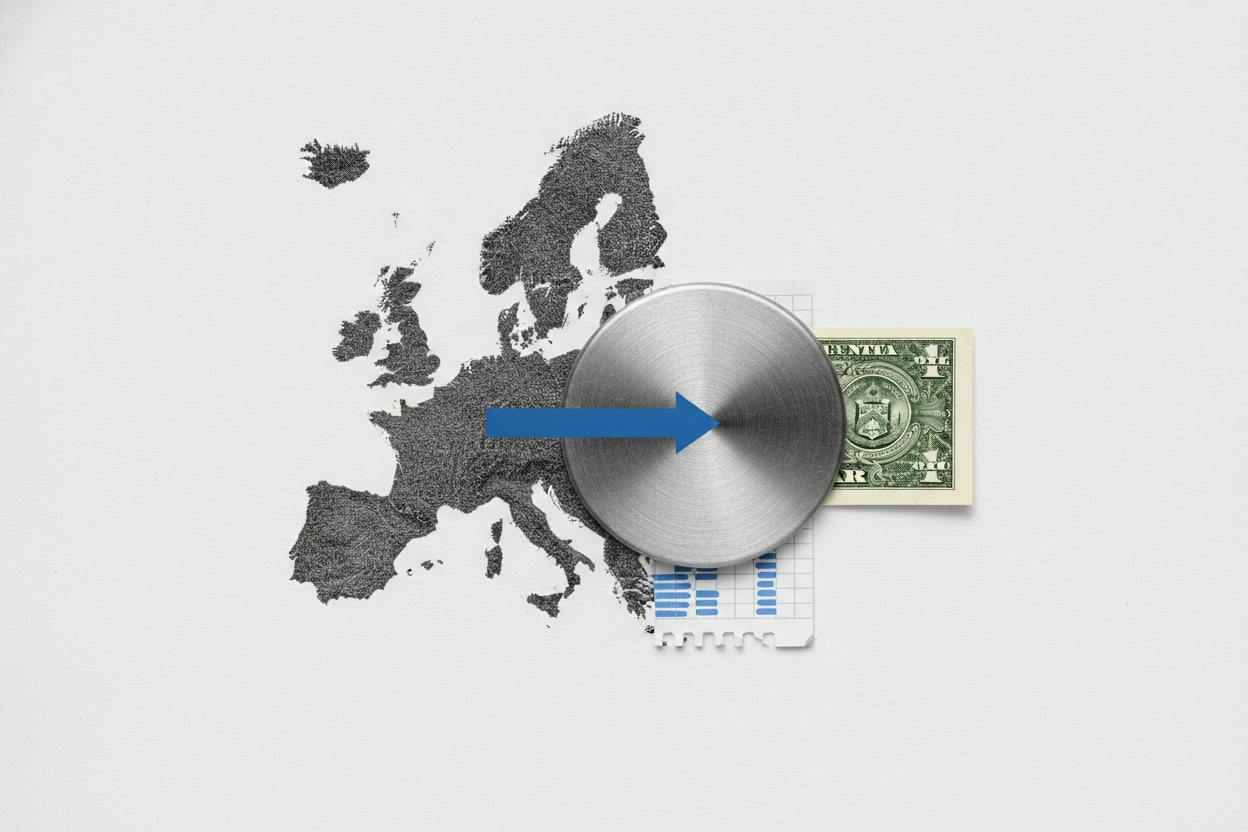
European stocks trading in the U.S. opened the week on a positive note, with the S&P Europe Select ADR Index climbing 0.51% late Monday morning. Healthcare and telecom shares led the advance, while a sharp drop in one biotech name weighed on the laggards.
American depositary receipts, or ADRs, are U.S.-traded shares that represent ownership in foreign companies. They allow U.S. investors to buy and sell European stocks during regular American trading hours, priced in dollars. Because they trade in the U.S., their daily moves reflect a blend of two forces: the performance of the underlying shares on their home exchanges and the exchange rate between the dollar and the euro or pound.
That dual influence means the ADR tape can serve as a real-time gauge of U.S. investor sentiment toward Europe, even when there's no fresh news about the companies themselves. On Monday, the modest index gain suggested a generally risk-on mood among U.S. investors looking across the Atlantic.
Who led and who lagged
Among the standout performers were EDAP TMS, a French medical technology company known for its ultrasound-based treatments, and Nokia, the Finnish telecom equipment maker. Both sectors—healthcare and telecoms—are often seen as defensive, which may have attracted buyers in a market still digesting interest rate uncertainty.
On the downside, Evaxion, a Danish biotech firm, tumbled 17%. Such a steep single-stock decline can skew the index's overall picture, especially in a universe where a handful of volatile names can dominate the day's moves. For investors, it's a reminder that the headline index number may not tell the whole story.
Professional traders typically keep an ADR and its local listing aligned through arbitrage—buying the cheaper version and selling the pricier one to capture the difference. But that mechanism doesn't prevent short-term gaps during the U.S. session, when liquidity and currency swings can do most of the work.
What it means for investors
For U.S.-based investors, ADRs offer a convenient way to gain exposure to European companies without dealing with foreign exchanges or currency conversions. They also provide a same-day "nowcast" of European market sentiment, since they update while European exchanges are closed.
However, it's important to remember that ADR returns are influenced by currency movements. A stronger dollar can erode the dollar-denominated value of European holdings, while a weaker dollar can boost them. So a gain in the ADR index might not fully reflect the underlying stock's performance in its home currency.
Monday's action—a modest index gain alongside extreme moves like Evaxion's 17% drop—highlights the importance of looking beneath the surface. On days when a few stocks are making outsized moves, the ADR index can be a noisy guide to what the next European open will look like.
For context, other regional ADR markets have shown similar patterns recently. Asian ADRs edged higher as some names jumped while others slipped, and European ADRs have seen sector rotation as banks and energy stocks trade in opposite directions. The broader European market has also been influenced by oil price swings, which can lift energy shares while weighing on travel stocks.
Investors watching European equities from the U.S. should keep an eye on both the index level and the underlying drivers. A single-stock plunge or a currency shift can distort the headline, so it pays to check what's actually moving the market.
As always, this is not a recommendation to buy or sell any specific stock. Instead, it's a guide to understanding what the day's ADR moves might signal about European markets and how to interpret them in the context of your own portfolio.