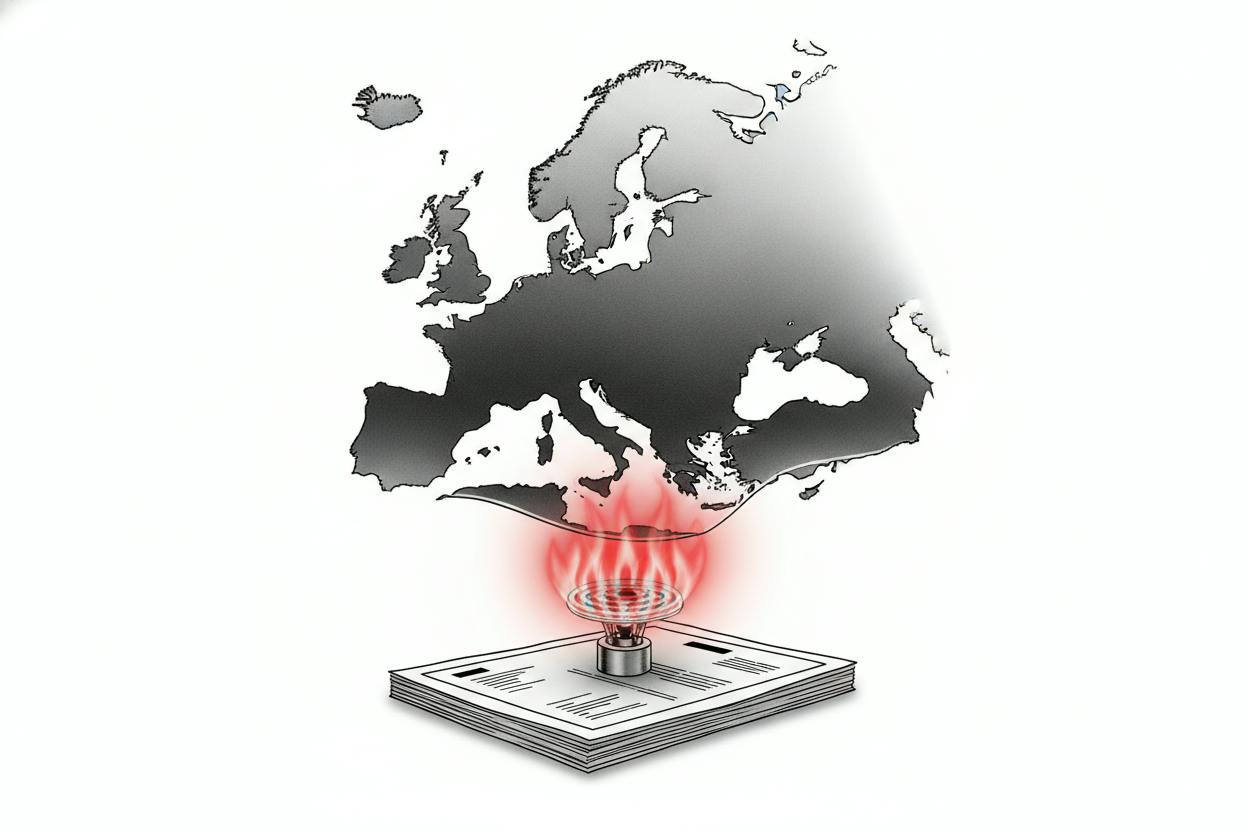
European stocks closed lower on Thursday after official data showed that inflation in the euro area accelerated in October, reigniting worries that elevated energy costs will keep price pressures uncomfortably high. The pan-European Stoxx Europe 600 index finished the session down 1.1%.
Eurostat, the European Union's statistics agency, reported that consumer prices in the 20-country currency bloc rose 4.0% in October compared with a year earlier, up from 3.8% in September. The increase was modest, but it was enough to unsettle investors who had hoped that the region's inflation problem was fading.
Why energy costs matter
The latest inflation reading is being driven in large part by energy prices, which have climbed in recent months. Energy is a uniquely important input in the European economy: it powers factories, heats homes, and fuels transport. When energy costs rise, they tend to ripple through the broader economy, pushing up the prices of everything from manufactured goods to food.
That spillover effect is why investors pay close attention to energy-driven inflation. A sustained rise in energy prices can make inflation "sticky," meaning it takes longer to come back down to the European Central Bank's (ECB) target of 2%. The October figure remains double that target, and the uptick suggests the path back to price stability may be bumpier than hoped.
The pain is also uneven across the region. While the euro area average stands at 4.0%, some member states are experiencing significantly faster price growth than others. That divergence complicates the ECB's task, because a single interest rate policy has to serve economies with very different inflation dynamics.
What this means for interest rates
For markets, the key question is what the ECB will do next. Higher-than-expected inflation reduces the case for cutting interest rates soon. The central bank has been holding rates at historically high levels to cool price growth, and any sign that inflation is proving stubborn could delay the start of rate cuts.
That prospect weighed on European equities on Thursday. Higher interest rates make borrowing more expensive for companies, which can squeeze profit margins and slow investment. They also make bonds more attractive relative to stocks, which can pull money out of equity markets.
The Stoxx Europe 600's 1.1% decline was broad-based, with most sectors ending in the red. Energy and industrial stocks, which are particularly sensitive to the cost of power and fuel, were among the hardest hit. The move echoes similar concerns in other markets, where investors are grappling with the same inflation-versus-growth trade-off.
Recent data from the UK has shown a similar pattern, with inflation proving sticky and the Bank of England projecting that it will take until 2028 to bring price growth back to its 2% target. That has reinforced the view that central banks on both sides of the Channel may need to keep policy tight for longer.
What it means for investors
For everyday investors, the takeaway is that inflation is not yet defeated in Europe. The October uptick is a reminder that the final stretch of the fight against high prices can be the most difficult, especially when energy costs are involved.
Sticky inflation typically means interest rates stay higher for longer, which can weigh on stock valuations and increase the appeal of cash and bonds. It also means that companies with strong pricing power—those that can pass higher costs on to customers without losing business—may be better positioned than those that cannot.
Investors should also keep an eye on the energy market. If oil and natural gas prices continue to climb, that will likely keep upward pressure on inflation and could prompt the ECB to hold rates steady for an extended period. Conversely, a sharp drop in energy prices could ease the pressure and open the door to rate cuts.
The broader market context is also important. European stocks have been volatile in recent weeks, with investors juggling concerns about inflation, interest rates, and global growth. The slide in European ADRs and weakness in other regional markets suggest that sentiment remains fragile.
For now, the ECB is widely expected to keep its key interest rate unchanged at its next meeting, but the October inflation data will likely fuel debate about how long that pause will last. Investors will be watching upcoming economic data and central bank commentary for clues about the future path of rates.
In the meantime, the message from the markets is clear: inflation is still a force to be reckoned with, and its impact on interest rates and stock prices is far from over.



