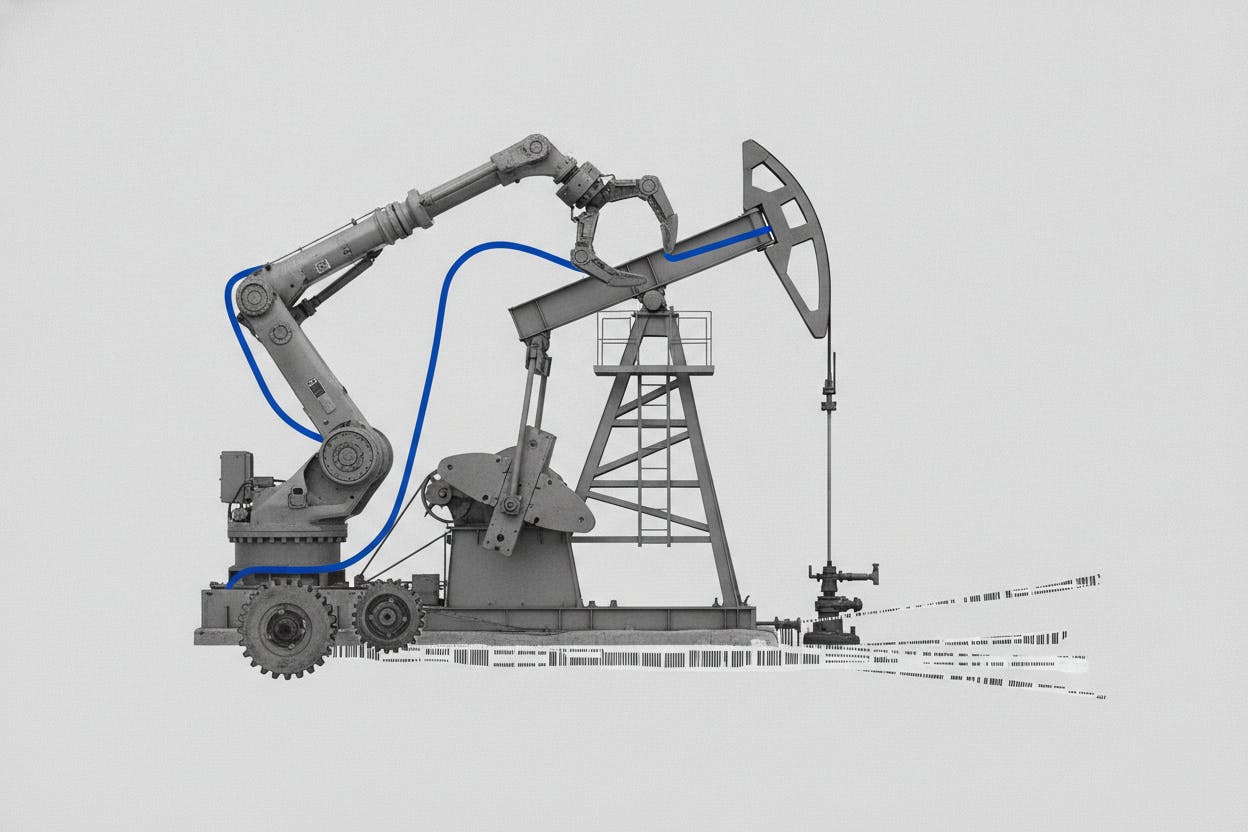
ExxonMobil is doubling down on automation in the Permian Basin, the heart of U.S. shale oil production. The company told Reuters it plans to expand robotics-enabled drilling to half of its Permian rig fleet by 2028, a move designed to make drilling faster, safer, and more cost-effective. The announcement comes on a day when crude prices and energy stocks slipped, underscoring the pressure on producers to protect margins even as the market softens.
What is robotics-enabled drilling?
Traditional drilling relies heavily on human crews to steer the drill bit, adjust weight on the drill, and monitor speed and pressure. Robotics-enabled rigs automate many of these tasks using sensors and software. The drill can adjust itself in real time, reducing the need for constant human intervention. This can shorten the time it takes to complete a well and also reduce the number of workers needed near heavy equipment, improving safety.
ExxonMobil currently operates two automated rigs in the Permian. The company's goal is to scale that up to roughly half of its fleet within the next few years. The Permian Basin, which spans parts of West Texas and southeastern New Mexico, is the largest oil-producing region in the United States, and it has become a testing ground for new drilling technologies.
Why this matters for oil investors
Oil prices have been volatile, and Monday saw a slip in crude prices and energy stocks. For investors, the key takeaway is that ExxonMobil is focusing on efficiency rather than just chasing higher production. When prices fall, companies that can produce oil at lower costs are better positioned to maintain profits. Automation is a way to cut costs per barrel, which can help protect margins even when the market is weak.
This is part of a broader trend in the energy sector, where companies are using technology to make shale drilling more like a manufacturing process. Instead of treating each well as a unique project, they aim to standardize operations and reduce variability. That can lead to more predictable output and better financial performance.
What it means for your portfolio
For everyday investors, this news is a reminder that energy companies are not just at the mercy of oil prices—they also have control over their own efficiency. A company that can produce oil at $40 a barrel when prices are $60 is in a much stronger position than one that needs $55 to break even. ExxonMobil's push into automation is a signal that it is trying to stay competitive in a world where oil prices may not always be high.
It's also worth noting that the Permian Basin is a key driver of U.S. oil production growth. If ExxonMobil can successfully automate half its rigs there, it could boost its overall output and lower its costs, which could be positive for its earnings and stock price over the long term. However, automation is not a magic bullet—it requires significant upfront investment, and the benefits may take time to show up in financial results.
Broader market context
The move comes as energy stocks have been under pressure, with crude prices slipping on Monday. Investors are watching global supply and demand, as well as economic signals that could affect oil consumption. In this environment, companies that can demonstrate cost discipline tend to be viewed more favorably.
ExxonMobil's announcement is also part of a wider trend of automation across industries, from AI cloud expansion to IPO plans that rely on technology to drive growth. While the energy sector has been slower to adopt automation than some others, the potential for cost savings is significant.
What to watch next
Investors will be watching how quickly ExxonMobil can scale up its automated rigs and whether the technology delivers the promised efficiency gains. They'll also be keeping an eye on oil prices, which remain the biggest driver of energy stock performance. If automation helps ExxonMobil maintain or grow its production while keeping costs low, it could give the company an edge over competitors that are slower to adopt new technology.
For now, the announcement is a clear sign that ExxonMobil is betting on technology to stay ahead in the competitive world of shale oil. Whether that bet pays off will depend on execution and on the broader oil market, but it's a reminder that innovation is just as important in energy as it is in tech.