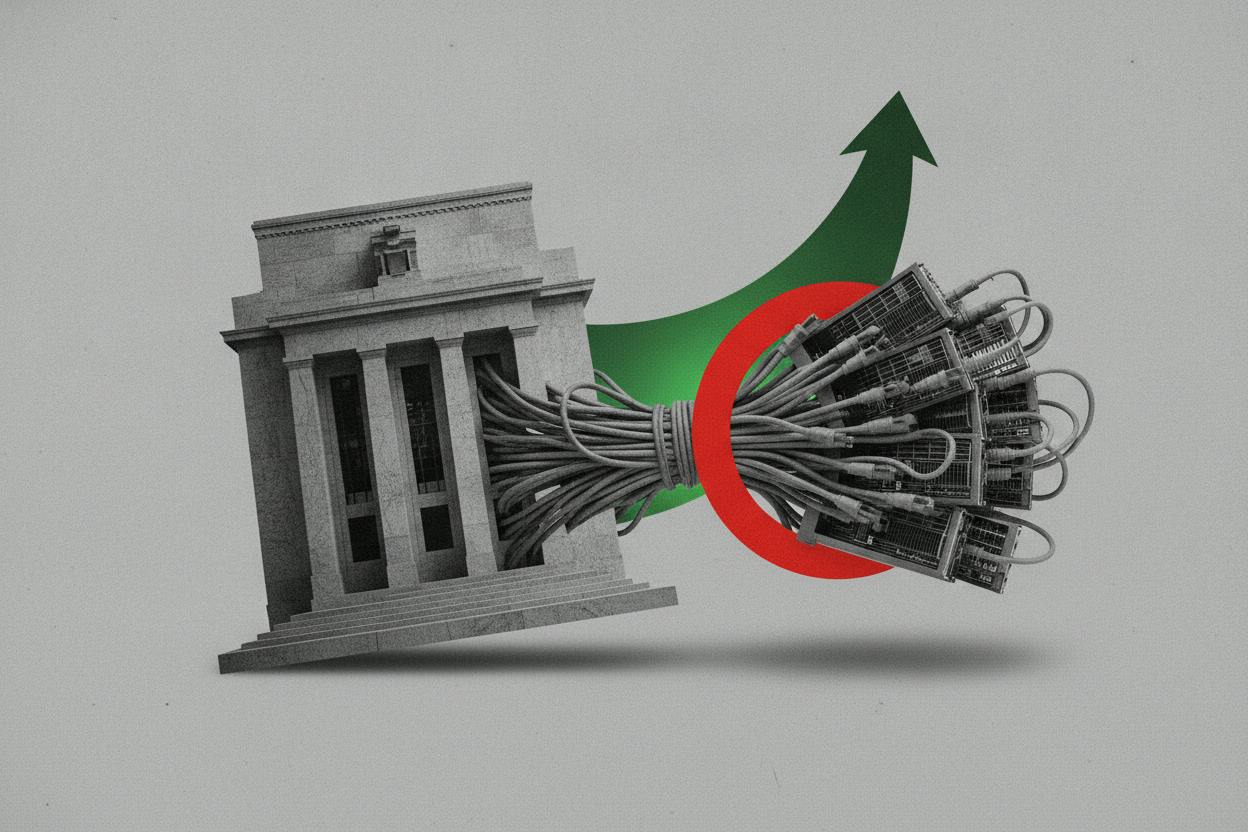
Federal Reserve Chair Kevin Warsh will travel to San Francisco on Monday for a three-hour public forum on artificial intelligence, pressing tech leaders on how a data-center buildout measured in the trillions of dollars could shape inflation, productivity, and employment. The event is Warsh's only scheduled open meeting tied to his five AI-focused task forces, with panels spanning technology, academia, and policy.
The forum comes at a delicate moment for the central bank. Fed officials see AI as a potential long-run productivity boost, but also as a near-term "wild card" for an institution trying to keep prices stable while the job market holds up. The core tension is timing: productivity gains could eventually cool inflation, but today's spending spree on chips, power, and data centers can push prices higher, which can keep the Fed biased toward tighter policy for longer.
Why AI is a wild card for the Fed
For everyday investors, the stakes are straightforward. If the AI buildout adds to near-term inflation, the Fed's "reaction function"—how it responds to hotter or cooler economic data—leans toward higher interest rates or keeping them elevated. That matters because higher rates raise the discount rate, the math investors use to value future profits, and make debt more expensive. That is rough for long-duration tech cash flows and capital-hungry projects like data centers.
Officials have also flagged labor-market risk. AI could displace some workers quickly, even if it creates new roles over time. That dual threat—inflation from spending and deflation from job losses—makes AI a uniquely complicated variable for monetary policy.
Add local and political pushback on data-center construction and worries about leveraged "complex" funding vehicles for AI infrastructure, and the pace of rollout could become as important as the technology itself for the data the Fed watches.
What it means for investors
For markets, the forum's backdrop includes a potential Anthropic IPO that could value the AI company above $1 trillion. But blockbuster AI listings don't happen in a vacuum. If the AI buildout is adding to near-term inflation, the Fed's reaction function leans toward higher rates or keeping them elevated. That raises the bar for IPO timing and pricing, and stress can show up first in the funding plumbing that supported the boom.
Higher rates also lift refinancing risk if parts of the buildout are funded through more leveraged, harder-to-unwind structures. Investors have seen this dynamic play out before: when the cost of capital rises, the most debt-dependent corners of the market feel it first.
Warsh's push for fewer rate votes, as reported in our coverage of the Fed's strategy-only meeting in 2027, signals a broader shift toward a more deliberate, data-driven approach. Monday's forum is part of that effort, giving the Fed a chance to hear directly from the people building the technology.
The event also comes amid a busy stretch for AI-related news. Nvidia's leadership transition and Fractile's $7 billion valuation highlight the sector's rapid evolution. And Anthropic's IPO could turn Amazon and Google stakes into a $411 billion windfall, underscoring the financial stakes involved.
What to watch next
Investors will be listening for any signals from Warsh about how the Fed plans to weigh AI's competing effects. The key question is whether the central bank sees the current spending boom as a temporary inflation blip or a more persistent pressure. That distinction will shape how quickly the Fed moves on rates.
Also worth watching: how the forum addresses the funding structures behind AI infrastructure. If leveraged vehicles start to wobble, that could spill into broader markets, much like past episodes of credit stress.
For now, the takeaway for everyday investors is simple: AI is not just a tech story—it's a macro story. The Fed's decisions on rates, driven in part by AI's economic impact, will ripple through everything from mortgage rates to retirement portfolios. Monday's forum is a chance to see how the central bank is thinking about that balance.



