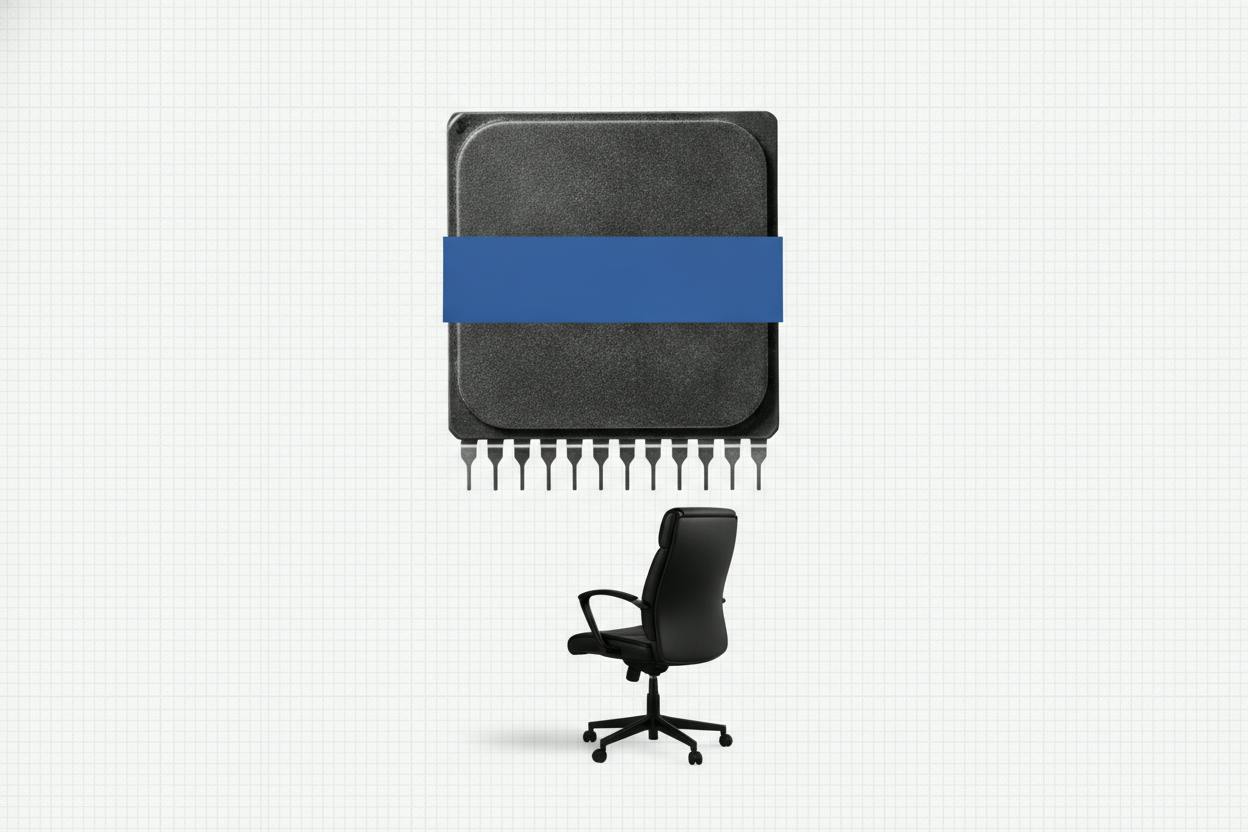
Nvidia, the world's most valuable chipmaker and a bellwether for the artificial intelligence boom, has named longtime director Harvey Jones as its first-ever board chair. The appointment comes after Jensen Huang, the company's co-founder and CEO for over three decades, stepped down from the top job.
Jones, who has served on Nvidia's board since 1993, takes on the newly created role as the company navigates a leadership transition that has already rattled markets. The news of Huang's departure had earlier triggered volatility in Nasdaq futures and weighed on tech shares globally.
Who is Harvey Jones?
Harvey Jones is not a household name like Jensen Huang, but he is deeply familiar with Nvidia's inner workings. Joining the board in 1993, the same year the company was founded, Jones has witnessed Nvidia's evolution from a graphics card maker into a dominant force in AI computing. His long tenure suggests continuity and institutional memory at a time when the company faces significant strategic decisions.
The creation of a separate board chair role is a notable governance shift. Previously, Huang held both the CEO and chair titles, a common structure in Silicon Valley but one that critics say concentrates too much power. By splitting the roles, Nvidia's board is signaling a move toward more conventional corporate governance, even as it retains a director with deep ties to the company's history.
Why this matters for investors
For everyday investors, the key question is what this leadership change means for Nvidia's future. The company has been at the center of the AI revolution, with its graphics processing units (GPUs) powering everything from chatbots to data centers. Its stock has soared in recent years, making it a major holding in many index funds and retirement accounts.
Leadership transitions at any company carry uncertainty, but they are especially significant at a firm so closely identified with its founder. Jensen Huang was not just the CEO; he was the public face of Nvidia and a driving force behind its strategic bets on AI. His departure raises questions about whether the company can maintain its innovative edge.
However, investors should note that Nvidia's board has moved quickly to fill the vacuum. Harvey Jones's appointment as chair provides a degree of stability, and the company has also named an interim CEO to manage day-to-day operations. The transition appears orderly, which may reassure markets that the company is not in crisis.
Still, the leadership shake-up has already had ripple effects. Asian stocks slipped as Nvidia's dip rattled tech shares, and Singapore shares edged lower as worries spread across the region. The uncertainty has also hit Chinese tech stocks, with fears about chip access adding to the jitters.
What to watch next
Investors will be watching several things in the coming weeks. First, how the interim CEO and the board handle Nvidia's product roadmap and customer relationships. The company's AI chips are in high demand, and any disruption could affect its revenue growth.
Second, whether the leadership change affects Nvidia's partnerships. For instance, Siemens' CEO has said its AI partnership with Nvidia will continue despite the uncertainty, which is a positive sign. But other partners may be more cautious.
Third, the broader market reaction. Nvidia is such a large and influential stock that its moves can sway entire indices. If the leadership transition is seen as smooth, the sell-off could be short-lived. If not, expect continued volatility.
For ordinary investors, the takeaway is to stay informed but not panic. Leadership changes at major companies are common, and Nvidia's board has taken steps to ensure continuity. However, the situation is fluid, and the coming months will reveal how the company fares without its iconic leader at the helm.



