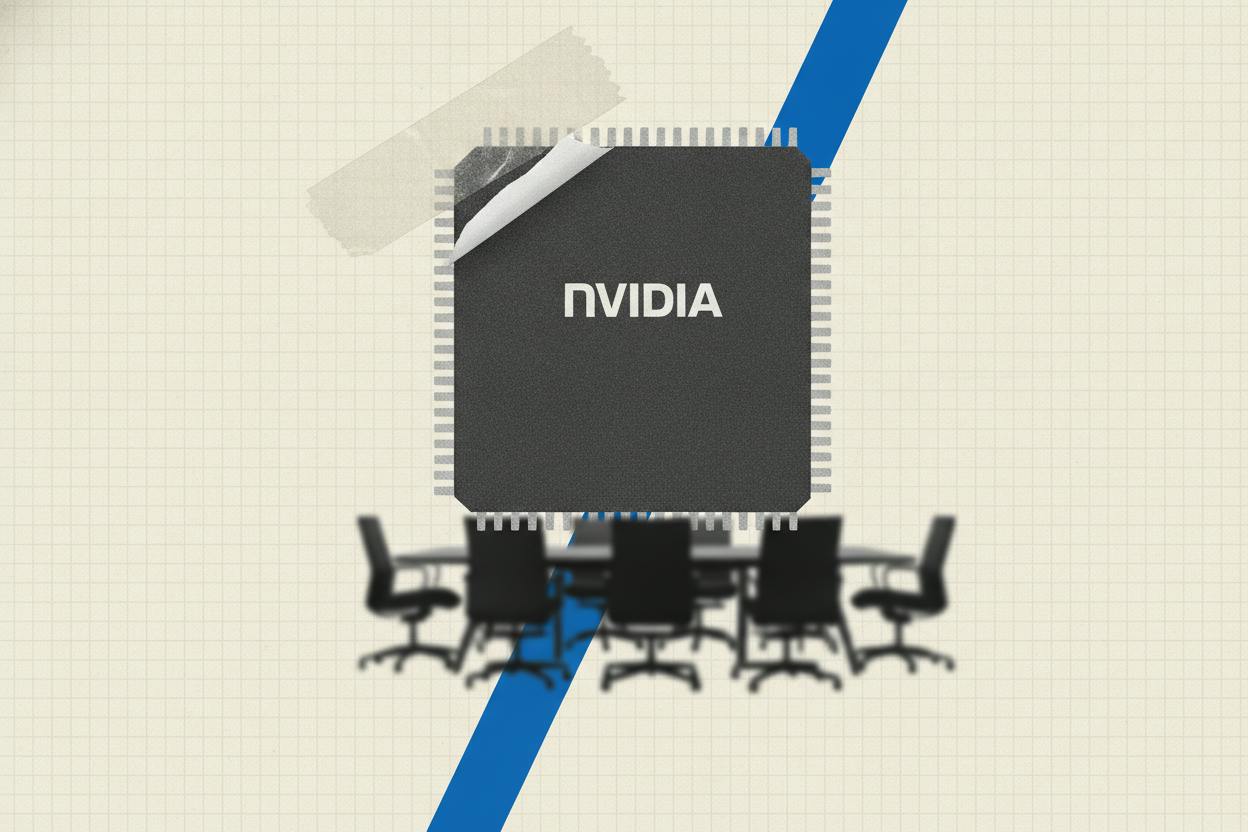
Nasdaq futures slipped in early trading while US Treasury futures held steady after a note from Commerzbank Research suggested that Nvidia's board could discuss the future of CEO Jensen Huang as soon as Thursday. The report, which said the company is reportedly considering removing Huang, sent a ripple through markets that have come to rely on Nvidia as the bellwether of the artificial intelligence boom.
Why Nvidia's leadership matters so much
Nvidia has become the most valuable chipmaker in the world, and its GPUs are the workhorses behind the current wave of AI development. From data centers to autonomous vehicles, Nvidia's technology is embedded in the infrastructure that many companies are betting on for future growth. As a result, any hint of instability at the top can have outsized effects on the broader tech sector and the indices that track it.
Investors have grown accustomed to Jensen Huang's visionary leadership. Under his guidance, Nvidia pivoted from gaming graphics to AI computing, and the company's stock has soared accordingly. A change at the helm—especially one that appears sudden—raises questions about whether the company's strategy will remain intact. When investors can't gauge whether a strategy will stay on course, they often focus less on next quarter's earnings and more on what the uncertainty means for the long term.
The broader context: political scrutiny and supply chain worries
The leadership headline lands on top of rising US political scrutiny of the chip supply chain. Lawmakers have been increasingly vocal about the need to secure semiconductor production and limit China's access to advanced chips. This has already led to export controls and has prompted some Chinese firms to stockpile Nvidia chips abroad to hedge against further restrictions. Any leadership vacuum at Nvidia could complicate the company's navigation of these geopolitical headwinds.
The market's reaction has been telling. While Nasdaq futures slipped, Treasury futures held firm, suggesting that investors are not fleeing to safety but rather recalibrating their risk exposure. This is a classic response to uncertainty: sell the most volatile assets, hold the steady ones, and wait for clarity.
What this means for everyday investors
For the average investor, this news is a reminder of how concentrated the market's recent gains have been. A handful of mega-cap tech stocks, led by Nvidia, have driven much of the S&P 500's and Nasdaq's performance. When one of those pillars wobbles, the entire index can feel it. That's why we've seen Asian markets slip and Tokyo tech shares dip in response to Nvidia's after-hours moves.
But it's important to keep perspective. Leadership changes, even at the most critical companies, are not necessarily a death knell. Boards often have succession plans, and a change at the top can sometimes bring fresh energy. However, the manner of the change matters. If Huang is removed abruptly, it could signal deeper issues—perhaps disagreements over strategy, governance, or even the direction of the AI push.
Investors should also consider the broader market context. The recent hot inflation data has revived bets that the Federal Reserve might hike rates again, which could pressure high-valuation tech stocks. Nvidia's leadership uncertainty adds another layer of risk to an already jittery market.
What to watch next
The key date is Thursday, when the board is reportedly set to discuss Huang's future. Any official statement from Nvidia will be closely scrutinized. Investors will also watch for reactions from major partners, such as Siemens, which has said its AI partnership with Nvidia will continue despite the uncertainty. That kind of vote of confidence could help stabilize sentiment.
In the meantime, expect continued volatility in tech stocks and the broader indices. For those with diversified portfolios, this is a moment to stay the course rather than make impulsive moves. For those heavily concentrated in tech, it might be worth reviewing risk exposure.
Ultimately, the market is pricing in uncertainty. The coming days will reveal whether this is a temporary blip or the start of a more significant shift. Either way, the story underscores how intertwined the fortunes of a single company can be with the health of the global market.