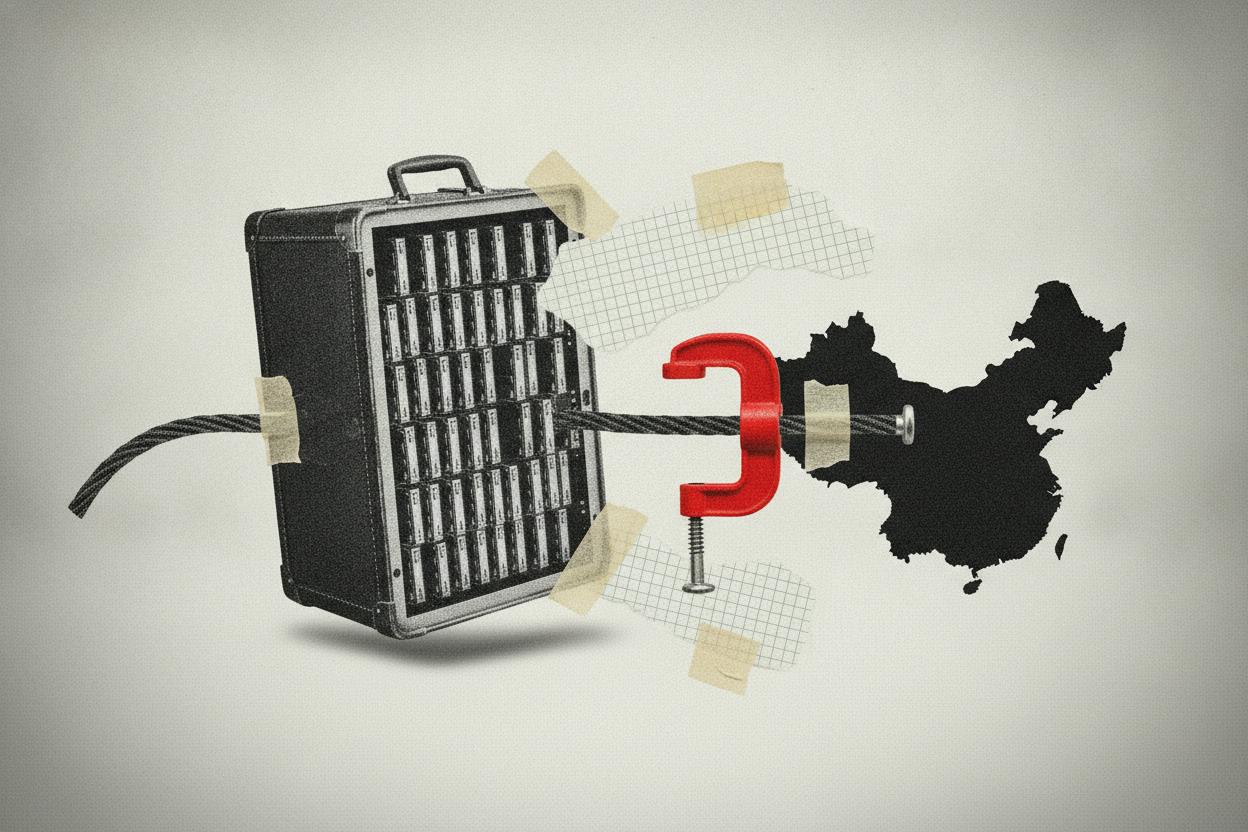
Chinese companies are scrambling to secure access to Nvidia's most advanced artificial intelligence chips outside mainland China, according to a Reuters report. The rush is driven by fears that the US government could tighten rules on remote access to such hardware, making it harder for Chinese firms to use American-made AI technology even when the chips are located abroad.
The report says demand is rising for offshore data centers—facilities in places like Singapore, Malaysia, or other jurisdictions where Chinese companies can lease computing power without the chips physically entering China. Some firms are also turning to grey-market stockpiles, buying chips through unofficial channels to build a buffer against potential restrictions.
Why remote access matters
Remote access is a key workaround for Chinese companies. Even if advanced chips cannot be exported to China, firms can still use them if the hardware sits in a data center overseas and they connect to it over the internet. This lets them train and run AI models without violating US export controls that bar the sale of top-tier chips to China.
The US has already imposed several rounds of restrictions on advanced semiconductor exports to China, citing national security concerns. Nvidia's most powerful chips, such as its H100 and newer models, have been subject to these limits. But the rules have not always covered remote access, and Chinese firms have used that gap to keep using cutting-edge AI hardware.
Now, the Reuters report suggests Washington may be looking to close that loophole. If remote access is restricted, Chinese companies would lose a vital channel to the world's most advanced AI computing power, which is why many are moving quickly to lock in capacity while they still can.
What this means for investors
For everyday investors, this story is a reminder of how geopolitics can ripple through the tech sector. Nvidia is the dominant supplier of AI chips, and its revenue depends heavily on global demand. Any tightening of export rules could affect its sales outlook, even though the company has said it expects restrictions to have a limited long-term impact.
At the same time, Chinese tech companies that rely on AI—from cloud providers to startups building large language models—could face higher costs or delays if they lose access to overseas computing power. That could weigh on their growth prospects and, in turn, on the broader Chinese tech sector. Recent market moves already reflect some of this anxiety: Hong Kong tech stocks have slid on reports that Washington is weighing new curbs, and Chinese equities have slipped on similar concerns.
The grey-market angle is also worth noting. When official channels are blocked, buyers often turn to unofficial ones, which can be riskier and more expensive. For investors, this signals that demand for AI chips remains intense, but it also highlights the uncertainty that comes with doing business in a politically charged environment.
What to watch next
The key question is whether the US actually tightens the rules, and how quickly. Any formal announcement would likely trigger further market moves, especially in chip stocks and Chinese tech names. Investors should also watch how Nvidia and other chipmakers respond—they may adjust their product lines or find new ways to serve customers within the rules.
For now, the race for overseas AI chips is a clear sign that Chinese firms are determined to keep using the best available technology, even if it means going through extra layers of complexity. That determination is a double-edged sword: it shows the strength of demand for AI, but it also underscores how fragile access can be when politics and technology collide.
As always, it's wise to keep an eye on the bigger picture. AI is a transformative technology, but its commercial path is increasingly shaped by government policy. For investors, understanding those policy risks is just as important as tracking earnings or product launches.