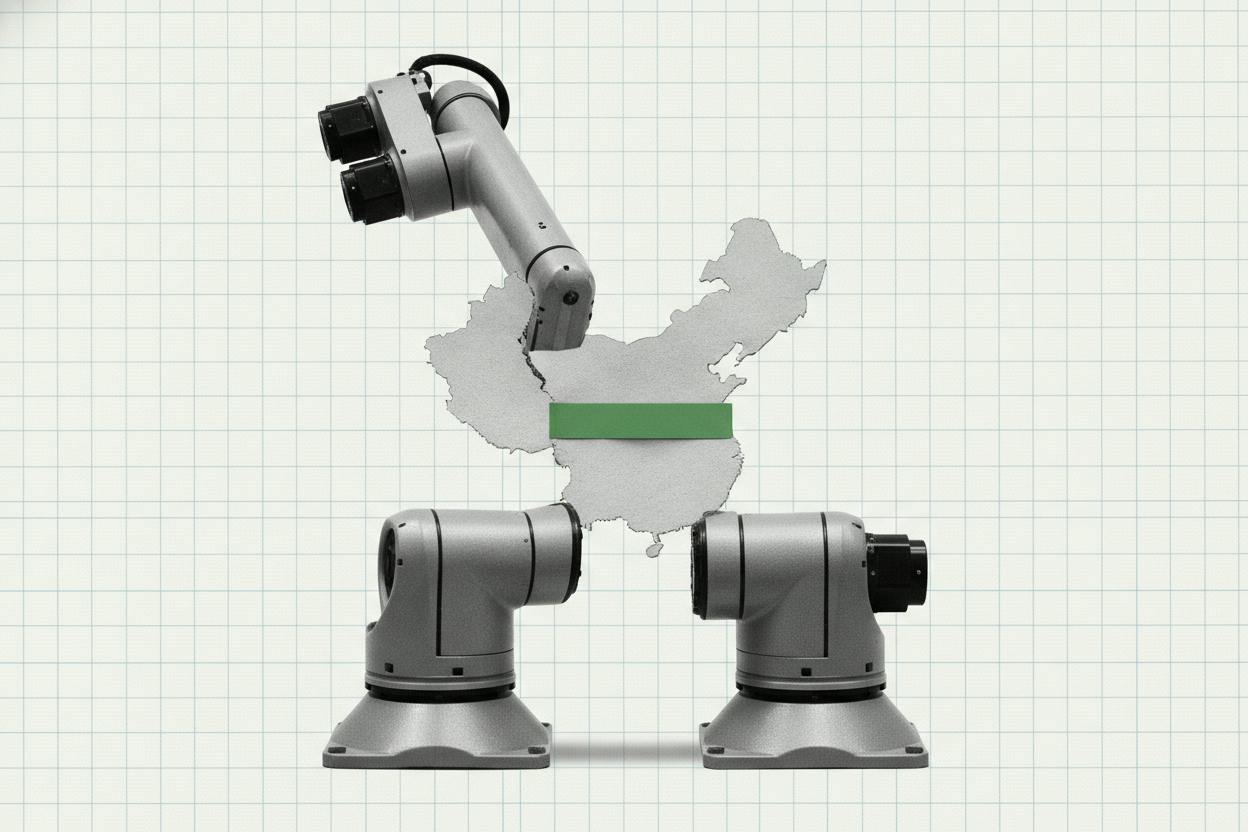
SoftBank and ABB are exploring a plan to spin off ABB's China robotics business into a separate entity, according to a Bloomberg report, as they try to salvage a $5.4 billion deal that Beijing recently blocked. The proposed carve-out would restructure ownership so that the buyer does not directly control the assets that Chinese regulators find sensitive.
The deal, which would have seen SoftBank acquire ABB's robotics division, hit a wall when Chinese authorities refused to approve it. China is ABB's largest robotics market, accounting for roughly 30% of the division's revenue, and the company has a substantial manufacturing and sales footprint there. That makes a clean exit difficult and a restructure more realistic.
What is a China carve-out?
A carve-out in this context means separating the China operations from the rest of the robotics business and placing them under different ownership and governance. Instead of SoftBank buying the entire division, the China unit would remain independent or be owned by a different entity, while SoftBank would acquire the non-China parts.
This is not a minor adjustment. Splitting operations typically reduces the synergies that a buyer might have expected from combining the businesses. It also complicates governance, as decision-making for the China unit would be separate from the rest of the company. For investors, it means the final price and structure become more negotiable, and the deal's value is no longer a single number but two: one for China and one for the rest of the world.
Bloomberg reported that the China unit could be worth between $2 billion and $3 billion, though that figure is an estimate and not a confirmed valuation. ABB is also considering other options, including finding a different buyer for the entire robotics business.
Why Beijing blocked the deal
The block reflects a broader trend: governments are increasingly scrutinizing cross-border deals in technologies they consider strategic. Robotics, automation, and artificial intelligence are areas where national security and economic competitiveness overlap. When a target company has significant China exposure, regulators in Beijing are often wary of foreign control over local operations, especially if those operations involve advanced manufacturing or data.
This is not the first time China's regulatory stance has affected global deals. For example, Prudential's growth targets have been challenged by China's slowdown, and Chinese chipmaker YMTC is pushing to localize its supply chain to reduce dependence on foreign equipment. These examples show how China's regulatory and industrial policies are reshaping global business strategies.
For SoftBank, the block comes at a time when the company is already facing market skepticism about its AI investments. SoftBank's default insurance cost recently hit a four-year high, reflecting investor concerns about its exposure to AI-related ventures. A failed or restructured robotics deal could add to that pressure.
What it means for investors
If the carve-out proceeds, investors would need to think about ABB's robotics value as two separate pieces: China and ex-China. The China business, with its strong revenue contribution, would be valued on its own merits, potentially at a premium or discount depending on regulatory risks. The rest of the world business would be valued based on its growth prospects without the China overhang.
For SoftBank, the deal's structure would change what it is actually buying. Instead of a global robotics leader, it might acquire a business that is smaller and less integrated, which could reduce the strategic benefits. That could make the price more negotiable, but it also means the deal might not deliver the same synergies as originally planned.
For ABB, a carve-out would allow it to retain some value from the China operations while still selling the rest. But it also means the company would continue to manage a complex business in a challenging regulatory environment. Other multinationals like Zimmer Biomet have also noted that China remains a drag, even as they raise their overall outlooks.
The broader lesson for everyday investors is that cross-border deals in technology are becoming harder to complete, especially when China is involved. Regulatory approvals can be unpredictable, and the final structure of a deal may look very different from the initial announcement. That uncertainty is something to keep in mind when evaluating any company with significant exposure to China or to strategic technologies.
For now, the deal is not dead, but it is clearly in flux. Investors should watch for further announcements from SoftBank and ABB about the carve-out plan, as well as any alternative buyers that might emerge. The outcome will not only affect the two companies but also signal how future tech deals with China exposure might be structured.