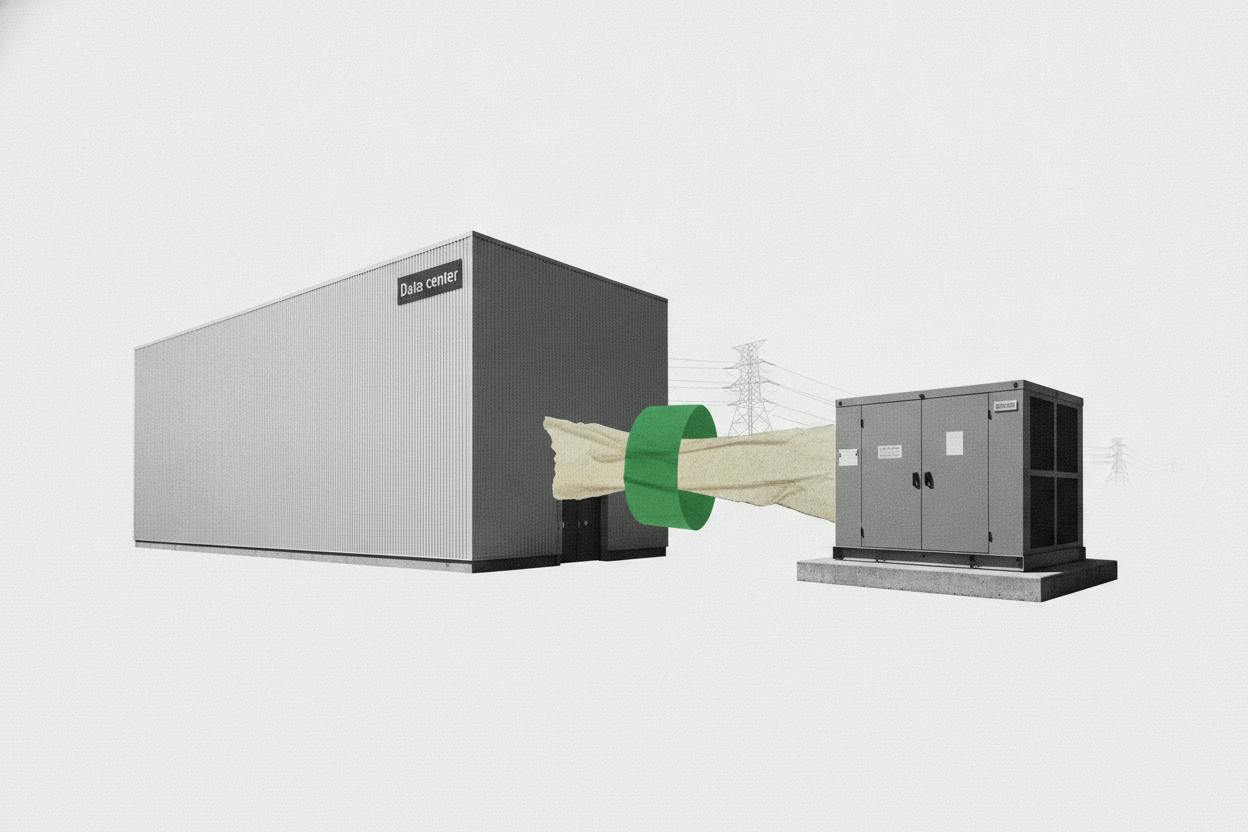
Microsoft is making clear it intends to foot the bill for the enormous electricity needs of its artificial intelligence data centers, rather than passing those costs on to ratepayers or leaning on government support. Speaking at a BloombergNEF conference in Houston, Noelle Walsh, a Microsoft cloud executive, said the company doesn't want other customers “paying for its growth,” adding: “We will pay our own way.”
One concrete step in that direction is Project Kilby, a behind-the-meter power-and-data site in West Texas that Microsoft is developing with Chevron, the oil and gas major, and Joulent LLC, an energy developer. Chevron says the site is still targeted to start running by 2028 and reach full operations by 2031.
Why data centers need so much power
Data centers are the physical homes of the cloud and AI services that have become central to modern life. They house thousands of servers that process and store information, and they consume vast amounts of electricity — not just to run the computers, but also to keep them cool. As AI models grow more complex, the energy demands of these facilities have surged, putting pressure on power grids and raising questions about how to meet that demand without spiking costs or emissions.
Utilities and regulators have been grappling with how to handle this surge. In some regions, data center developers have sought special rates or subsidies, which can shift costs onto residential and other commercial customers. Microsoft's stance is a notable departure: the company says it will absorb the costs itself, a position that could influence how other tech giants approach their own expansion plans.
The broader context is a race among hyperscale cloud providers — Microsoft, Amazon, Google, and others — to build out capacity to meet AI demand. That race has drawn attention from investors, who see data center growth as a key driver of revenue for tech companies and for the energy firms that supply them. Siemens Energy's record order backlog is one sign of how deeply AI demand is reshaping the energy equipment market.
Project Kilby: a behind-the-meter approach
Project Kilby is an example of a “behind-the-meter” arrangement, meaning the power generation is located on the same site as the data center, bypassing the traditional grid. This approach can reduce strain on local utilities and avoid some transmission costs, but it also requires significant upfront investment and long-term planning.
Chevron's involvement brings fossil fuel expertise to the table, though the project's exact power source has not been detailed. The oil major has been expanding into power generation and low-carbon ventures, and this partnership with Microsoft signals that traditional energy companies see data centers as a growing customer base. Venture Global's bet on AI data centers reflects a similar trend among energy firms.
The timeline — startup by 2028, full operations by 2031 — is long by tech standards, but not unusual for large energy infrastructure projects. Permitting, construction, and grid interconnection can take years, and tighter permits may slow AI data centers even as they don't stop them entirely.
What it means for investors
For everyday investors, this story is about more than one company's power strategy. It highlights a key risk for the AI boom: the cost and availability of electricity. If tech giants can't secure reliable, affordable power, their growth plans could stall. Microsoft's willingness to pay its own way suggests it sees power as a strategic investment, not just an expense.
That could be good news for energy companies and power equipment makers, which stand to benefit from long-term contracts and infrastructure spending. Intel's view that data center demand will power growth into 2027 is another data point in the same story. But it also raises questions about the ultimate cost of AI: if companies like Microsoft absorb power costs, those costs may eventually show up in higher prices for cloud services or thinner profit margins.
For now, Microsoft's stance is a signal that the company is thinking long-term about its energy needs. Whether other firms follow suit remains to be seen, but the pressure on grids and the push for cleaner power will keep this issue in the spotlight. Major investments in AI data centers are happening globally, and how they are powered will be a defining question for the industry.
As always, investors should watch how these projects develop and what they mean for the companies involved. The energy transition and the AI boom are converging, and the winners will be those that manage both effectively.