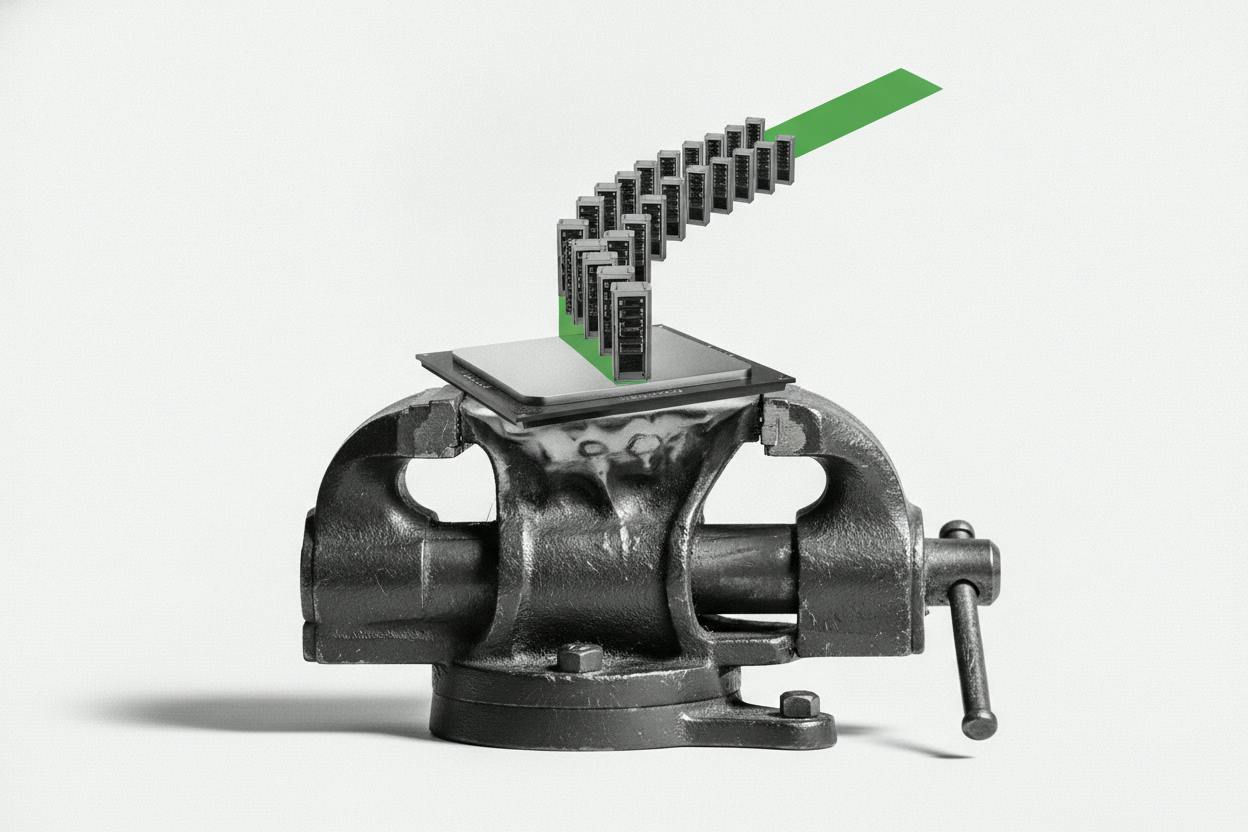
Intel has told analysts at RBC Capital Markets that its growth through 2027 will be driven by data center chips, even as the personal computer market remains sluggish. The company also cautioned that supply constraints could persist into the first half of 2028, a warning that adds a layer of uncertainty to its outlook.
The comments, made during a recent meeting with RBC, offer a rare glimpse into Intel's internal expectations at a time when the company is fighting to regain ground in the semiconductor industry. Intel has been losing market share in both PCs and servers to rivals like AMD and, more recently, to chip designers that rely on Taiwan's TSMC for manufacturing.
Data centers: the bright spot
Data center chips—particularly server CPUs—are the processors that power cloud computing, enterprise servers, and increasingly, artificial intelligence workloads. RBC noted that server CPU shipments could rise more than 30% as demand from cloud providers and AI companies accelerates. That growth would be a welcome contrast to the PC market, where sales have been soft for several quarters as consumers and businesses hold onto older machines.
The shift toward data centers is not unique to Intel. Across the industry, chipmakers are reorienting their strategies around AI and cloud infrastructure. Venture Global's bet on AI data centers is one example of how companies are positioning for this demand. Similarly, SoftBank and Grab's $1.85 billion commitment to Malaysian AI data centers underscores the scale of investment flowing into this space.
For Intel, the data center segment is critical because it offers higher margins than PC chips and is seen as a key battleground for future growth. The company has been working to improve its server product lineup, but it faces stiff competition from AMD's EPYC processors and from custom chips designed by cloud giants like Amazon and Google.
Supply shortages: a double-edged sword
Intel's warning that chip shortages could last into the first half of 2028 is notable. On one hand, tight supply often means pricing power for existing products. On the other, it can limit the company's ability to meet surging demand, potentially handing market share to competitors.
Shortages in the semiconductor industry are not new. The pandemic-era chip crunch that began in 2020 disrupted everything from cars to gaming consoles, and while that crisis largely eased, supply chain bottlenecks have persisted in certain segments. For Intel, the issue may be tied to its own manufacturing capacity and its transition to new production processes, which have faced delays in the past.
RBC's note suggests that even as demand for server CPUs climbs, Intel may not be able to fully capitalize on it if supply remains constrained. That could mean longer lead times for customers and a continued opening for rivals.
What it means for investors
For everyday investors, the key takeaway is that Intel's future is increasingly tied to the data center market, not the PC business that made it a household name. The company's guidance points to a growth story driven by cloud and AI, but the supply warning tempers expectations.
Investors should watch how Intel manages its manufacturing ramp and whether it can secure enough capacity to meet demand. They should also keep an eye on the competitive landscape—AMD has been gaining share in servers, and Nvidia dominates the AI accelerator market, though Intel's CPUs still play a role in many AI systems.
The broader market context matters too. Sea's recent earnings beat showed that tech companies can still surprise positively, but aluminum prices slipping remind us that supply dynamics can shift quickly. For Intel, the balance between demand and supply will be a central theme over the next few years.
Intel's stock has been volatile as investors weigh its turnaround prospects against its challenges. The company has made bold promises about returning to manufacturing leadership, but execution remains the question. The RBC meeting suggests that management is confident about the data center opportunity, yet the supply warning is a reminder that even good news can come with caveats.
For now, the message is clear: data centers are Intel's growth engine, but the road to 2027 may be bumpy. Investors should monitor quarterly earnings for updates on both demand and supply, and consider how Intel's performance fits into their broader portfolio strategy.