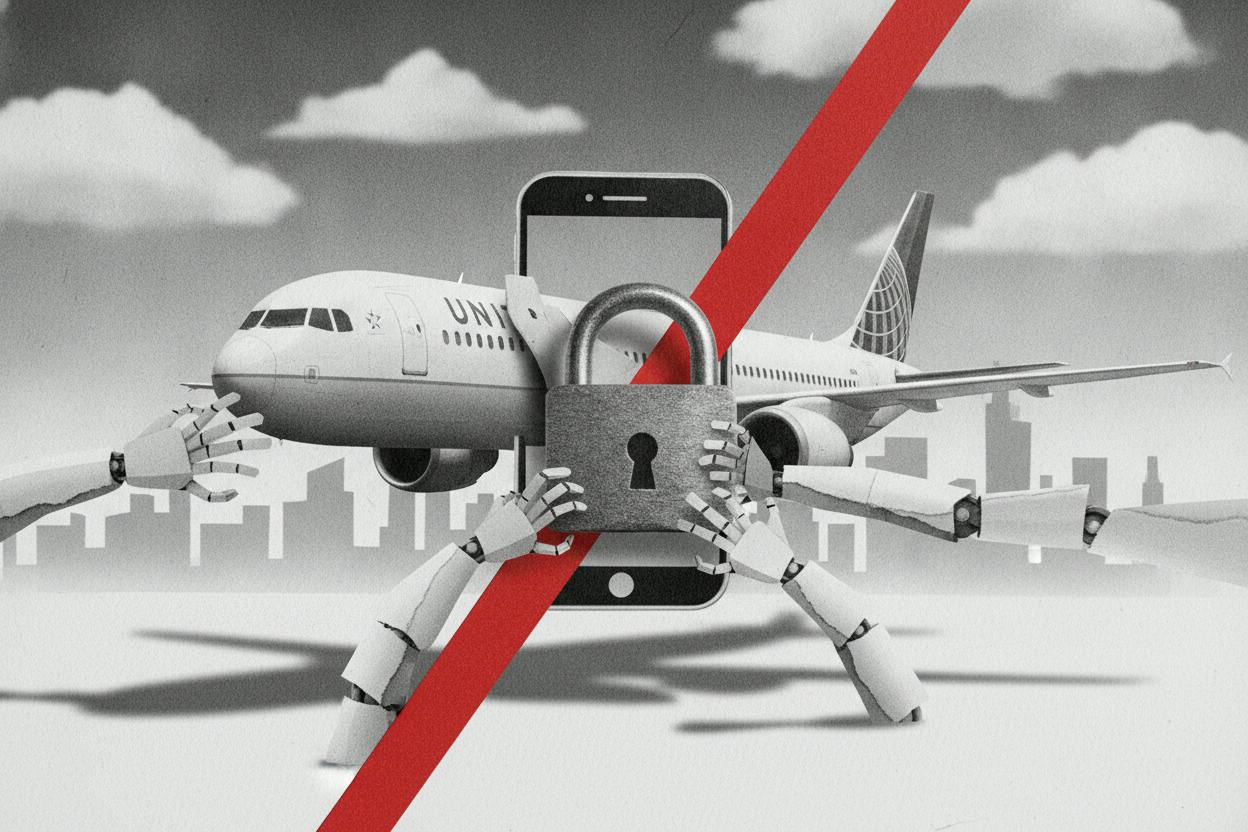
United Airlines said Wednesday it is moving to block third-party artificial intelligence "agents" from accessing its apps and booking systems, arguing the bots pose security and compliance risks as they grow more capable of planning and purchasing travel on a user's behalf.
The carrier also said it plans tighter rules across its own apps and for travel partners, according to the brief. In plain terms, United is drawing a line between AI tools that answer questions and AI tools that take actions — like booking a flight, changing a reservation or spending frequent-flyer miles.
Why an airline would fence out AI agents
AI agents are a step beyond chatbots. Instead of just suggesting a flight, an agent can log into an account, compare options, and complete a transaction. That convenience cuts both ways. If a traveler hands their login to a third-party assistant, that tool could expose personal data, make unintended purchases, alter reservations, or redeem loyalty miles without clear permission, United warned.
Those risks are not hypothetical for an airline. A booking system touches payment credentials, passport details and loyalty balances — all attractive targets for fraud. A bot acting on stale or misread instructions could also create customer-service headaches and compliance exposure, especially around data-privacy rules that govern how personal information is shared with outside parties.
United's stance is not unique in spirit. Companies across sectors are wrestling with how much access to grant autonomous AI tools. Some businesses see agents as a new sales channel; others see them as an uncontrolled gateway into their systems. The split is visible well beyond aviation — from AI shopping agents in China to software firms betting on agents to keep users engaged.
The bigger fight over who controls the transaction
For airlines, the booking flow is valuable real estate. Carriers invest heavily in their own apps and websites because direct bookings are cheaper than paying commissions to online travel agencies and other intermediaries. If a third-party AI agent inserts itself between the traveler and the airline, it can capture that relationship — and potentially steer customers based on its own logic rather than the airline's.
That helps explain why United is framing the issue as security and compliance rather than simply competition. By setting rules for partners and its own apps, the airline keeps control over how bookings happen and who can touch customer accounts. Rival carriers will be watching closely. If United's approach holds up without driving customers away, other airlines may adopt similar policies.
There is also a cost dimension. Running AI agents is not free — banks have started budgeting for agent usage as expenses climb. For airlines, allowing outside bots to hammer booking systems could add infrastructure load and fraud-monitoring costs on top of the commission question.
What it means for investors
For everyday investors, this is less about a single airline's app policy and more about a theme that is starting to show up across the market: who captures the value as AI moves from answering questions to completing transactions.
- Platform control matters. Companies that own the customer relationship — airlines, banks, retailers — have an incentive to keep AI agents on their own terms. That can protect margins tied to direct bookings and loyalty programs.
- Travel intermediaries face a shifting landscape. Online travel agencies and metasearch sites have long relied on accessing airline inventory. Stricter rules on automated access could change how easily new AI-driven travel tools plug into that ecosystem.
- Regulation is a wild card. Data-privacy and consumer-protection rules could push more companies toward United's cautious stance, or force them to open access under clear conditions.
United's move is a reminder that the AI trade is not only about chipmakers and model builders. It is also about how established businesses defend their systems, their data and their customer relationships as autonomous software becomes more capable. Investors will want to watch whether other airlines follow United's lead — and whether travel-tech firms that depend on airline inventory adapt smoothly or run into friction.
For now, the message from United is straightforward: AI agents are welcome to help travelers plan, but not to reach into its booking systems without rules. How the rest of the industry responds will shape how quickly AI-driven travel booking becomes a mainstream reality — or stays fenced out.