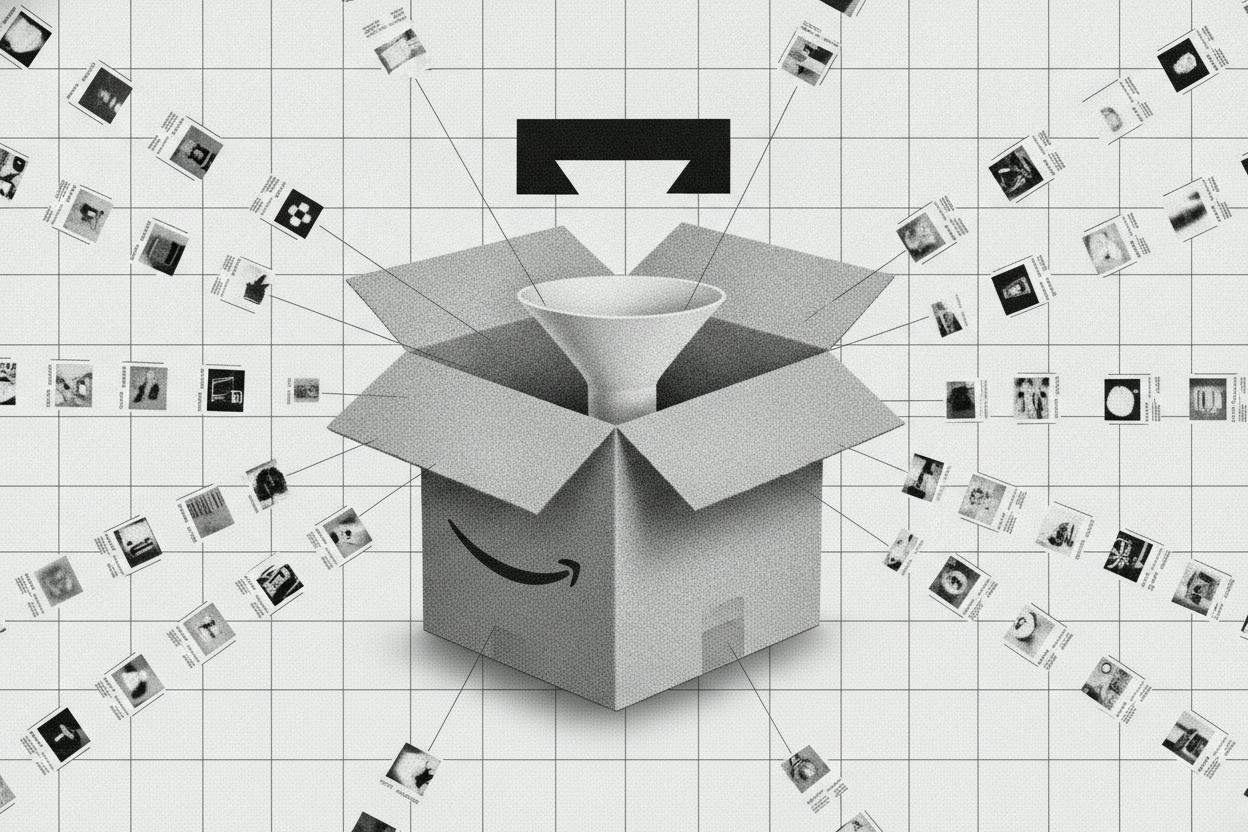
Amazon is reportedly exploring an ambitious plan to build a vast database of product information that could keep shoppers—and the AI tools that guide them—from wandering off to Google or brand websites. The project, called World Product Graph, is described in a draft memo from Amazon's Selection & Catalog Systems team, according to Reuters.
The idea is to assemble details on "virtually every item for sale" by learning how brands structure their product listings, encouraging partners to feed updates, and potentially crawling other retailers' sites. Amazon would even include products it doesn't sell itself. The goal: answer shopping questions directly, without sending people elsewhere.
Amazon told Reuters the document is a "draft" and "outdated," and it's unclear whether the project will ever launch. The memo itself reads like an aspirational, PR-style plan dated October 1, 2027. But the fact that it exists at all reveals a lot about where Amazon sees the future of online shopping—and the threats it's bracing for.
Why Amazon wants to own product facts
Amazon's shopping experience has long been built on a simple premise: you come to Amazon, you find what you want, you buy it. But the rise of AI-powered shopping assistants is changing how people search. Instead of typing "best running shoes for flat feet" into a search bar, more shoppers are asking an AI chatbot for recommendations. If that chatbot is Google's Gemini or a standalone shopping agent, it might not send the shopper to Amazon at all.
That's the threat Amazon is trying to neutralize. The World Product Graph would give Amazon's own AI tools—including its shopping assistant Rufus and Alexa for Shopping—a richer, more reliable set of facts to draw from. The memo reportedly acknowledges that some of Amazon's AI answers are currently wrong or incomplete, which can erode trust and send shoppers elsewhere. Amazon, for its part, told Reuters that Alexa for Shopping is about 97% accurate globally and that the usage figures cited in the memo were outdated.
But the bigger strategic play is about controlling the path to purchase. A 2025 Morgan Stanley report cited by Reuters found that only 16% of shoppers start broad product research on Amazon, compared with 57% who start on Google. However, when shoppers already know what they want, 41% start on Amazon, versus 23% on Google and 18% on Walmart. That high-intent moment—when a shopper is close to buying—is Amazon's most valuable choke point.
If AI shopping agents start answering those high-intent queries elsewhere, Amazon risks losing not just the checkout but the advertising dollars that come with it. Amazon's ad business is strongest right next to the purchase decision. Fewer detours to Google or brand sites can mean more sponsored placements viewed and more checkouts that begin and end on Amazon.
What it means for investors
For investors, this is a reminder that Amazon's competitive moat isn't just about logistics or Prime membership—it's also about data. The company already knows what you buy, but it wants to know what you might buy, and why. A comprehensive product graph would make Amazon's AI more useful, which could keep shoppers engaged and protect the advertising revenue that has become a major profit driver.
The plan also underscores the growing importance of AI in e-commerce. Amazon is far from alone in this race. Rivals like JD.com are already using AI to power massive shopping events, and the broader industry is betting that AI assistants will become the new front door to online retail.
There's also a potential upside for Amazon's AI ambitions beyond shopping. The company has invested heavily in AI, including a significant stake in Anthropic, the maker of the Claude chatbot. An IPO of Anthropic could turn Amazon's stake into a windfall, but the more immediate payoff may come from using AI to strengthen its core retail business.
Still, the World Product Graph is far from a done deal. The memo is dated 2027, and Amazon has not confirmed any concrete plans. Building a database of "virtually every item for sale" would be a massive technical and logistical challenge. It would require cooperation from brands that may be reluctant to hand over data to a dominant retailer, and crawling other retailers' sites raises legal and ethical questions that Reuters notes remain unresolved.
For now, investors should watch how Amazon's AI tools perform in the real world. If Rufus and Alexa for Shopping become noticeably more accurate and useful, that's a sign the strategy is working. If not, the company may need to find other ways to keep shoppers from straying.
Either way, the battle for the internet's product facts is just beginning—and it's a fight Amazon clearly wants to win.



