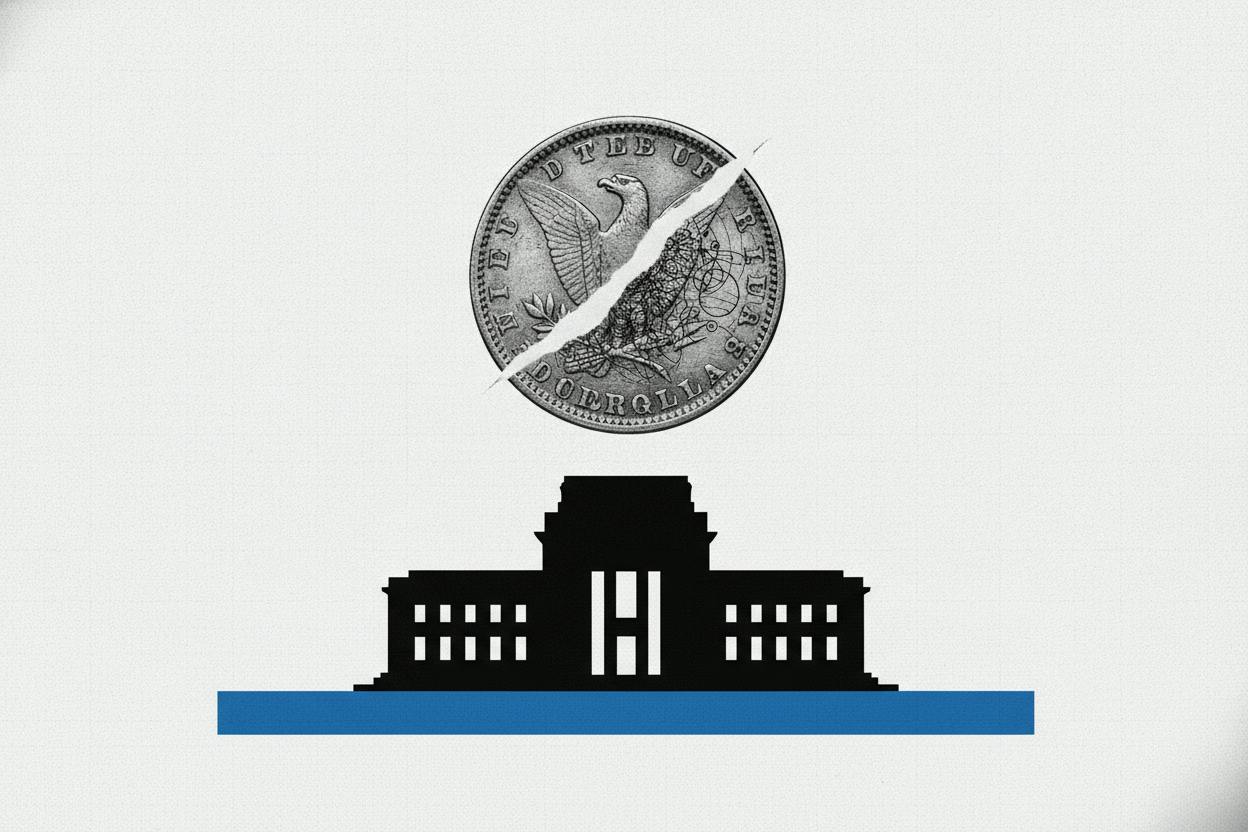
The Federal Reserve's late-October policy meeting has suddenly become a genuine toss-up. After September's consumer price index (CPI) came in hotter than expected, futures markets now price roughly 50-50 odds that the central bank will raise interest rates again at its October 27-28 gathering.
The Labor Department reported that headline CPI rose 3.7% from a year earlier, still well above the Fed's 2% target. But the more worrying figure was "core" inflation, which strips out volatile food and energy prices. That measure came in a touch hotter than economists had forecast, suggesting price pressures are broadening beyond a few categories.
For the Fed, this is a problem. The central bank has been trying to cool inflation without tipping the economy into recession. When core inflation looks sticky and broad-based, officials have a harder time justifying a pause. They can't confidently argue that inflation is on a sustainable path down to 2%.
So traders quickly repriced the upcoming Federal Open Market Committee (FOMC) meeting. Just a few weeks ago, the market leaned clearly toward a "hold" — keeping rates where they are. Now, it's a coin flip. That shift matters even before the Fed makes any announcement.
Why a coin flip changes things
When futures markets are split, it's not just about where rates are today. It's about how quickly expectations can swing. A meeting that's genuinely uncertain tends to raise short-term interest-rate volatility. That volatility can ripple into everything priced off expected Fed policy over the next few months.
For example, September's inflation report also pushed European bond yields higher, as investors around the world recalibrated their expectations for global monetary policy. The dollar strengthened against currencies like the South African rand, which fell to 16.62 per dollar. These moves show how one U.S. data point can send shockwaves through global markets.
The Fed's own officials have been sending mixed signals. Governor Michelle Bowman recently said there's "no urgency" for more rate hikes after the September move, but she also left the door open. That kind of ambiguity only adds to the uncertainty.
What it means for your money
For everyday investors and borrowers, the immediate effect is on borrowing costs tied to short-term rates. When futures markets are split, lenders and borrowers aren't just reacting to where rates are today, but to how quickly expectations can swing. Banks and other lenders often protect themselves by keeping wider pricing "buffers" and updating variable-rate products more quickly as odds shift.
That's why rates linked to the Fed's next move — like credit-card annual percentage rates, home-equity lines of credit, and other variable-rate loans — can feel especially choppy ahead of a close-call meeting. Even fixed-rate quotes can vary more from day to day as providers bake that uncertainty into pricing.
For investors, the bigger picture is that the path of interest rates remains highly uncertain. If the Fed does hike in October, it would mark another step in the most aggressive tightening cycle in decades. If it holds, it would signal that officials are willing to wait and see how the economy responds to the hikes already delivered.
Either way, the market's reaction to this CPI report shows how sensitive investors are to any sign that inflation is not cooling fast enough. The mixed futures reaction on the day of the release — with some stocks falling and others holding steady — reflects that nervousness.
What to watch next
Between now and the October meeting, investors will be parsing every piece of economic data for clues. Jobless claims, retail sales, and producer prices could all move the needle. But the biggest focus will be on any comments from Fed officials, who may try to guide expectations one way or the other.
The Fed has a dual mandate: maximum employment and stable prices. With inflation still running hot, the pressure to act is real. But with the economy showing signs of cooling, the risk of overtightening is also on the table. That's why this decision is shaping up to be such a close call.
For now, the message for investors is simple: expect volatility. Whether you're borrowing, saving, or investing, the next few weeks could bring sharp swings in rates and market prices. The coin flip is real, and the outcome will shape financial conditions for months to come.