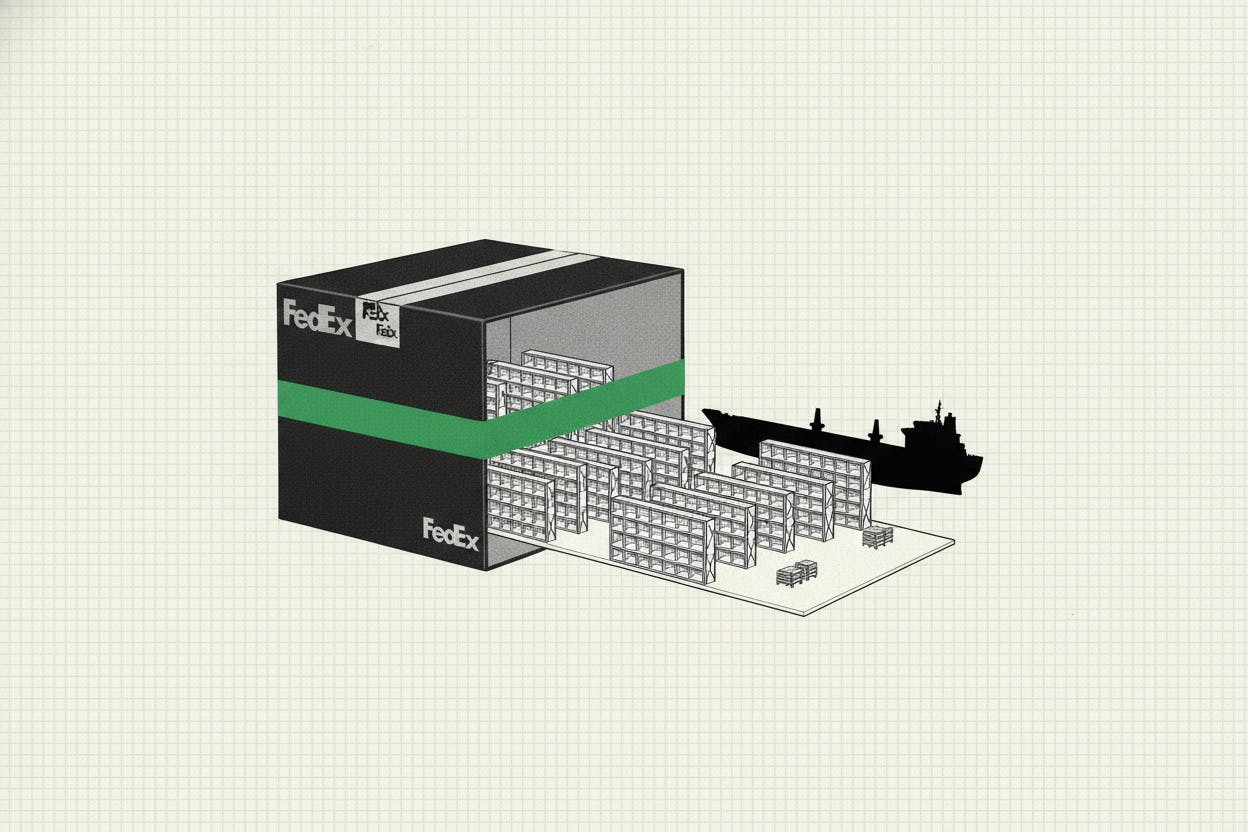
FedEx is selling its FedEx Supply Chain contract logistics business to CMA CGM, the French shipping and logistics group, for roughly $1.4 billion. The move is part of a broader effort by the package delivery giant to simplify its operations and focus on its core air and ground networks.
What FedEx Is Selling
FedEx Supply Chain handles what is known as contract logistics: warehousing, order fulfillment, inventory management, and other behind-the-scenes services for retailers, technology companies, and healthcare firms. It is a business that requires significant investment in physical buildings and labor, tying up capital and exposing the company to utilization risk.
By selling this unit, FedEx is shedding those fixed costs. Instead of owning and operating warehouses, it will rely on its network to move packages through its air and ground systems. The deal also includes multiyear commercial agreements in air and ocean freight that will roll out in phases through 2028. These agreements cover non-exclusive ocean shipping with CMA CGM and certain air cargo capacity solutions, ensuring that FedEx can still capture shipping demand generated by the warehouses it no longer owns.
What CMA CGM Gains
For CMA CGM's CEVA Logistics unit, the acquisition is about expanding its footprint in North America. CEVA says the deal will give it roughly 150 warehouses and 20,000 employees in the region, significantly boosting its ability to offer integrated logistics services. This allows CEVA to bundle storage, fulfillment, and international transport into a single "warehouse-to-ship" offering for large shippers, making its customer relationships stickier and intensifying competition for integrated logistics contracts.
The deal also comes as logistics companies increasingly seek to offer end-to-end solutions, combining warehousing with ocean and air freight to capture more business from global supply chains. CMA CGM's move mirrors similar strategies by rivals like Segro, which recently formed a £3 billion joint venture to develop UK logistics parks.
What It Means for Investors
For FedEx shareholders, this sale represents a shift from fixed to variable costs. Warehouses lock companies into long leases, staffing commitments, and utilization risk. By handing that operation to CEVA, FedEx's financial results will depend more on network pricing and efficiency than on running buildings. The phased-in air and ocean agreements act as a volume bridge, allowing FedEx to still benefit from shipping demand without the capital intensity.
The $1.4 billion price tag also provides FedEx with cash that can be used for other priorities, such as debt reduction, share buybacks, or investments in its core network. The company has been under pressure from investors to improve margins and streamline operations, and this deal fits that narrative.
For CMA CGM, the acquisition strengthens its position in the competitive logistics market. The extra warehouses and employees give it more opportunities to cross-sell ocean, air, and warehousing services, potentially increasing revenue per customer. However, integrating a large workforce and real estate portfolio comes with its own challenges, and investors will watch how smoothly CEVA absorbs the new assets.
Broader Market Context
The logistics sector has seen a wave of consolidation as companies seek to offer more comprehensive services. This deal is part of a broader trend where shipping and logistics firms are expanding their footprints to capture more of the supply chain value chain. Similar moves have been seen in other industries, such as Kroger's $1.65 billion acquisition of Giant Eagle after its failed Albertsons merger, and dealmakers staying busy across sectors.
For everyday investors, this deal highlights the importance of understanding a company's capital allocation strategy. FedEx is choosing to focus on its strengths—moving packages—while outsourcing the capital-intensive warehousing business. This can lead to more predictable earnings and potentially higher returns on invested capital over time.
The deal is expected to close in the coming months, subject to regulatory approvals. Investors will be watching for any updates on the integration and the performance of the commercial agreements, which will be key to determining whether this sale delivers the expected benefits.