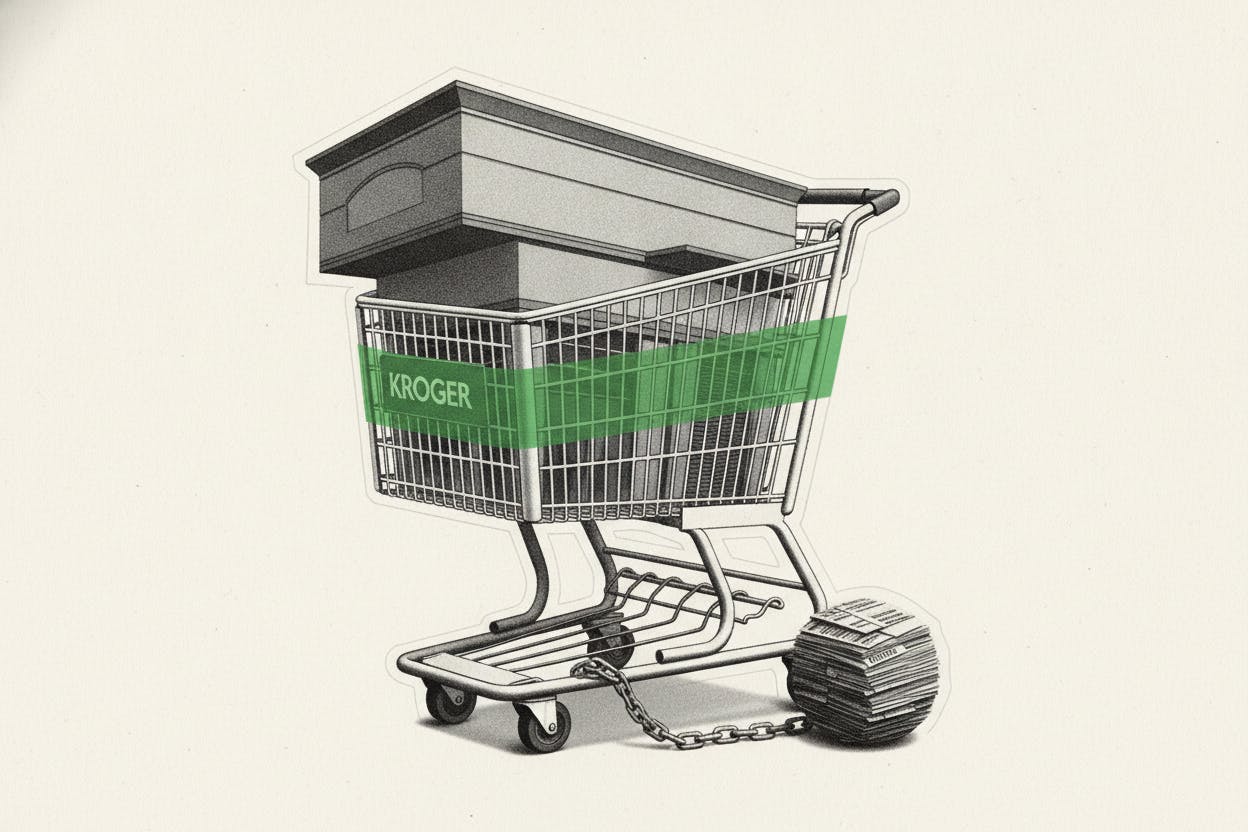
Kroger is back in the acquisition game. After regulators blocked its $24.6 billion merger with Albertsons last year, the supermarket giant has struck a smaller but still significant deal: buying regional rival Giant Eagle for $1.65 billion.
The deal includes $1.25 billion in cash and the assumption of about $400 million in Giant Eagle's liabilities. Kroger will add roughly 197 supermarkets and 11 standalone pharmacies across parts of the Midwest and Mid-Atlantic, including Ohio, Pennsylvania, West Virginia, and Maryland.
Why Kroger Is Buying Again
Grocery is a scale business. Margins are razor-thin, and the biggest players — Walmart, Amazon, Costco — keep pushing prices down and convenience up. That leaves traditional supermarket chains like Kroger hunting for cost savings and market share through consolidation.
Kroger's previous attempt to merge with Albertsons would have created a national giant with over 5,000 stores. But federal regulators sued to block it, arguing the deal would reduce competition and raise prices for shoppers. Kroger abandoned the merger in late 2024.
This time, Kroger is taking a more targeted approach. The company describes the Giant Eagle acquisition as an "adjacent markets" expansion — filling in gaps in regions where Kroger already has a presence, rather than trying to enter entirely new territories. That could make the deal easier to defend on antitrust grounds.
Giant Eagle operates primarily in Ohio, Pennsylvania, West Virginia, and Maryland. Kroger already has a strong footprint in Ohio and parts of Pennsylvania, so the overlap is limited. The deal also includes 11 standalone pharmacies, which could help Kroger expand its health and wellness offerings.
What It Means for Investors
For Kroger shareholders, this deal is a sign that management is not giving up on growth through M&A, even after the Albertsons setback. The smaller, more regional focus may reduce regulatory risk, but it also means less dramatic cost synergies.
Kroger says it expects to achieve cost savings by integrating supply chains, combining purchasing power, and streamlining back-office operations. But the company has not yet provided specific synergy targets. Investors will be watching for details when the deal is expected to close, likely in the second half of 2025.
The deal also highlights the ongoing pressure on traditional grocers. Walmart and Amazon continue to invest heavily in low prices and fast delivery. Kroger has been fighting back with its own digital initiatives, including online ordering and delivery partnerships. Adding more stores in existing markets could help Kroger spread those fixed costs over a larger base.
For Giant Eagle, the sale marks the end of an era. The chain has been family-controlled for decades and has struggled to keep up with larger competitors. Selling to Kroger gives its owners a cash exit and its employees a larger corporate parent.
Kroger's stock was little changed on the news, suggesting investors are taking a wait-and-see approach. The deal is small relative to Kroger's $40 billion market cap, so it won't transform the company overnight. But it does show that Kroger is willing to keep playing offense in a consolidating industry.
What to Watch Next
Investors should keep an eye on a few things. First, regulatory approval: while this deal is smaller and more regional than the Albertsons merger, it could still face scrutiny from the Federal Trade Commission. Kroger will need to convince regulators that the deal won't hurt competition in local markets.
Second, integration: Kroger has a good track record of integrating acquisitions, but every deal carries execution risk. If Kroger can smoothly absorb Giant Eagle's stores and supply chain, the deal could add to earnings within a year or two.
Finally, the broader grocery landscape: if Kroger succeeds with this deal, it may look for more regional acquisitions. Other mid-sized chains like Weis Markets, SpartanNash, or even smaller independents could become targets. Consolidation in grocery is likely to continue as long as Walmart and Amazon keep raising the bar.
For everyday investors, this deal is a reminder that scale matters in retail. Kroger is placing a bet that bigger is better — and that it can compete with the giants without becoming one itself.