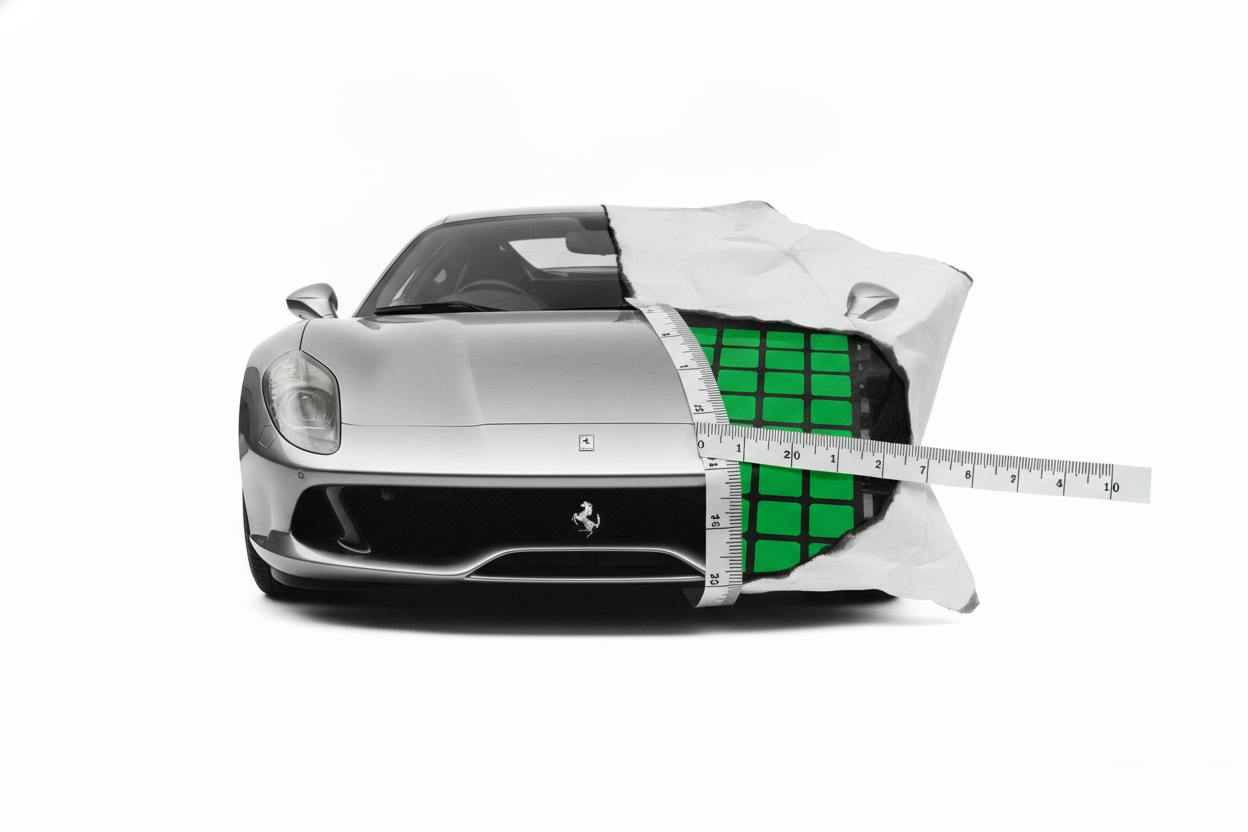
Ferrari's move into electric vehicles has raised questions about whether the iconic brand can keep its exclusivity and pricing power. But according to a new note from UBS Securities, dealers aren't seeing any slowdown in demand.
Nearly 70% of Ferrari dealers surveyed by UBS report higher customer inquiries, a sign that enthusiasm for the marque remains strong even as the company prepares to launch its first all-electric model, the Luce. The survey suggests that the EV debate is more noise than a near-term signal for the Italian luxury carmaker.
Model transition in focus
Ferrari is in the middle of a significant model changeover. Older models are winding down, while the new F80 hypercar is just starting to ramp up production. This transition is expected to cause a slight dip in deliveries—UBS forecasts volumes will fall about 1% year over year in the third quarter.
Yet the bank still expects organic sales to grow 8% in the same period. That gap between volume and revenue highlights a key dynamic in the luxury car business: Ferrari can often offset selling fewer cars with higher pricing, a richer mix of models, and expensive customization options.
“Customers care about resale values,” the UBS note said, explaining that when resale values stay strong, buyers are less sensitive to the initial sticker price because the total cost of ownership looks more manageable when they eventually sell the car. That gives Ferrari more room to lean on higher-margin trims and personalization to keep revenue growing even when volumes soften.
What to watch beyond deliveries
UBS flagged several checkpoints that will matter more than headline delivery numbers in the coming quarters:
- The Amalfi order book: How quickly orders for this new model are filling up will be a key indicator of demand.
- Luce reservations: Whether reservations for the all-electric Luce come from new buyers or existing collectors will show if Ferrari is expanding its customer base or just converting current fans.
- F80 delivery pace: The speed at which the limited-edition F80 hypercar reaches customers will affect revenue recognition.
- Resale values: Whether used Ferrari prices hold up as the lineup shifts will be crucial for maintaining the brand's pricing power.
These factors, rather than the raw number of cars shipped, will determine whether Ferrari can keep growing revenue even as it navigates the transition to electric.
What it means for investors
For investors, the key question isn't just how many cars Ferrari ships in a transition quarter, but how much revenue it can generate per car. If resale values stay high, buyers tend to worry less about the sticker price because the total cost of owning the car looks more manageable when they sell it later. That gives Ferrari more room to lean on higher-margin trims and personalization to keep sales rising, even when volumes soften.
The read-through, then, is whether that “price and mix” engine keeps doing the heavy lifting through the Luce and F80 rollout—because that’s what would let growth stay positive despite lower deliveries.
This dynamic isn't unique to Ferrari. Other luxury and premium brands often face similar challenges when transitioning their lineups. For example, Ford's F-Series pickup truck has shown how a strong product can keep sales momentum even in a changing market. And in the broader retail space, Trent's fast-fashion sales have grown even as the company expands its store count, showing how mix and scale can drive revenue.
Investors will be watching Ferrari's next earnings report closely to see if the 8% organic sales growth forecast materializes. If it does, it would confirm that the brand's pricing power remains intact despite the EV transition. If not, it could signal that the shift to electric is proving more challenging than expected.
For now, UBS's survey suggests that dealer confidence is high, and the brand's ability to command premium prices appears undiminished. The coming quarters will test whether that confidence translates into sustained financial performance.