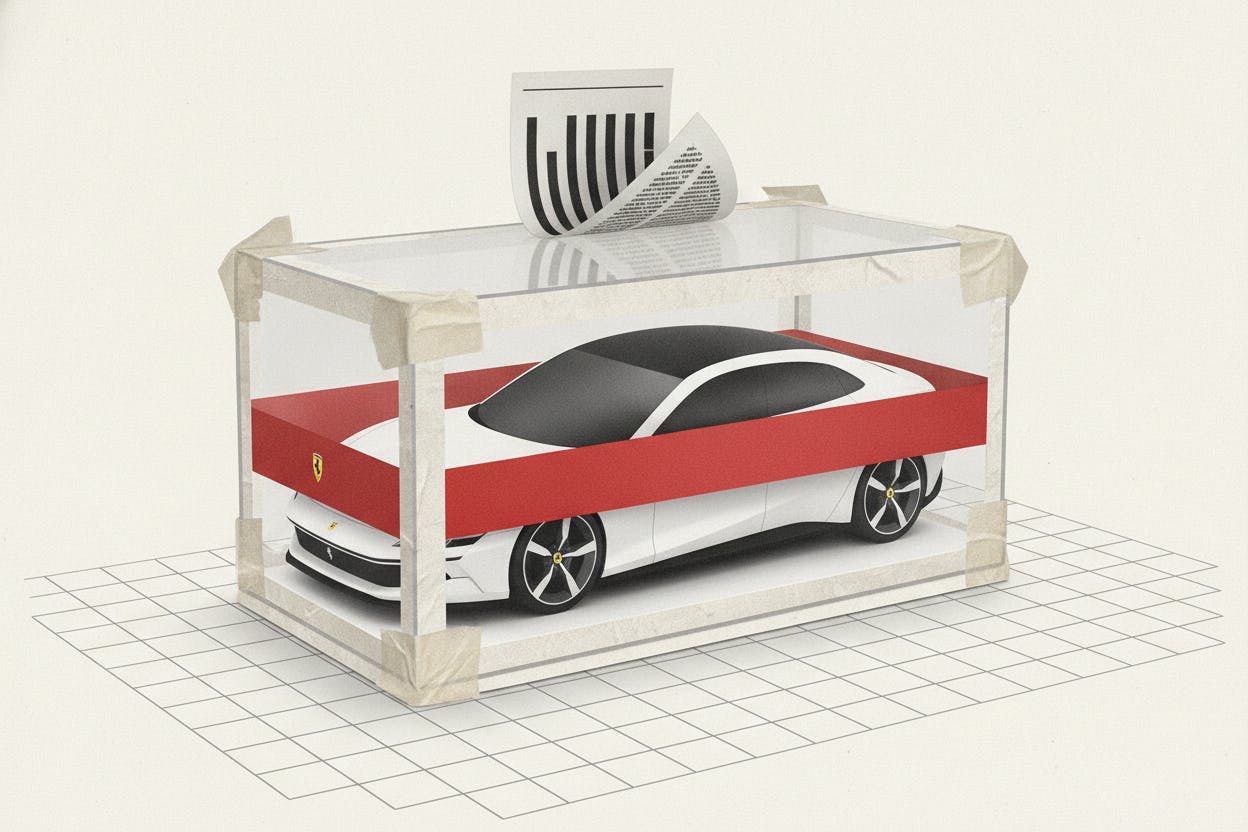
Ferrari has offered an early update on its first all-electric vehicle, the Luce, and the news is reassuring for investors watching the luxury automaker's pivot to battery power. CEO Benedetto Vigna said orders for the €550,000 model are tracking to plan, even after the car drew a wave of criticism when it debuted in May.
The Luce — a five-seat, four-door grand tourer — marks a major departure for Ferrari, a brand built on roaring V12 and V8 engines. The car's styling and price tag sparked debate among enthusiasts and analysts alike. But Vigna's comments suggest that skepticism has not translated into weak demand.
What the Luce means for Ferrari's strategy
Ferrari's move into electric vehicles is a carefully managed gamble. The company has long positioned itself as a maker of exclusive, high-performance machines, and its customer base is famously loyal — and wealthy. The Luce's €550,000 price tag places it well above many competitors' EVs, reinforcing Ferrari's luxury positioning.
By launching the Luce, Ferrari is signaling that it can maintain its brand cachet while embracing electrification. The company has said it aims for 40% of its sales to be fully electric by 2030, with hybrids making up another 40%. The Luce is the first step in that direction.
Early criticism of the car focused on its design and the challenge of translating Ferrari's driving character into an EV. But Vigna's update suggests that the company's core customers — many of whom already own multiple Ferraris — are willing to give the Luce a chance.
What it means for investors
For shareholders, the Luce's reception is a key near-term indicator. Ferrari's stock has performed strongly in recent years, buoyed by pricing power and a loyal customer base. The company's ability to sell high-margin, low-volume vehicles has made it a standout in the auto sector, even as other luxury brands struggle with EV adoption.
If the Luce continues to attract orders at the expected pace, it would validate Ferrari's strategy of entering the EV market on its own terms — with a high price and limited production. That could support the stock's premium valuation. Conversely, any signs of weak demand would raise questions about the brand's ability to navigate the electric transition.
Investors should also watch for updates on production timelines and delivery volumes. Ferrari typically provides detailed order books and delivery guidance in its quarterly earnings reports. The company's next earnings release will likely offer more concrete data on the Luce's order pipeline.
For context, Ferrari's approach contrasts with that of mass-market automakers, which are racing to cut EV prices to boost volume. Ferrari's strategy is the opposite: keep supply tight and prices high. That model has worked well for the company's combustion-engine cars, and early signs suggest it may work for the Luce too.
Broader market backdrop
The luxury EV segment is becoming increasingly crowded, with competitors like Rolls-Royce, Bentley, and Lamborghini all launching or planning electric models. Ferrari's brand strength and pricing power give it an edge, but the segment is still small and unproven.
Meanwhile, the broader auto industry is facing headwinds from slowing EV demand in some markets, trade tensions, and rising raw material costs. Ferrari's high-end focus insulates it from many of these pressures, but not entirely. The company's reliance on wealthy buyers means it is sensitive to economic cycles and stock market volatility.
Vigna's comments come at a time when investors are closely watching how traditional automakers adapt to electrification. Ferrari's update is a reminder that even in a challenging environment, strong brands can command premium prices — and that early skepticism does not always translate into poor sales.
What to watch next
Investors will be looking for more details on the Luce's order book, production ramp-up, and delivery schedule. Ferrari is expected to begin delivering the Luce to customers in late 2025 or early 2026. Any updates on pre-order numbers or wait times will be closely scrutinized.
Also worth watching is how Ferrari manages the transition to EVs while maintaining its combustion-engine lineup. The company continues to sell high-margin V12 and V8 models, and it has signaled that it will not abandon them entirely. That dual-track approach could help Ferrari navigate the EV transition without alienating its traditional customer base.
For now, the Luce's early demand is a positive sign. But as with any new model — especially one as unconventional as a Ferrari EV — the real test will come once the car reaches customers and the reviews start rolling in.