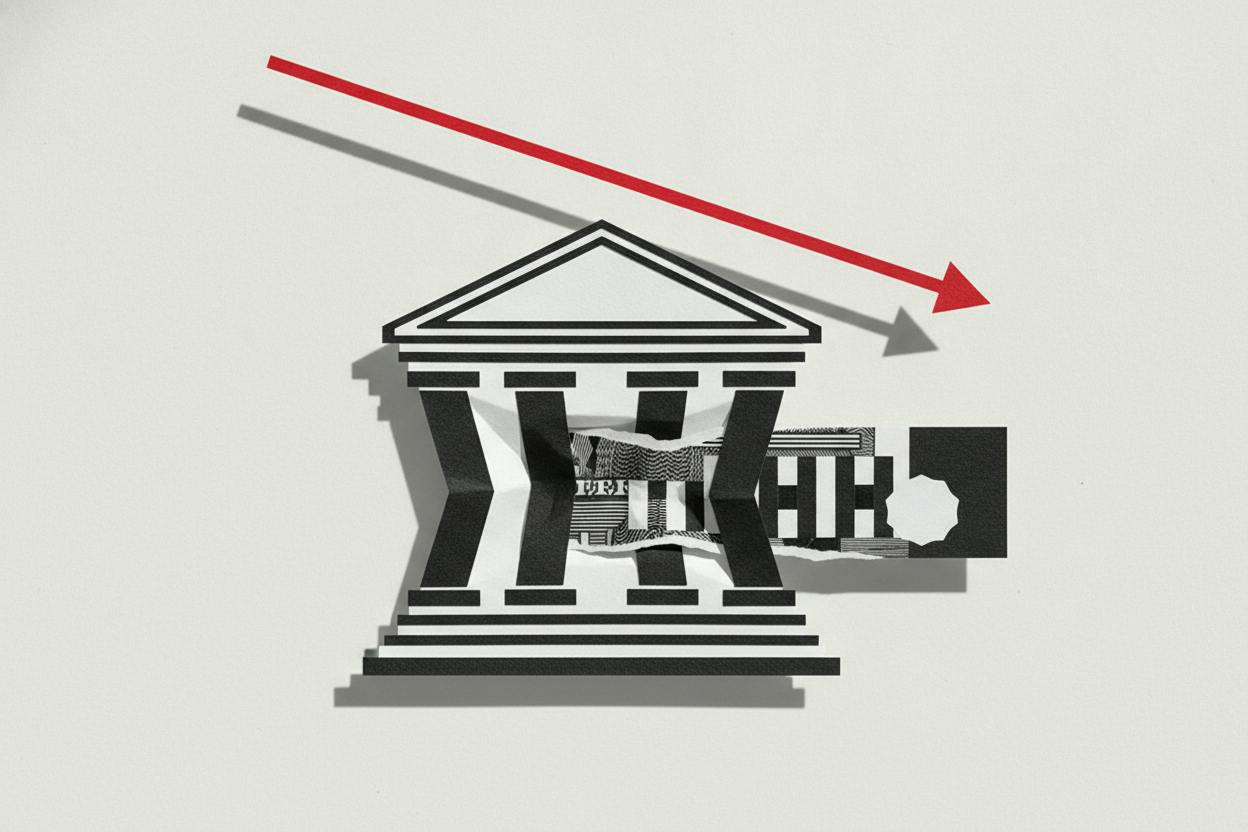
Financial stocks edged higher on Tuesday as Treasury yields eased, providing some relief to banks that have been wrestling with paper losses on their bond portfolios. The 10-year US Treasury yield fell to 5.03%, a notable move that helped lift shares of lenders and other financial firms.
The day's gains were also fueled by a handful of earnings beats. Nasdaq, the exchange operator, Blackstone, the private equity giant, and Eagle Bancorp, a regional lender, all saw their shares jump after reporting results that topped Wall Street's expectations.
Why Treasury yields matter for banks
The key driver of the day was the bond market. When Treasury yields fall, the prices of existing bonds rise. That's because newer bonds issued at lower yields are less attractive, making older bonds with higher coupon rates more valuable.
For banks, this is more than just a market curiosity. Many banks hold large portfolios of Treasuries and mortgage-backed securities as part of their day-to-day operations. When yields rise, the value of those holdings drops, creating unrealized losses on their balance sheets. When yields fall, those losses shrink.
These gains and losses are recorded in a line item called accumulated other comprehensive income, or AOCI. It's an accounting measure that investors watch closely because it can affect how strong a bank's capital position appears. A bank with large unrealized losses in AOCI may look less sturdy to regulators and investors, even if its core business is healthy.
So when the 10-year yield slipped to 5.03%, it was a welcome sign for banks that have been sitting on those paper losses. The move helped lift financial stocks across the board, even as the broader market remained cautious.
Earnings beats lift individual names
Beyond the macro picture, several companies gave investors reason to cheer with better-than-expected quarterly results.
Nasdaq, the stock exchange operator, reported earnings that beat analyst forecasts, sending its shares higher. The company has been diversifying beyond its core exchange business into areas like market data and anti-financial-crime software, which can provide steadier revenue streams.
Blackstone, one of the world's largest alternative asset managers, also topped expectations. The firm manages money across real estate, private equity, and credit, and its results are often seen as a bellwether for the broader private markets. A strong quarter suggests that investor appetite for alternative assets remains resilient, even in a higher-rate environment.
Eagle Bancorp, a regional bank based in Maryland, also jumped after its earnings came in ahead of estimates. Regional banks have been under particular scrutiny since last year's banking turmoil, so a solid report from one of them can help reassure investors about the health of the sector.
What it means for investors
For everyday investors, the connection between Treasury yields and bank stocks is worth understanding. When yields rise, banks can face headwinds from bond portfolio losses, even if their lending business is doing fine. When yields fall, the opposite can happen.
That dynamic is especially relevant right now, as the market has been volatile over concerns about interest rates, inflation, and the pace of economic growth. The 10-year yield has been hovering near multi-year highs, and any meaningful drop can provide a short-term boost to financial stocks.
But investors should be careful not to read too much into a single day's move. Yields can reverse quickly, and the broader trend still points to a higher-for-longer rate environment. Banks may continue to face pressure on their bond portfolios if yields stay elevated.
For those watching the market, the key is to keep an eye on the 10-year Treasury yield as a barometer for financial stocks. A sustained decline could ease some of the pressure on banks, while a renewed climb could reignite concerns.
In the meantime, the earnings beats from Nasdaq, Blackstone, and Eagle Bancorp show that individual company performance can still drive stock moves, even when the macro backdrop is uncertain. Investors would do well to focus on the fundamentals of the companies they own, rather than getting caught up in daily yield swings.
As always, past performance is not a guarantee of future results, and it's important to consider your own financial situation and risk tolerance before making any investment decisions.