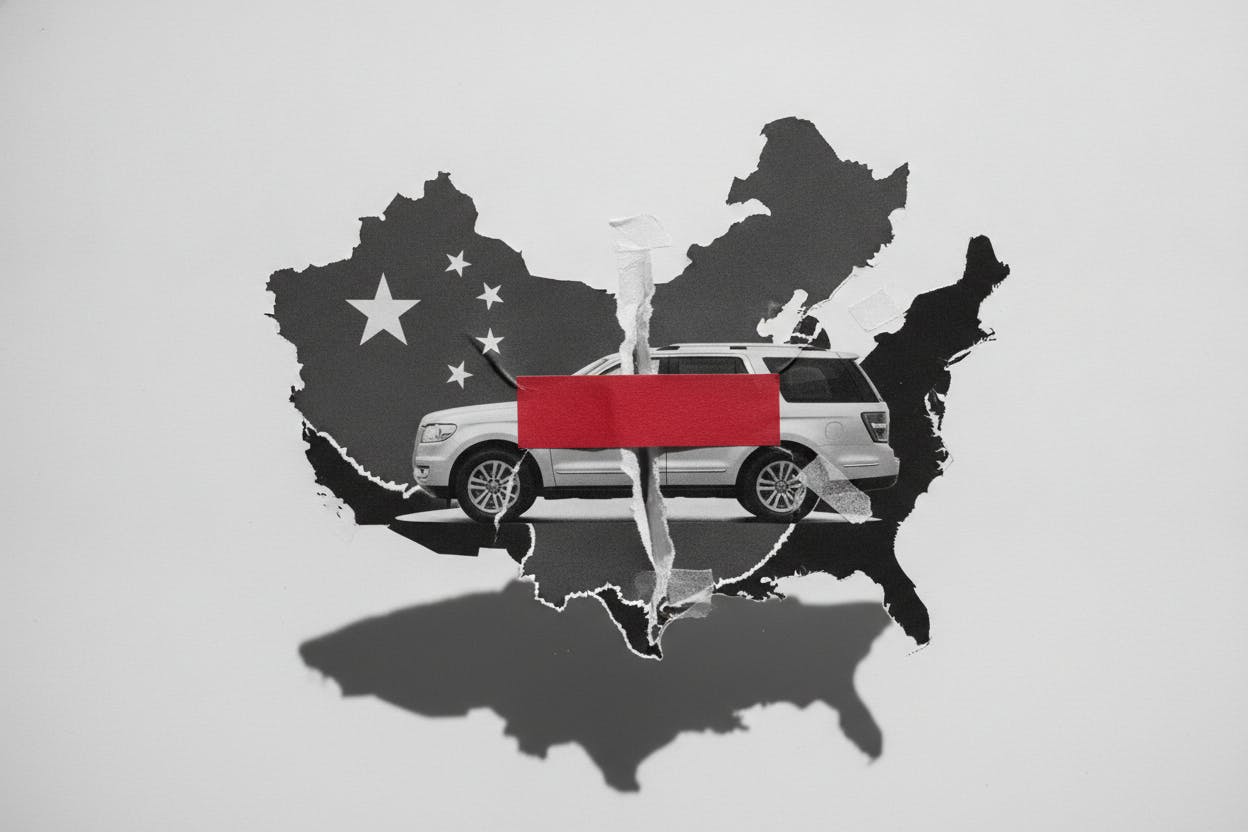
Ford Motor Company said it will begin building some Lincoln models in the United States starting in 2030, shifting production that currently happens in China. The decision, announced by CEO Jim Farley, comes as tariffs and new rules around connected vehicles have made importing those cars more expensive and complicated.
The company specifically pointed to a 52.5% US tariff on the China-built Lincoln Nautilus, a midsize SUV that is currently imported. That tariff, combined with upcoming federal restrictions on connected-vehicle technology, changed the financial math enough to justify moving assembly back to American soil.
Why tariffs and tech rules are driving the shift
The tariff on the Nautilus is part of a broader wave of US trade measures aimed at reducing reliance on Chinese-made goods, particularly in industries like autos and technology. For Ford, the 52.5% levy makes it significantly more expensive to import the Nautilus than to build it domestically, even after accounting for the higher labor and production costs in the US.
At the same time, new connected-vehicle rules from the US government are set to restrict certain Chinese-made hardware and software in cars sold in America. These rules are designed to address national security concerns about data collection and remote access. For automakers, they add another layer of complexity to building vehicles in China and shipping them to the US.
Ford's move is part of a larger trend. Many global automakers are rethinking their supply chains in response to trade tensions and regulatory shifts. Some are moving production closer to their biggest markets, while others are diversifying across countries. The auto industry, which has long relied on global supply chains, is now adapting to a more fragmented trade environment.
What this means for Ford and Lincoln
Lincoln is Ford's luxury brand, and the Nautilus is one of its key models. Moving production to the US could help Ford avoid the tariff hit and ensure the vehicle remains competitive on price. It also gives Lincoln a "built in America" story, which may appeal to some buyers.
However, the transition won't happen overnight. The 2030 timeline reflects the time needed to retool factories, secure supply chains, and meet regulatory requirements. In the meantime, Ford will continue to import the Nautilus from China, absorbing the tariff costs or passing them on to consumers.
For investors, the announcement signals that Ford is taking a proactive approach to managing trade risks. But it also highlights the cost pressures facing the auto industry. Moving production is expensive, and those costs could weigh on margins in the near term.
What it means for investors
For everyday investors, this news is a reminder that trade policy can have a direct impact on company profits and stock prices. Tariffs can raise costs, squeeze margins, and force companies to make expensive operational changes. Ford's decision to shift production is a strategic response, but it also shows how much uncertainty remains in the global trade environment.
Investors should watch how Ford manages the transition and whether it can maintain Lincoln's profitability. The company's ability to absorb tariff costs while investing in new production capacity will be key. Also worth watching is how other automakers respond to similar pressures. If more companies move production to the US, it could reshape the competitive landscape.
It's also a broader signal about the direction of US trade policy. Tariffs on Chinese goods are likely to remain a feature of the economic landscape, and companies that rely heavily on Chinese manufacturing may need to adapt. That could create both risks and opportunities for investors in sectors like autos, technology, and consumer goods.
For now, Ford's announcement is a clear example of how geopolitical and regulatory forces are influencing corporate decisions. It's not just about cars—it's about how companies navigate a world where trade barriers are rising and supply chains are being redrawn.
As the 2030 deadline approaches, expect more details on which US plants will build the Lincolns and how Ford plans to manage the transition. For investors, the key takeaway is that Ford is positioning itself to reduce its exposure to tariffs and regulatory risk, but the costs of that shift will be felt in the coming years.