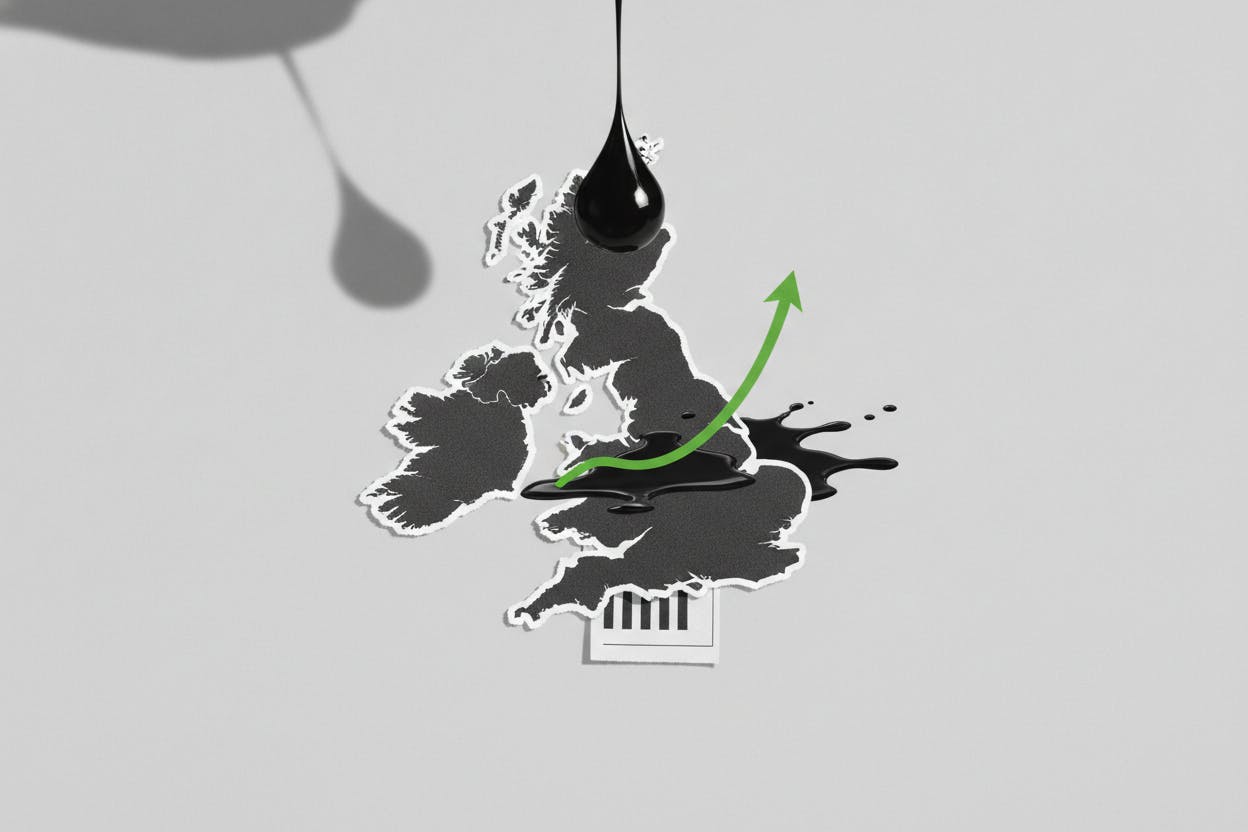
London's FTSE 100 index edged up 0.14% on Tuesday, a modest gain that masked two very different forces pulling at the market. On one hand, energy stocks surged after crude prices jumped on fresh tensions between the US and Iran around the Strait of Hormuz. On the other, new data showed UK wage growth cooling, which could have implications for interest rates.
Energy stocks lead the way
The biggest movers were the oil giants. BP climbed 2.96% and Shell rose 1.86%, as investors priced in the risk of supply disruptions from the Strait of Hormuz, a narrow waterway that carries about a fifth of the world's oil. The US-Iran tensions have raised fears that shipping could be disrupted, pushing crude prices higher.
This is a familiar pattern for markets: when geopolitical risk flares up in oil-producing regions, energy companies tend to benefit because higher oil prices mean higher revenues. But the same tensions can hurt other sectors, especially those that rely on cheap fuel or that face higher input costs.
For context, the Strait of Hormuz is a critical chokepoint. If it were to be closed or even threatened, oil prices could spike sharply, which would ripple through the global economy. That's why investors watch headlines from the region so closely.
Wage growth slows to 4.1%
On the domestic front, the Office for National Statistics reported that UK pay growth slowed to 4.1% year over year. That's a meaningful cooling from recent levels, and it matters because wages are a key driver of inflation. When pay rises quickly, consumers have more money to spend, which can push prices up. Slower wage growth suggests that inflationary pressure from the labour market may be easing.
For the Bank of England, this is a welcome sign. The central bank has been wrestling with how to bring inflation down to its 2% target without tipping the economy into recession. If wage growth continues to moderate, it gives policymakers more room to consider cutting interest rates, which would be a boost for borrowers and for the housing market.
However, it's not all clear sailing. The UK economy has been sluggish, and the Bank of England has to balance the risk of inflation staying too high against the risk of growth stalling. The cooling wage data is one piece of the puzzle, but not the whole picture.
What it means for investors
For everyday investors, the FTSE's modest rise on Tuesday is a reminder that markets are often driven by competing forces. Here, geopolitics and domestic economic data were pulling in opposite directions. The energy sector's gains helped lift the index, but the broader market was held back by uncertainty.
If you hold a diversified portfolio, you're likely to have exposure to both energy stocks and UK-focused companies. The energy gains could offset any weakness elsewhere. But it's worth remembering that oil prices are volatile, and geopolitical tensions can fade quickly, taking energy stocks down with them.
The wage data, meanwhile, could be a positive for UK-focused stocks, especially those in consumer and retail sectors. If the Bank of England cuts rates later this year, borrowing costs would fall, which could stimulate spending and investment. That would be a tailwind for the domestic economy.
But don't expect a dramatic shift overnight. The Bank of England has been cautious, and it will want to see more evidence that inflation is under control before making any moves. The next few months of wage and inflation data will be crucial.
Broader market context
The FTSE's performance on Tuesday was also part of a wider global picture. Oil prices have been climbing, and that has had knock-on effects across markets. In the US, long-term Treasury yields have hit levels not seen in years, partly because investors worry that higher oil prices could stoke inflation. That's a concern for growth stocks, which are more sensitive to interest rates.
In Asia, South Korean stocks slipped on the same US-Iran tensions, showing how geopolitical risk can ripple across the globe. Meanwhile, tech stocks in the US have been under pressure as oil climbs and yields rise.
For UK investors, the FTSE 100's composition is a double-edged sword. It's heavy on energy and mining companies, which benefit from higher commodity prices, but it also has a large share of international earners, whose profits can be hit by a stronger pound. The interplay of these factors will continue to drive the index in the coming weeks.
Looking ahead
Investors will be watching several things in the near term. First, any further developments in the US-Iran situation, especially around the Strait of Hormuz. Second, the Bank of England's next policy meeting, where the wage data will be a key input. Third, corporate earnings, which will give clues about how companies are coping with the current environment.
For now, the FTSE's modest gain is a sign of resilience, but it's not a clear signal of direction. Markets are likely to remain choppy as investors weigh geopolitical risks against the prospect of easier monetary policy.
As always, the best approach for most investors is to stay diversified and focus on the long term. Short-term market moves, whether driven by oil spikes or wage data, are hard to predict and even harder to act on. A well-balanced portfolio is designed to weather these ups and downs.