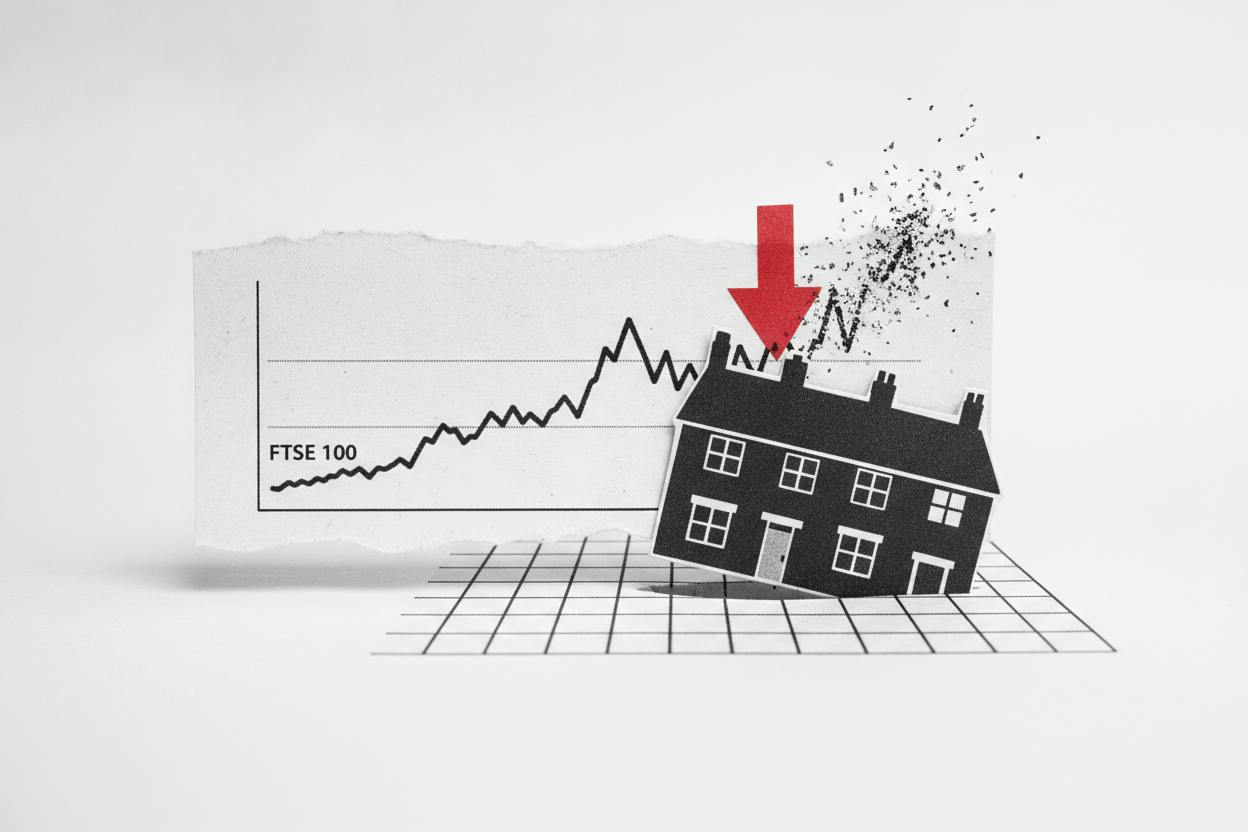
The FTSE 100 slipped again on Friday, extending its recent decline as a global selloff in stocks spread and the excitement around artificial intelligence-linked trades continued to cool. The blue-chip index, which tracks the UK's largest listed companies, has been caught up in a broader risk-off mood that has hit technology and growth stocks particularly hard.
AI fever fades
For much of the past year, AI-related stocks have been the engine of market gains, with investors piling into companies seen as winners from the AI boom. But that enthusiasm has shown signs of fraying in recent sessions. When sentiment turns, the same stocks that led the rally can fall quickly as investors take profits or reassess valuations.
The pullback is not confined to the UK. Markets in the US and Asia have also felt the chill, with tech-heavy indices under pressure. This global nature of the selloff means the FTSE 100, despite its heavy weighting in banks, energy and consumer goods, cannot escape the broader mood.
UK housing market under strain
Adding to the sombre tone, fresh data from Lloyds, one of the UK's biggest mortgage lenders, showed that house prices fell 0.6% in October 2026, following a 0.1% dip in September. That took the annual decline to 1.2% – the biggest drop since October 2023.
Andrew Asaam, director of mortgages at Lloyds, said that sticky inflation pressures and elevated interest rates are squeezing household budgets, which can make buyers more cautious and keep demand soft. He also noted that prices haven't moved much over the past couple of years as the market gradually adjusted to higher rates, so one month's slide doesn't tell the whole story.
Still, the data is a reminder that higher borrowing costs are still filtering through. They can cool risk appetite in financial markets, and more slowly, they reset what people can afford to pay for homes.
What it means for investors
For everyday investors, the combination of a cooling AI trade and a softening housing market points to an environment where caution is warranted. The AI selloff is a reminder that even the most popular trends can reverse quickly, and diversification remains key.
For homeowners, the house price decline has a more direct impact. A 1.2% annual drop in home values can make your next remortgage pricier. Lenders typically price mortgages in bands based on your loan-to-value (LTV) ratio – the size of your mortgage compared with what your home is worth. The lowest rates usually go to borrowers with more equity.
If prices slip, recent buyers can find themselves in a higher LTV band even if their income and on-time payments haven't changed. That means fewer of the best deals and potentially higher monthly payments when their fixed-rate term ends. The risk is greatest for households that bought in the past couple of years with smaller down payments, because they've had less time to pay down the loan and build an equity cushion.
For those watching the broader economy, the housing data adds to a picture of an economy still adjusting to higher interest rates. While inflation has eased from its peaks, it remains above central bank targets in many countries, and rate cuts have been slower than markets once hoped. As US hiring beat forecasts in October, the prospect of a December rate hike by the Federal Reserve has revived, which could keep global borrowing costs higher for longer.
That backdrop is also weighing on other markets. Copper prices are heading for their worst week since March as the tech selloff cools demand hopes, and cocoa prices are bouncing but face a cloudy outlook due to weak demand and high stocks. These moves show how a shift in investor sentiment can ripple across asset classes.
For now, the key question is whether the AI selloff is a temporary blip or the start of a deeper correction. If the market's favourite trade continues to unwind, the FTSE 100 and other indices could face further pressure. But for long-term investors, short-term volatility is often just noise. The fundamentals of the companies you own matter more than the daily swings.
In the meantime, keep an eye on housing data and central bank signals. They will give clues about the path of interest rates and the health of the consumer – both of which are crucial for the economy and for your investments.