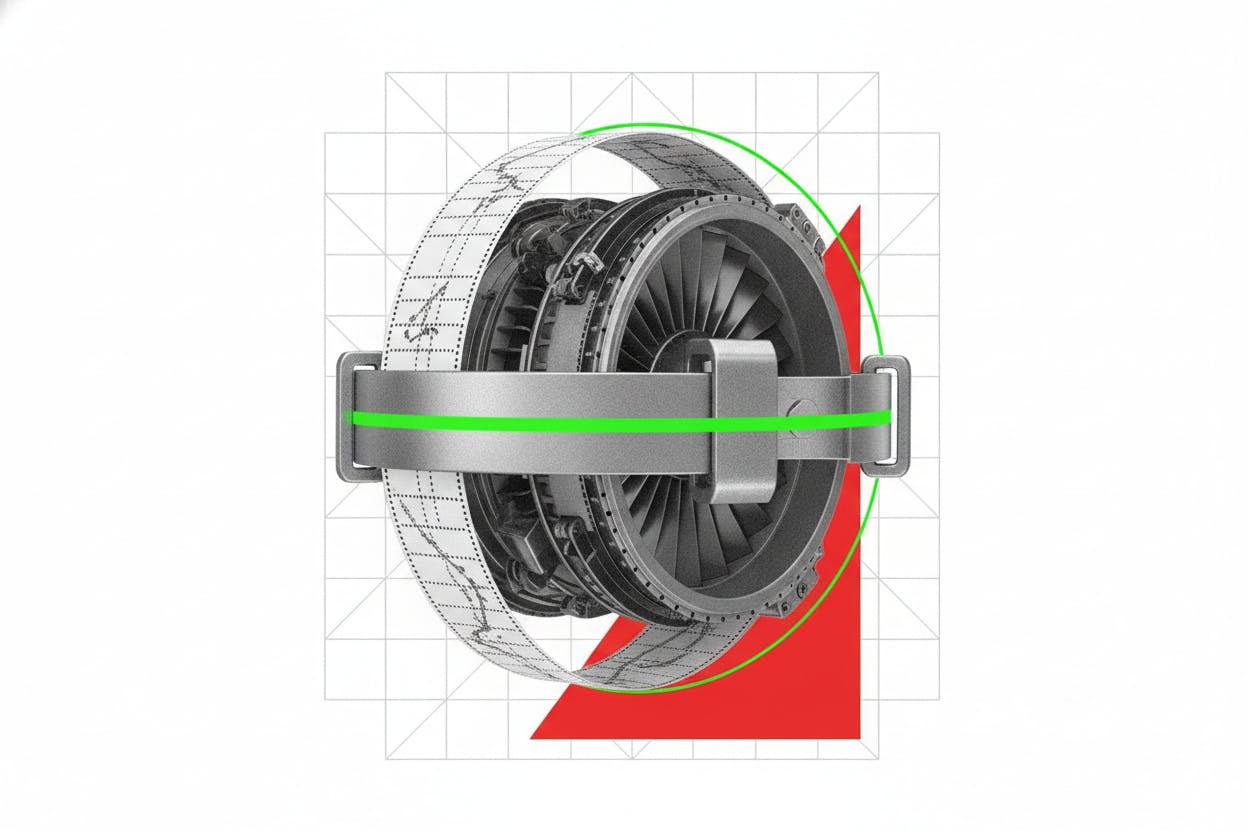
GE Aerospace has lifted its 2026 adjusted profit forecast, signaling that airlines are expected to keep spending on engine parts and maintenance even as higher jet fuel costs squeeze their budgets. The company now expects adjusted earnings of $7.65 to $7.85 per share, up from its previous outlook.
Why Engine Services Are Holding Up
The aerospace giant's revised forecast reflects a key dynamic in the aviation industry: airlines may cut back on flying when fuel costs rise, but they cannot defer essential engine maintenance. Parts and repair services generate steady, recurring revenue for GE Aerospace, which is one of the world's largest suppliers of jet engines for commercial and military aircraft.
Higher jet fuel costs have been a headwind for airlines, but the demand for air travel remains strong enough that carriers are keeping their fleets in the air. That means engines need regular inspections, replacement parts, and overhauls—work that GE Aerospace provides through its services network.
This trend is not unique to GE. Other aerospace companies have also reported resilient aftermarket demand, as airlines prioritize maintaining existing planes amid delays in new aircraft deliveries from Boeing and Airbus.
What the New Forecast Means
GE Aerospace's updated 2026 profit view suggests management is confident that the services business will remain a reliable growth driver. The company's engines power many of the world's most popular narrow-body jets, including the Boeing 737 and Airbus A320 families, which account for a large share of global air travel.
Adjusted profit, or earnings per share excluding one-time items, is a closely watched metric for investors because it strips out non-recurring charges and gives a clearer picture of ongoing operations. The new range of $7.65 to $7.85 per share represents an increase from the company's earlier guidance, though GE Aerospace did not specify the exact prior figure in its announcement.
The forecast also comes as the broader industrial sector faces mixed signals. While some companies have warned of slowing demand, GE Aerospace's outlook stands out as a positive data point for the aerospace supply chain.
What It Means for Investors
For everyday investors, GE Aerospace's raised forecast is a reminder that not all parts of the economy move in lockstep. Even when input costs like jet fuel rise, companies with essential service businesses can maintain—or even increase—their earnings.
Investors should watch for upcoming earnings reports from other aerospace suppliers and airlines to see if the trend holds. If carriers start cutting flight schedules more aggressively, that could eventually reduce engine usage and, in turn, parts demand. But for now, GE Aerospace is betting that the need to keep planes flying safely will sustain its services revenue.
The company's stock often trades on the strength of its services backlog, which provides visibility into future revenue. A higher profit forecast can boost investor confidence and support the share price, though broader market conditions and interest rate expectations also play a role.
In a market where many companies are cautious about the future, GE Aerospace's upbeat outlook offers a contrast. It suggests that the aviation industry's post-pandemic recovery still has momentum, even as cost pressures mount.
For context, other companies have also recently updated their profit views. For example, UnitedHealth lifted its 2026 profit view after a strong second quarter, while TotalEnergies warned of lower LNG earnings despite higher oil-related profits. Each story highlights how different sectors are navigating the current economic environment.
Looking Ahead
GE Aerospace's next major catalyst will be its full-year 2025 earnings report, due early next year, where investors will get more detail on engine deliveries, services margins, and cash flow. The company is also expected to provide updates on its transition following the spin-off of GE Vernova, its energy business.
For now, the raised forecast reinforces the view that aerospace aftermarket services remain a bright spot in the industrial landscape. Whether that holds through 2026 will depend on how airlines balance fuel costs, travel demand, and fleet maintenance schedules.