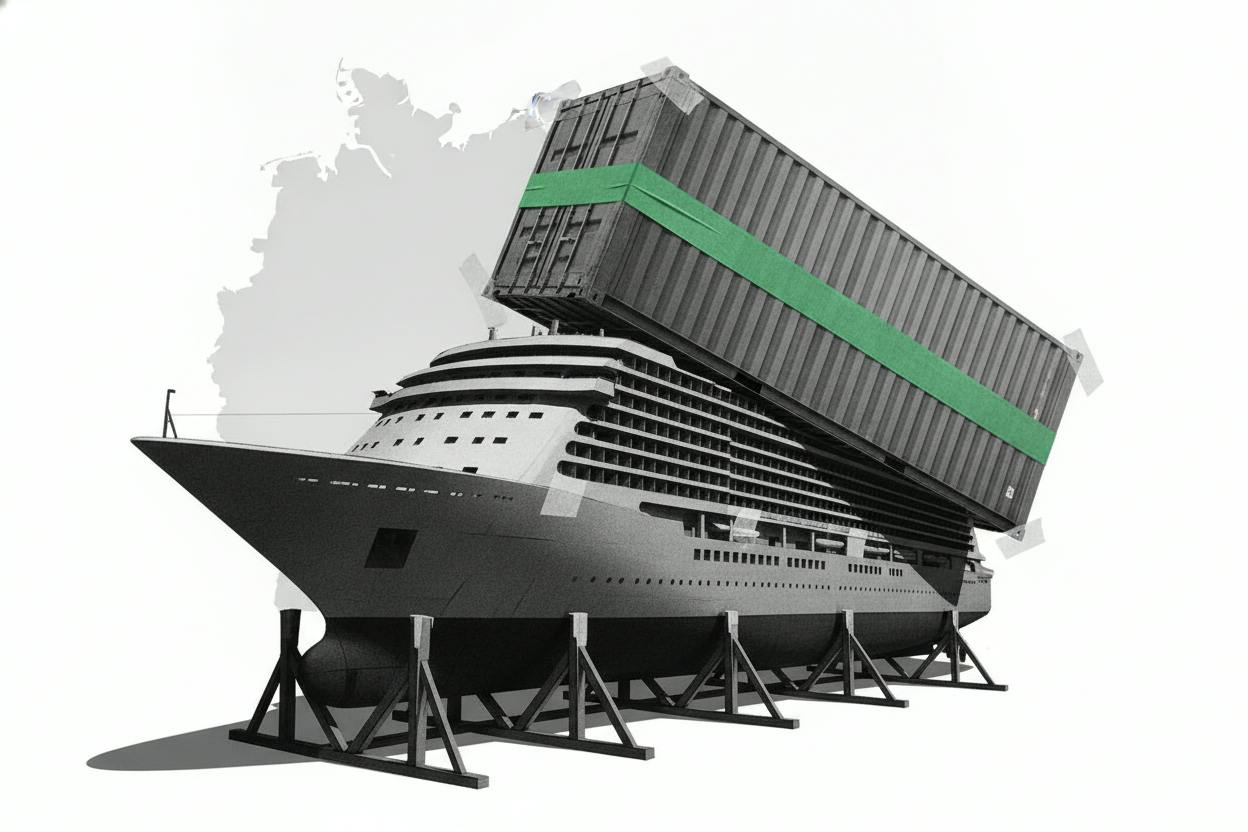
Germany’s government is close to a deal that would sell most of cruise-ship builder Meyer Werft to MSC Mediterranean Shipping Company, according to a report from Der Spiegel. The report says the Geneva-based shipping giant could end up with about 80% of the company, a move that would effectively put one of Europe’s most storied shipyards under foreign control.
Meyer Werft, based in the northern German town of Papenburg, is one of the world’s leading builders of cruise ships. It has been struggling with high costs, supply-chain disruptions, and a sharp drop in orders during the pandemic. The German government has already stepped in with loan guarantees and a temporary stake to keep the company afloat, but a full sale would mark a more permanent solution.
Why is Germany selling?
The German state has been reluctant to take on long-term ownership of industrial firms, preferring to support them through guarantees or temporary stakes. But Meyer Werft’s financial troubles have forced Berlin to act. The company is a major employer in the region and a key part of Germany’s shipbuilding industry, which also builds naval vessels and specialized ships.
By selling a majority stake to MSC, the government would reduce its own exposure while ensuring the yard stays open and workers keep their jobs. For MSC, the deal would turn it from a customer—it already orders ships from Meyer Werft—into a part-owner, giving it more control over its supply chain and future vessel designs.
This is part of a broader European pattern. Governments across the continent have become more willing to intervene when strategically important companies face collapse, whether through direct stakes, loans, or brokered sales. The pandemic and the energy crisis exposed how fragile supply chains can be, and policymakers are now more comfortable with state involvement in critical industries.
What does this mean for investors?
For everyday investors, the deal is a reminder that government policy can have a big impact on company valuations and market dynamics. When a state steps in to rescue a firm, it can support jobs and output, but it also often comes with strings attached—like restructuring demands or limits on dividends.
For MSC, which is privately held, the acquisition would be a major strategic move. It would give the company direct access to shipbuilding capacity, which could help it lock in lower costs and faster delivery times for new vessels. That could be a competitive advantage in the shipping industry, where freight rates and vessel availability are constantly shifting.
Investors in other shipping or cruise-related stocks might watch the deal closely. If MSC gains more control over its fleet, it could pressure rivals that rely on third-party shipyards. On the other hand, a successful rescue of Meyer Werft could ease concerns about the health of European shipbuilding, which has been squeezed by competition from Asian yards.
What to watch next
The deal is not final yet. Spiegel’s report is based on unnamed sources, and negotiations could still fall apart. Key details—like the exact price, the size of the stake, and any conditions attached—have not been disclosed.
Investors will also be watching fresh economic data from Switzerland, including GDP figures and sight deposit data from the Swiss National Bank. That data can influence expectations for the Swiss franc and the SNB’s monetary policy, which in turn affects global currency markets.
For now, the Meyer Werft story is a clear sign that governments are willing to use their financial muscle to keep strategic industries alive. Whether that’s good for taxpayers or for long-term competitiveness is a debate that will continue, but for investors, it’s a reminder that politics and markets are deeply intertwined.