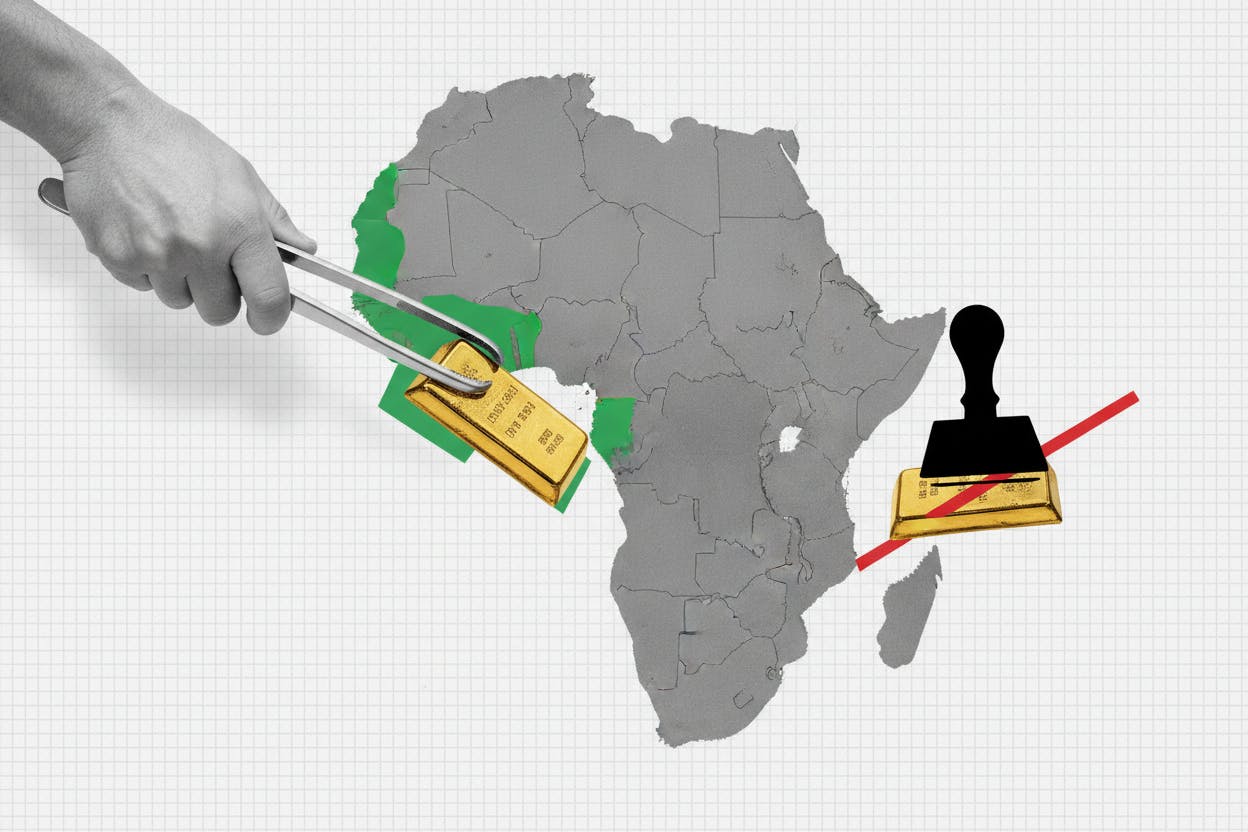
Two developments in African gold markets this week highlight the metal's growing role in economic strategy and the political risks that can disrupt trade. Ghana announced it will begin purchasing 30% of major miners' gold output from July 1st, while the US Treasury sanctioned Rwanda's Gasabo Gold Refinery over allegations it is part of a network smuggling minerals from the Democratic Republic of Congo (DRC).
Ghana's Gold Purchase Plan
Ghana, Africa's largest gold producer after South Africa, said the new policy is designed to build foreign-currency reserves and support local processing. By routing more gold through the state rather than straight into export markets, the government aims to increase the amount of bullion held by the central bank and encourage domestic refining. The move comes as Ghana continues to grapple with debt restructuring and a need to shore up its dollar reserves, a challenge also seen in other African economies like Uganda, as noted in a recent report on Africa's FX markets.
For mining companies operating in Ghana, the policy means a portion of their output will now be sold to the state at prevailing market prices. While the government has not detailed the exact mechanism, similar programs in other countries have involved the central bank purchasing gold directly from producers. The plan is expected to take effect from July 1st, giving miners time to adjust their sales strategies.
US Sanctions on Gasabo Gold Refinery
Separately, the US Treasury's Office of Foreign Assets Control (OFAC) designated Rwanda's Gasabo Gold Refinery, accusing it of being part of a network that moves minerals from conflict-affected areas of the DRC into Rwanda. The sanctions freeze any US-based assets of the refinery and generally prohibit US persons from doing business with it.
The DRC has long struggled with illegal mining and smuggling of gold, tin, tantalum, and tungsten, often funding armed groups. Rwanda has denied involvement in such trade, but the US action signals increased scrutiny of supply chains in the Great Lakes region. The sanctions also raise the compliance burden for traders, banks, and logistics firms involved in regional gold flows.
What It Means for Investors
For investors, the two stories share a common theme: control and scrutiny. When a key export is also a source of dollars, governments try to manage it, and outsiders increasingly screen where it came from and who handled it.
Impact on gold traders and financiers: A US sanctions designation rarely stops at the named company. Banks that clear payments, insurers that cover shipments, and shippers that transport bullion often step back to avoid exposure, even to deals that look legal on paper. That "de-risking" shows up in the dollar payment and trade-finance system: more paperwork, longer settlement times, and fewer institutions willing to intermediate a transaction if the provenance looks connected to Rwanda or the DRC. When fewer gatekeepers will touch a flow, costs rise and buyers typically demand bigger price discounts — which can squeeze hard-currency access for firms that rely on those routes.
Broader market context: Gold prices have remained elevated in 2025, driven by central bank buying, geopolitical uncertainty, and expectations of lower interest rates. The moves in Africa come as other markets also see gold-related activity, such as Core Lithium spinning out its gold assets into a separate entity. For everyday investors, the key takeaway is that gold's role as a safe-haven asset is being complicated by supply-chain politics. While gold itself is a global commodity, the ability to move it across borders efficiently depends on a network of banks, refiners, and logistics providers that are increasingly subject to regulatory scrutiny.
What to watch next: Investors should monitor whether other countries follow Ghana's lead in directing gold sales to central banks, and whether the US expands sanctions to other entities in the region. The compliance burden for gold traders is likely to increase, potentially affecting the premiums or discounts at which African gold trades relative to benchmark prices. For those with exposure to gold mining stocks or exchange-traded funds (ETFs), the developments underscore the importance of understanding where and how gold is sourced.
In summary, Ghana's gold purchase plan and the US sanctions on Gasabo Gold Refinery both point to a world where gold is not just a commodity but a tool of economic policy and a target of geopolitical enforcement. For investors, that means paying closer attention to the supply chain behind the metal.