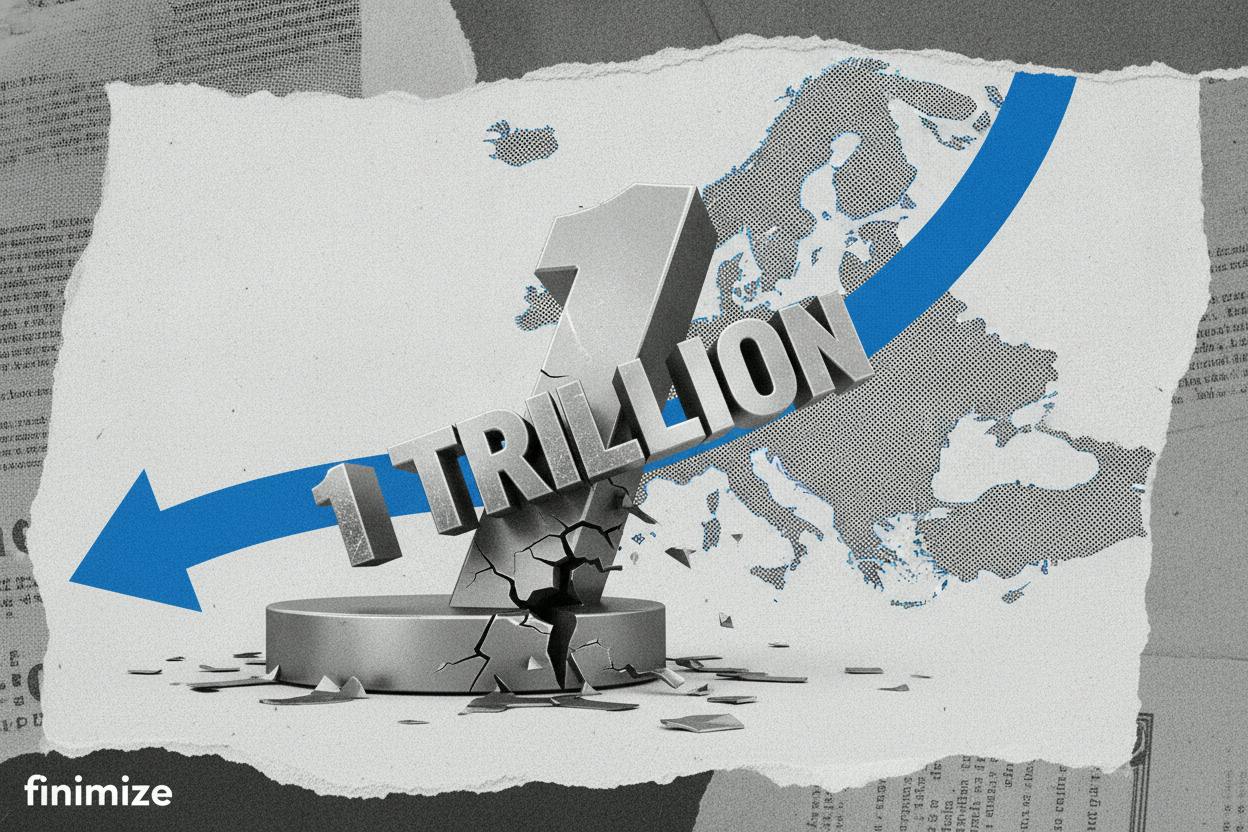
Global mergers and acquisitions activity slowed sharply in the third quarter, with total deal value falling 41% from the prior quarter to $993 billion, according to data from LSEG. It marks the first time quarterly M&A volume has dropped below the $1 trillion mark since the second quarter of 2025, a sign that the dealmaking boom that defined much of the past year has hit a softer patch.
The pullback wasn't for lack of ambition. Companies are still pursuing transformative transactions, but the math behind those deals has gotten harder. Higher interest rates raise the cost of borrowing, and they also push up the returns investors demand from any acquisition. That combination tends to lower what buyers are willing to pay, making it tougher to bridge the gap between what sellers want and what acquirers can justify.
Fewer megadeals, but some big names still in play
The clearest evidence of that tension showed up in the megadeal tally. Only 10 transactions valued above $10 billion were announced in the quarter, the fewest since the fourth quarter of 2024. That's a meaningful drop for a market that has relied on large, headline-grabbing tie-ups to drive overall volumes.
Even so, some substantial bids did emerge. Banca Monte dei Paschi's $32 billion offer for Banco BPM and Gold Fields' $25.7 billion bid for Northern Star Resources were among the quarter's largest proposed deals, showing that strategic buyers are still willing to commit serious capital when the fit is right.
Zoom out, and the picture looks less gloomy. Total M&A value for 2026 is up 28% to $3.9 trillion, even as the number of individual deals has fallen 8%. That gap tells an important story: companies are doing fewer transactions, but the ones they are doing are larger. This "fewer but bigger" dynamic has been a hallmark of the current cycle, where scale and strategic necessity often outweigh the impulse to do lots of small bolt-on acquisitions.
Tech and Asia Pacific are reshaping the map
Technology has been a major driver of that shift. Stake purchases in technology firms account for roughly 24% of deal activity so far this year, reflecting the intense competition for AI capabilities, cloud infrastructure, and semiconductor expertise. Rather than outright acquisitions, many companies are taking significant minority positions in tech firms, a structure that lets them gain exposure and influence without fully integrating a target.
The regional mix is also changing. Asia Pacific deal value rose to $242 billion, while the US and Europe cooled in the third quarter. That divergence matters because it suggests the slowdown is not uniform. Different regions are responding to different local conditions, from currency moves to regulatory environments to the availability of financing.
Cross-border M&A, meanwhile, is up 32%, helped by a strong dollar that is pulling more US buyers into Europe. A rising dollar doesn't just move currency charts; it changes what American acquirers can pay overseas. When the dollar strengthens, a euro- or pound-priced target translates into fewer dollars, making foreign assets look cheaper even if the local share price hasn't budged. That can keep outbound dealmaking going even when higher yields make big, debt-heavy domestic deals harder to justify.
What it means for investors
For everyday investors, the M&A slowdown is worth watching for a few reasons. First, merger activity is often a signal of corporate confidence. When deal volumes fall, it can indicate that executives are more cautious about the economic outlook or about their own borrowing costs. That doesn't necessarily mean a recession is coming, but it is a data point worth noting alongside earnings and guidance.
Second, the strong dollar's role in cross-border deals has implications for currency-sensitive portfolios. If more US companies shop in Europe, it can put a firmer valuation floor under likely targets compared with purely domestic peers. That makes the EUR/USD exchange rate a more deal-sensitive variable, because currency swings can change headline purchase prices and takeover premiums. Investors holding European equities with takeover appeal may find that currency moves amplify or dampen returns.
Third, the continued strength of tech stake purchases suggests that the appetite for AI and digital infrastructure remains robust. Companies are finding creative ways to deploy capital in this space, and that trend could support valuations in certain tech segments even as broader dealmaking cools.
Finally, the "fewer but larger" pattern means that when big deals do get announced, they can move markets more sharply. A single megadeal can lift an entire sector's shares or reshape competitive dynamics. Investors should be prepared for volatility around deal announcements, especially in sectors like banking, mining, and technology where consolidation pressures are building.
Looking ahead, the key question is whether the third-quarter dip is a temporary pause or the start of a longer slowdown. Much will depend on the path of interest rates, the strength of the dollar, and whether corporate boards remain confident enough to pursue large-scale transactions. For now, the data suggests a market that is still active but increasingly selective, rewarding investors who pay attention to the details behind the headlines.