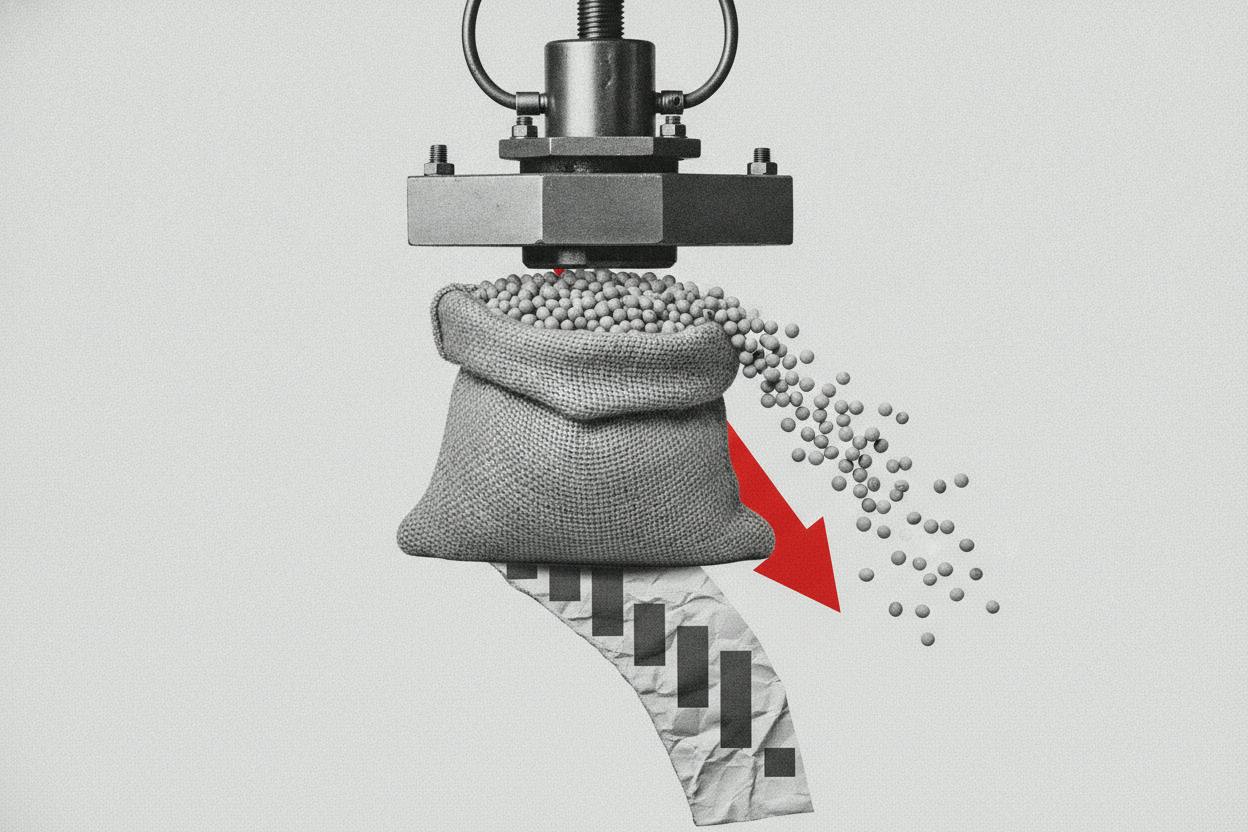
Soybean futures closed lower on Monday after the US Department of Agriculture reported that domestic processors crushed fewer beans than traders had expected in August, a fresh signal that near-term demand may be softening just as a large US harvest begins to arrive.
The most-active Chicago Board of Trade soybean contract settled at $12.84 a bushel, after briefly dipping to $12.73-3/4 during the session. The USDA said processors crushed 209.6 million bushels last month, below the average trade estimate. The report landed as traders were already focused on rising supply from what is expected to be a record-large US crop, and some market participants pointed to funds trimming positions as the pressure built.
What the crush number actually measures
"Crush" is the industry's shorthand for turning soybeans into meal for animal feed and oil for food and fuels. It is one of the most closely watched demand gauges in the soybean market because it reflects how many physical beans processors actually need to run their plants. When the crush comes in below expectations, it suggests processors are running a bit slower than the trade had assumed, which can mean they need fewer beans in the near term.
That matters most when fresh harvest deliveries are arriving. If crushers are not competing hard for prompt supplies, cash bids can soften, and the futures curve can shift toward what traders call "carry." In a carry market, later-month contracts hold up better than nearby ones because the market is more willing to pay for storage and delivery later rather than bid aggressively for beans today.
The nearby-versus-deferred spread is where traders often read whether the market feels tight right now or comfortable enough to store beans. A crush miss, on top of a big crop, tilts that read toward comfort.
Why the harvest backdrop amplifies the miss
Context matters here. The US is the world's largest soybean producer, and the crop is harvested in the autumn, with supplies building through the fall. When a large crop is expected, the market's attention shifts from how tight old-crop supplies are to how quickly new-crop bushels will need to be absorbed. Any sign that demand is not keeping pace can weigh on front-month pricing.
The August crush report is backward-looking, covering a month before the bulk of the harvest. But traders treat it as a check on the market's balancing mechanism. If processors are running slower than expected, they typically do not have to compete as hard for prompt soybeans, which can weaken nearby futures relative to deferred months. That is the dynamic that played out in Monday's session.
It is worth noting that the report matters less as a one-day price driver and more as a gauge of underlying demand. A single month's crush figure can be noisy, and longer-term demand from export buyers and domestic processors has not changed much based on this data point alone. Still, with a record crop expected, additional signs of slower pull-through from crushers can leave front-month pricing more vulnerable into harvest.
What it means for investors
For everyday investors, the soybean market is a useful window into a few broader themes. First, agricultural commodities are sensitive to supply and demand in ways that can move quickly. A record crop is generally bearish for prices because it means more bushels available, while strong demand is bullish. When the two forces collide, the market's daily moves often reflect which side is winning in the near term.
Second, the crush report is a reminder that commodity markets are driven by physical flows, not just financial sentiment. Processors, exporters and farmers all interact with the futures market to manage risk, and their behavior shows up in spreads and cash bids. Investors who hold agricultural commodities through futures-based exchange-traded funds or who own shares in food and agribusiness companies can see knock-on effects from these dynamics.
Third, the broader backdrop matters. A large US harvest can pressure prices not just for soybeans but for related crops like corn, which competes for acreage and storage. Investors watching the agricultural complex may want to keep an eye on how the harvest progresses and whether demand from export markets, particularly China, picks up. For now, the market is signaling that near-term supplies look comfortable, even if the longer-term picture remains uncertain.
Monday's close at $12.84 a bushel reflects that balance. The session's dip toward $12.73-3/4 showed where buyers stepped in, but the inability to hold higher levels suggests the market is not yet worried about a shortage. Traders will likely watch the next USDA reports and harvest updates for confirmation of whether the crush slowdown is a one-month blip or the start of a softer demand trend.