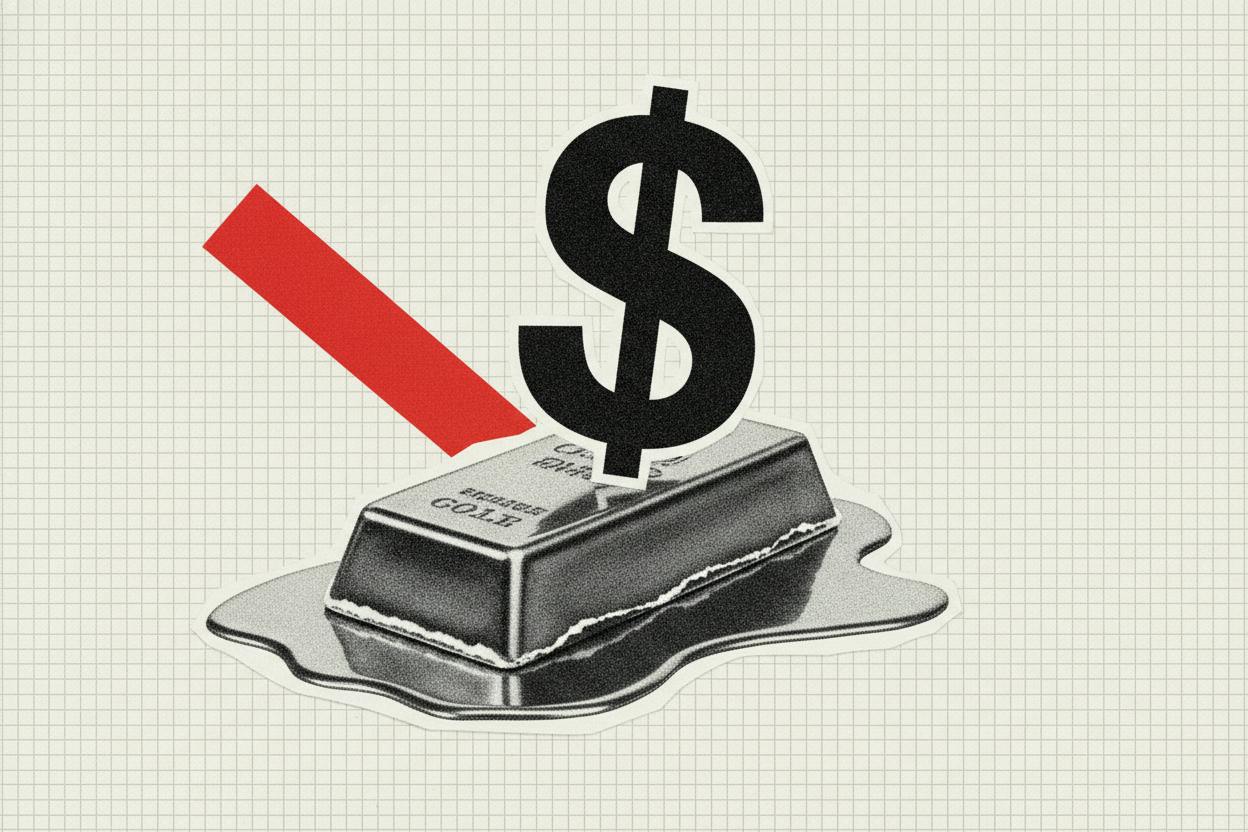
Gold prices tumbled more than 1% on Thursday, hitting their lowest level in 14 months, as a firmer US dollar and growing conviction that the Federal Reserve will raise interest rates again in December weighed on the precious metal. The slide underscores the delicate balance gold investors face when central banks tighten monetary policy.
Why gold is falling
Gold is often seen as a hedge against inflation and economic uncertainty, but it pays no interest. That makes it less attractive when rates are rising, because investors can earn a yield from cash or short-term government bonds instead. As expectations for a December rate hike have strengthened, those interest-bearing assets have become more appealing, drawing money away from bullion.
A stronger US dollar adds another layer of pressure. Since gold is priced in dollars, a firmer greenback makes the metal more expensive for buyers using other currencies, which can dampen global demand. This week, traders interpreted recent comments from Fed officials as signaling another quarter-point increase, and futures markets were pricing in a high probability of such a move. That kept the pressure on gold throughout the session.
Market plumbing: margin calls and forced selling
But not all of Thursday's decline was about rate expectations. Some of the selling appeared to be driven by market mechanics rather than a shift in investor sentiment. Jim Wyckoff of American Gold Exchange noted that stock market selling may have triggered margin calls, forcing some leveraged traders to sell liquid assets like gold and other metals to raise cash quickly.
Margin calls occur when an investor's account falls below the required minimum, prompting a demand to deposit more funds or sell positions. In a sharp equity pullback, those calls can cascade, and traders often sell whatever is easiest to unload. Gold is among the most liquid markets in the world, making it a prime candidate for such forced selling.
This dynamic means gold can sometimes fall in tandem with stocks during periods of stress, even though many investors expect bullion to act as a cushion in their portfolios. The result is that day-to-day diversification can look weaker exactly when markets are most volatile, and cross-asset moves can become unusually synchronized.
What it means for investors
For everyday investors, the recent slide in gold is a reminder that no asset is a perfect hedge. While gold has historically held up well during prolonged downturns, short-term sell-offs can be amplified by forced selling and dollar moves. Investors who hold gold as part of a diversified portfolio should be prepared for periods of volatility, especially when the Fed is tightening.
The broader picture also matters. A stronger dollar has ripple effects across global markets, as seen in recent pressure on emerging-market currencies. For instance, the dollar squeeze has kept several African currencies under pressure, and similar dynamics are playing out elsewhere. The dollar's strength is also a factor in other commodity markets, as a firmer greenback tends to weigh on prices of oil, copper, and other raw materials.
For Canadian investors, the decline in gold has already had an impact on the broader market. The TSX fell to a five-month low as gold miners tumbled, highlighting how interconnected commodity prices and equity markets can be. Similarly, oil, copper, and gold all slid together, a sign that a broad risk-off mood can hit multiple asset classes at once.
Looking ahead
Investors will be watching for any further signals from the Fed about the pace of rate hikes. If the central bank follows through with a December increase, gold could face additional headwinds. However, some analysts note that much of the bad news may already be priced in, and gold could find support if economic data weakens or if geopolitical tensions flare.
For now, the metal's slide to a 14-month low serves as a reminder that even traditional safe havens can be vulnerable when the dollar strengthens and rate expectations rise. As always, a well-diversified portfolio—one that doesn't rely too heavily on any single asset—remains the best defense against market turbulence.