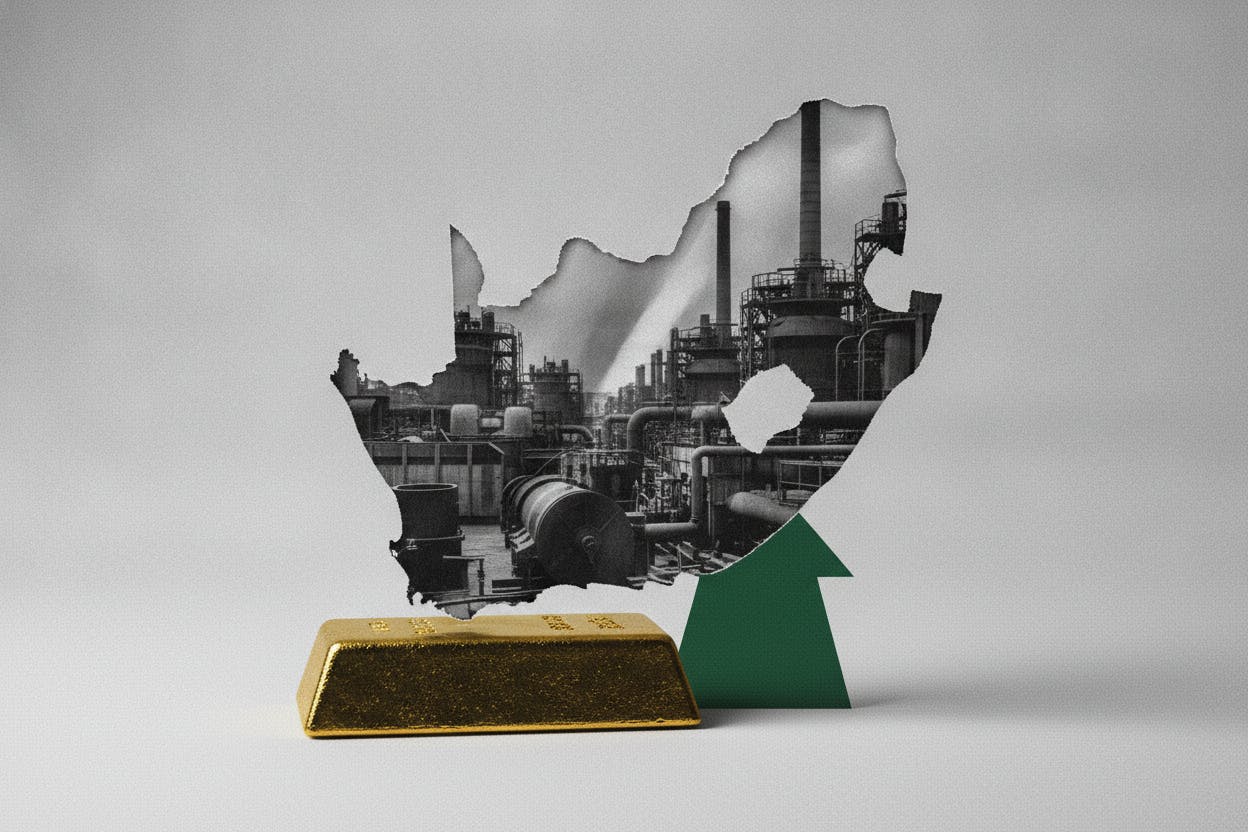
South Africa's rand strengthened on Tuesday, defying a sharp contraction in factory output as a rally in gold prices provided support. The currency firmed to 16.32 per dollar, even as data showed manufacturing output fell 4.3% in May compared with the same month last year. The JSE Top-40 index ended the day up 1.1%, helped by mining stocks that benefit when dollar-priced metals rise.
Manufacturing weakness deepens
May's manufacturing decline follows a 2.9% drop in April, pointing to ongoing cost pressures and competitiveness challenges in the sector. Factory output is a key component of South Africa's economy, and back-to-back contractions raise concerns about broader growth momentum. The data adds to a picture of an economy struggling with high input costs, logistics bottlenecks, and subdued domestic demand.
Yet the rand's reaction shows that currency markets are often more focused on global commodity prices than local production numbers. South Africa is a major exporter of gold, platinum, and other minerals, and the rand frequently trades like a commodity proxy. When gold prices rise, investors anticipate higher export earnings and increased foreign currency inflows, which can support the rand even when other parts of the economy are weakening.
Gold's outsize influence
Gold prices climbed more than 1% on the day, lifting expectations for South Africa's export receipts. The metal is priced in dollars, so a higher gold price means miners earn more revenue in dollars, which they convert into rands. That flow of hard currency can prop up the exchange rate. The effect was visible in the JSE Top-40, where mining shares led gains, reflecting optimism about sector earnings.
This dynamic is a reminder that South Africa's currency and stock market can look healthy even while domestic production is faltering. Commodity moves can temporarily mask underlying growth problems, creating a disconnect between financial markets and the real economy. For investors, this means that a strong rand or rising stock index does not necessarily signal a robust economy.
What it means for investors
For everyday investors, the key takeaway is that South African assets are heavily influenced by global commodity cycles. A rising gold price can boost the rand and lift mining stocks, but it does not fix structural issues like weak manufacturing, high unemployment, or fiscal pressures. The manufacturing data matters for the bigger picture: persistent declines in factory output can weigh on tax revenues and economic activity over time, potentially affecting government bonds and the broader investment climate.
The rand's move to 16.32 per dollar also has implications for importers and consumers. A stronger currency makes imported goods cheaper, which can help contain inflation. But if the rand weakens again when commodity prices fall, the cost of imports could rise, adding to price pressures.
Investors should watch for further manufacturing data and commodity price trends. If gold continues to rally, the rand and mining stocks may stay supported. But if factory output keeps shrinking, the divergence between financial markets and the real economy could widen, increasing the risk of a correction when commodity prices eventually turn.
For context, similar dynamics have played out in other commodity-dependent economies. In Saudi Arabia, for example, industrial output fell 18.7% in May, dragged down by the oil sector, while stocks dipped. And in South Korea, the Kospi entered a bear market as oil surged on geopolitical tensions, showing how commodity shocks can move markets in different directions.
The South African case highlights the importance of looking beyond headline market moves. A rising rand and stock market can be comforting, but they may not reflect the health of the underlying economy. Investors should consider both the commodity tailwinds and the domestic headwinds when assessing South African assets.



