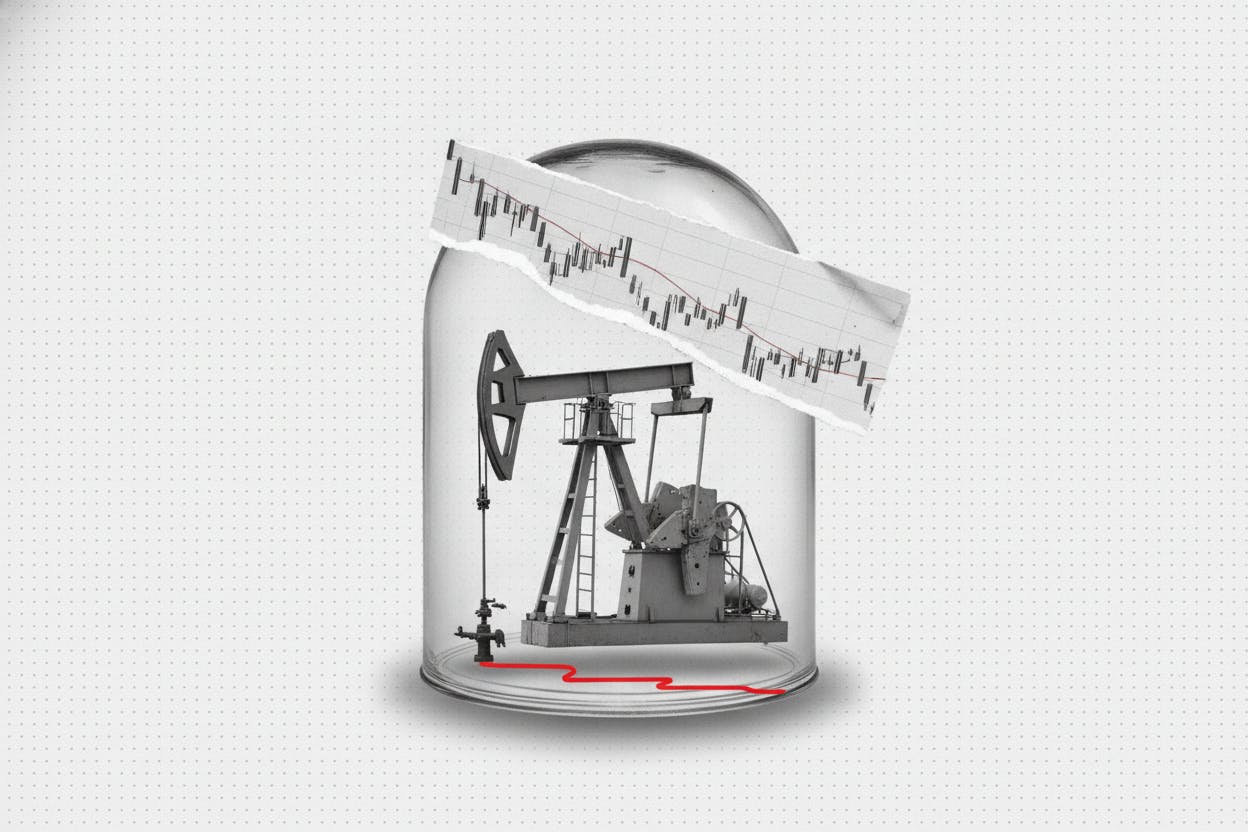
Saudi Arabia's stock market closed the week slightly lower after new data showed a sharp drop in industrial production, even as business sentiment improved. The Tadawul All Share Index fell 0.42%, reflecting investor caution over the country's energy-dependent economy.
The decline came after the General Authority for Statistics reported that Saudi Arabia's industrial production index dropped 18.7% in May compared to the same month last year. On a month-over-month basis, output rose 3.2% from April, suggesting a modest near-term rebound but not enough to offset the annual weakness.
Oil sector leads the slump
The main driver of the decline was the oil sector. The index measuring oil-related activities plunged 26.3% year over year in May, far outpacing the broader drop. By contrast, non-oil industrial activities slipped just 0.6%, indicating that the weakness was concentrated in energy rather than across the broader manufacturing base.
This pattern is consistent with Saudi Arabia's ongoing efforts to manage oil production as part of OPEC+ agreements aimed at supporting global crude prices. Lower output quotas have weighed on the kingdom's industrial output, even as non-oil sectors like construction and manufacturing show relative resilience.
The data comes amid a backdrop of fluctuating oil prices and geopolitical tensions in the Middle East. Recent disruptions in the Strait of Hormuz have added uncertainty to energy markets, as highlighted in our earlier coverage of Gulf stocks dipping amid tanker traffic halts.
Business confidence ticks up
Despite the weak industrial production numbers, there was a glimmer of optimism. Business confidence in Saudi Arabia rose in June, according to a separate survey, suggesting that firms are looking past the current slowdown. The improvement may reflect expectations of stronger demand in the second half of the year, particularly as the kingdom pushes ahead with its Vision 2030 diversification plan.
However, the divergence between falling output and rising confidence highlights the uncertainty facing investors. While the non-oil economy is showing signs of life, the heavy reliance on oil revenues means that any sustained weakness in crude production or prices could continue to weigh on the broader market.
What it means for investors
For everyday investors, the Tadawul's dip is a reminder of how closely Saudi stocks are tied to the energy sector. The 0.42% decline is modest, but the underlying data points to a structural challenge: the economy is still heavily dependent on oil, and any production cuts or price shocks can quickly ripple through the market.
The 18.7% year-over-year drop in industrial output is significant, but the month-over-month gain of 3.2% offers some hope that the worst may be over. Investors should watch for further data on oil production levels and OPEC+ decisions, as these will likely dictate the direction of Saudi stocks in the coming months.
Meanwhile, the uptick in business confidence is a positive sign, but it remains to be seen whether it translates into actual economic activity. The non-oil sector's resilience is encouraging, but it is not yet large enough to offset the drag from oil.
For those with exposure to Saudi equities, the key takeaway is to stay diversified. While the Tadawul All Share Index offers broad exposure, individual sectors can diverge sharply. Energy stocks may remain under pressure if production cuts continue, while non-oil sectors like healthcare, retail, and logistics could benefit from the government's diversification push.
As always, investors should keep an eye on global oil markets and geopolitical developments. The recent tensions in the Middle East, as covered in our report on stocks holding steady amid US-Iran strikes, add another layer of uncertainty that could affect Saudi stocks.
In the broader context, the Saudi market's performance is also influenced by global trends. For instance, Indian stocks and the rupee gained as oil eased, showing how lower crude prices can benefit oil-importing nations while hurting exporters like Saudi Arabia. Similarly, Asian markets diverged as China's inflation cooled, reflecting the interconnected nature of global markets.
In summary, the Tadawul's slight decline is a measured response to a mixed economic picture. Industrial output is down sharply year over year, but the month-over-month improvement and rising business confidence suggest that the economy may be stabilizing. For investors, the focus should remain on the oil sector's trajectory and the progress of Saudi Arabia's diversification efforts.



