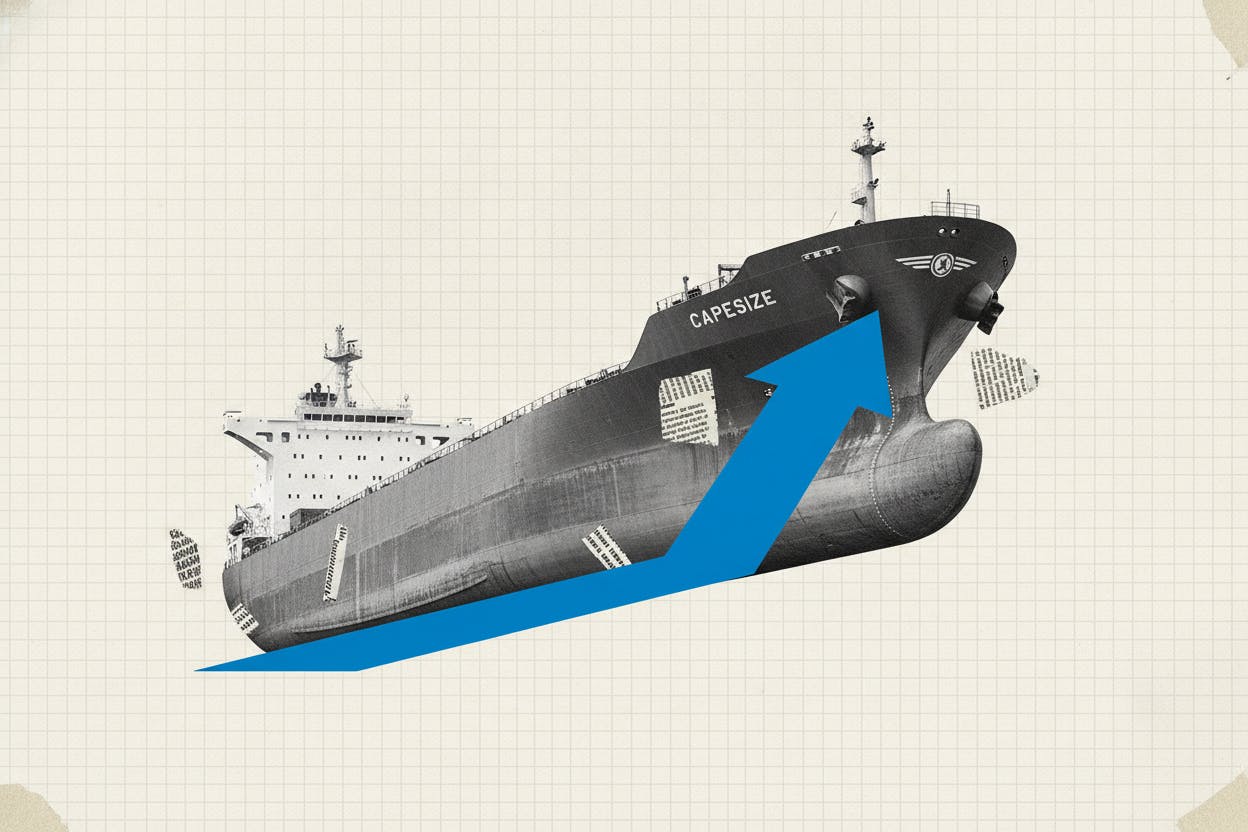
Dry bulk shipping rates have climbed to their highest level in a month, with the Baltic Exchange's main index rising 1.4% to 2,910 on Thursday. The move was driven by broad-based gains across the three largest vessel categories: capesize, panamax, and supramax.
What the Baltic Dry Index Tells Us
The Baltic Exchange's dry bulk index is a daily benchmark that tracks the cost of shipping key raw materials such as iron ore, coal, and grain by sea. It is widely watched by investors as a real-time indicator of global trade activity and demand for commodities. When rates rise, it typically signals stronger demand for raw materials or tighter vessel supply.
Thursday's reading of 2,910 is the highest since June 8, reflecting a recent uptick in shipping demand. The index has been volatile in 2025, influenced by shifting trade flows, weather disruptions, and broader economic uncertainty.
Biggest Vessels Lead the Charge
The capesize segment, which includes the largest dry bulk ships capable of carrying around 150,000 tons of cargo, saw its sub-index climb 2% to 4,569. That translated into a $801 increase in implied average daily earnings, bringing them to $37,931. Capesize vessels are primarily used to haul iron ore and coal, so their performance is closely tied to demand from steelmakers and power generators.
Panamax and supramax rates also strengthened, though the brief did not specify their exact percentage gains. Panamax ships are typically used for coal and grain, while supramax vessels carry a wider variety of smaller bulk cargoes.
What It Means for Investors
For everyday investors, rising dry bulk rates can be a positive signal for the global economy, as they suggest increased movement of industrial inputs. However, the shipping market is notoriously cyclical and can be influenced by factors like fleet capacity, fuel costs, and seasonal demand patterns.
Investors with exposure to shipping stocks or exchange-traded funds (ETFs) that track the sector may see near-term benefits from higher rates. Companies that operate dry bulk vessels, such as those listed on major exchanges, could report stronger earnings if the trend continues. Conversely, companies that rely on shipping raw materials may face higher input costs.
It is worth noting that the broader shipping market remains volatile. As highlighted in a recent analysis, Morgan Stanley noted that Scorpio Tankers' debt-free fleet is a safer bet on volatile shipping rates, underscoring the importance of balance sheet strength in this sector.
Broader Market Context
The dry bulk rally comes amid mixed signals in global markets. In Asia, stocks were steady as a Korea chip rally returned and Malaysia held interest rates, while Thailand's consumer confidence edged up after a four-month slide, helped by lower oil prices and government subsidies. Meanwhile, the Indian rupee hit a one-month low as oil prices surged and Federal Reserve rate worries converged.
These crosscurrents highlight the complex environment for shipping rates, which are sensitive to both commodity demand and currency movements.
What to Watch Next
Investors will be watching for further data on global industrial production, particularly from China, the world's largest importer of iron ore and coal. Any signs of a slowdown in Chinese steel output could weigh on capesize rates. Additionally, the upcoming earnings season for shipping companies will provide more clarity on how higher rates are translating into profits.
For now, the one-month high in dry bulk rates offers a glimmer of optimism for the sector, but the sustainability of the move will depend on whether demand holds up in the months ahead.



