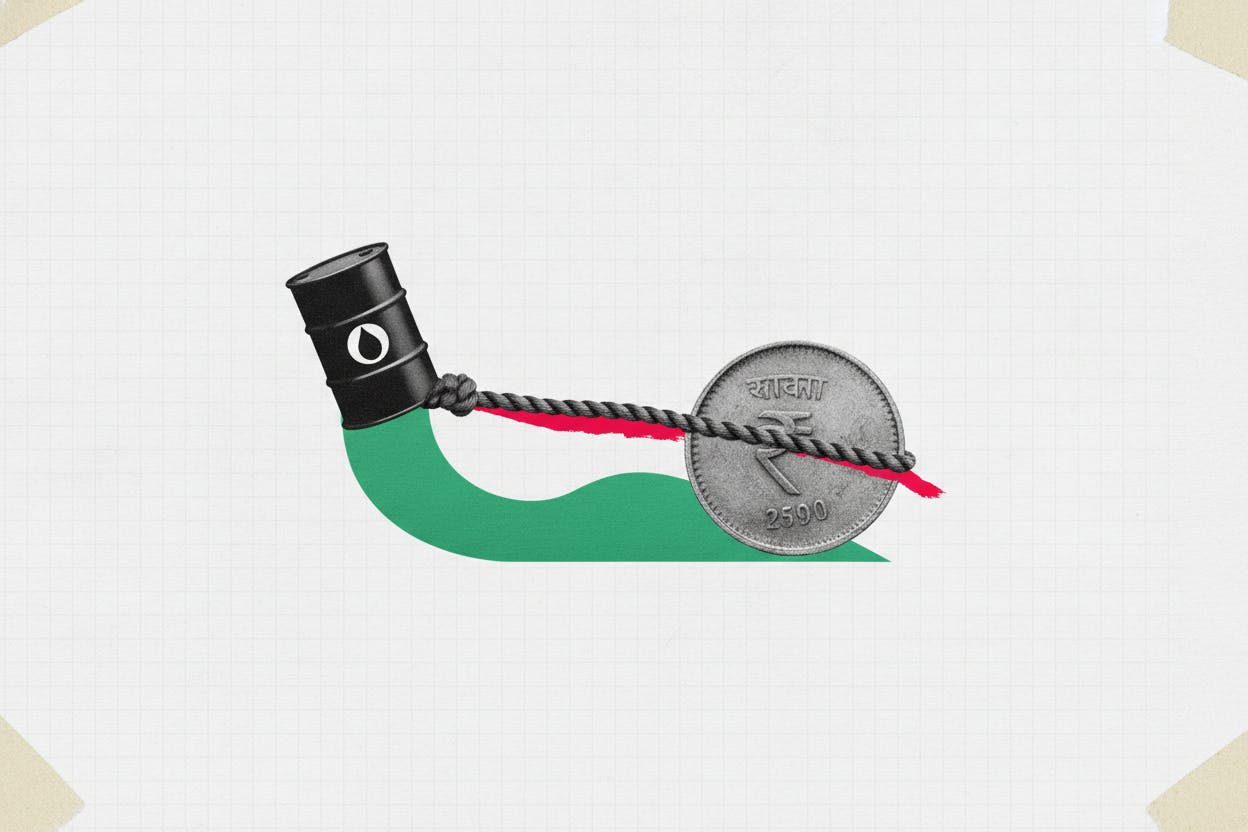
India's rupee slipped to its weakest level in a month on Wednesday, caught between two familiar headwinds: a surge in global oil prices and fresh signals from the Federal Reserve that US interest rates could stay higher for longer.
The currency fell 0.6% to 85.5550 per dollar, extending losses as traders recalibrated the outlook for India's trade balance and capital flows. The move came after the US launched fresh strikes on Iran, pushing Brent crude oil up another 1% on top of an 8% rally over the prior two sessions. At the same time, minutes from the Fed's June meeting showed some officials still saw a case for raising rates, a hawkish tilt that tends to lift the dollar and pressure emerging-market currencies.
Why Oil and US Rates Matter for the Rupee
India imports roughly 85% of its crude oil, making it one of the most energy-dependent large economies in the world. When oil prices rise, the country typically needs to buy more US dollars to settle its energy bills, creating immediate demand for the greenback and weighing on the rupee.
Over a longer horizon, persistently higher oil costs can widen India's current-account deficit — the broad measure of the country's net trade and income flows with the rest of the world. A bigger deficit often puts additional downward pressure on the currency and can complicate the inflation outlook, which in turn influences the Reserve Bank of India's interest rate decisions.
The Fed's latest minutes added another layer of pressure. While the central bank held rates steady at its June meeting, the record showed that some policymakers were not yet convinced inflation was under control and saw a case for further tightening. Futures markets now imply roughly a one-in-three chance of a rate hike this month and about a two-in-three chance by September. Higher US rates make dollar-denominated assets more attractive, drawing capital away from emerging markets like India and pushing the rupee lower.
Spillover Into Bonds and Stocks
The strain was visible across Indian financial markets. The benchmark 10-year government bond yield jumped 7 basis points on Wednesday, reflecting investors' demand for higher compensation to hold rupee-denominated debt amid currency and funding risks. The broader stock market also took a hit, falling 2% as the twin shocks of costlier oil and tighter global financial conditions weighed on sentiment.
For everyday investors, the rupee's weakness has a direct impact. A falling currency makes imported goods — from electronics to machinery — more expensive, which can feed into domestic inflation. It also reduces the rupee value of returns on foreign investments, a consideration for anyone holding international stocks or funds. On the flip side, companies that earn revenue in dollars, such as IT services and pharmaceutical exporters, may see a boost to their earnings when translated back into rupees.
What Investors Are Watching Next
Attention is now turning to the Strait of Hormuz, a narrow waterway through which about a fifth of the world's oil passes. ANZ, an Australia-based bank, noted that the latest US-Iran strikes have raised concerns about shipping disruptions in the region. Any escalation that threatens tanker traffic could send oil prices even higher, amplifying the pressure on the rupee.
Markets are also closely watching the Fed's next move. If US rate expectations continue to rise, the dollar could strengthen further, making it more expensive for Indian companies and the government to service foreign-currency debt and potentially cooling portfolio inflows into Indian stocks and bonds.
For now, the rupee remains in a familiar tug-of-war between oil and rates. The currency's sensitivity to these two factors means that headline-driven swings are likely to persist, and the stress is already spilling over into local assets. Bond investors may demand extra yield to compensate for currency risk, while tighter financial conditions could weigh on India-linked equities and credit markets.
As the situation evolves, investors will be watching for any signs of intervention by the Reserve Bank of India, which has in the past stepped in to smooth excessive volatility in the rupee. But with both oil and US rates pointing in the same direction, the pressure on India's currency is unlikely to ease quickly.



