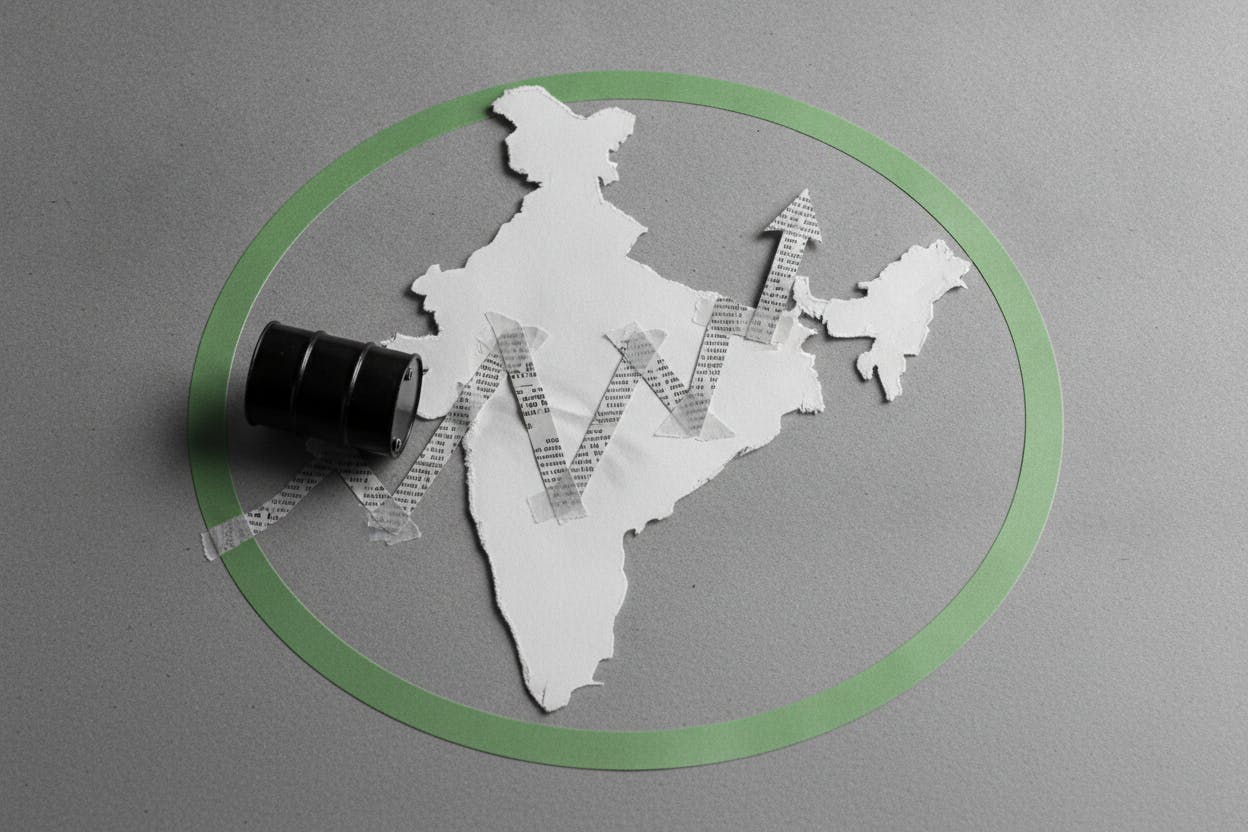
Indian stock indexes are poised to open higher on Thursday, recovering some ground after their sharpest one-day fall in three months. The early signal came from GIFT Nifty futures, which traded at 23,995.5, suggesting the Nifty 50 will open above Wednesday's close of 23,882.05. Both the Nifty 50 and the Sensex dropped more than 2% in the previous session, their biggest single-day declines since early January.
Oil Prices Stay Elevated Amid Middle East Tensions
The rebound attempt comes as investors weigh fresh US strikes on Iran-linked targets, which have kept Brent crude near $79 a barrel. The ongoing conflict has raised fears about potential disruptions to shipping through the Strait of Hormuz, a critical chokepoint for global oil supplies. For India, the world's third-largest oil importer, sustained high oil prices are a major economic headwind. A larger import bill can widen the current-account deficit—the gap between what the country earns from exports and what it spends on imports—and add to domestic inflation pressure. That, in turn, could complicate the Reserve Bank of India's monetary policy decisions.
This is not the first time oil has jolted markets this year. In a similar episode last month, oil surged 6% after President Trump declared the Iran deal over, sending US stocks sliding. More recently, oil jumped and stocks slid again as Trump threatened new Iran strikes, underscoring how geopolitical risk continues to drive volatility in energy markets.
Earnings Season Kicks Off with Tata Consultancy Services
Beyond oil, investors are turning their attention to corporate earnings. The reporting season is getting underway, with Tata Consultancy Services (TCS), India's largest IT services company, set to announce its quarterly results. TCS's performance is often seen as a bellwether for the broader IT sector and for corporate demand in key markets like the US and Europe. Strong results could help restore some confidence after the recent sell-off, while a miss might add to the pressure.
The broader market backdrop remains mixed. While Indian equities have rallied over the past year, they remain sensitive to global cues, especially US interest rate expectations and the strength of the dollar. Recent Fed minutes and rising bond yields have pressured financial stocks, and any further hawkish signals from the US central bank could weigh on emerging markets like India.
What It Means for Investors
For everyday investors, the key takeaway is that Indian stocks are trying to stabilize after a sharp correction, but the path ahead is uncertain. The near-term direction will likely depend on two things: oil prices and earnings. If crude stays elevated, sectors that are sensitive to fuel costs—such as airlines, logistics, and consumer goods—could face margin pressure. On the other hand, a sustained drop in oil would be a clear positive for the economy and for corporate profits.
Investors should also watch the rupee, which tends to weaken when oil prices rise, making imports more expensive. A weaker rupee can hurt companies with high foreign-currency debt or those that rely on imported raw materials.
While the rebound in futures is a welcome sign, it does not guarantee a sustained recovery. Markets often bounce after sharp falls, but the underlying risks—geopolitical tensions, inflation, and global monetary policy—remain. As always, a diversified portfolio and a long-term perspective are the best tools for navigating such volatility.