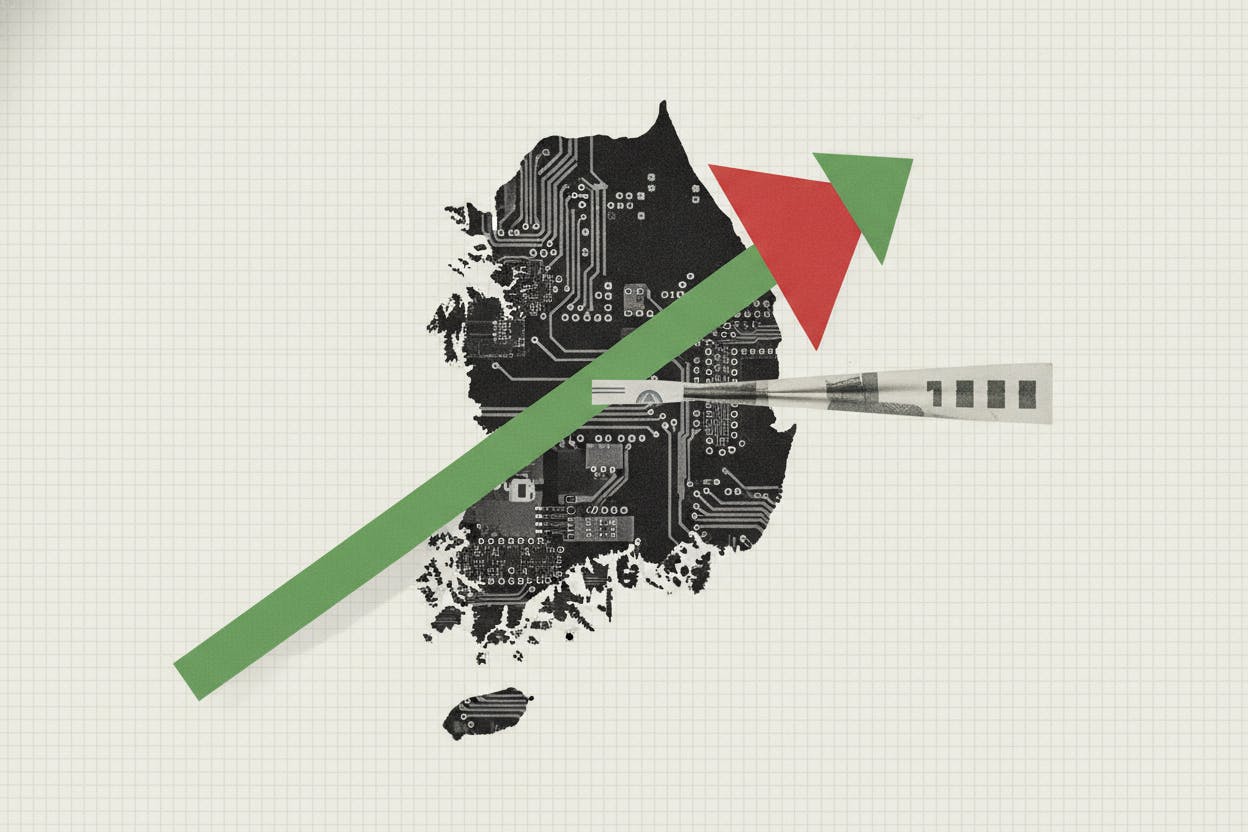
Asian markets steadied on Thursday, with South Korea's benchmark index snapping a three-day slide as semiconductor stocks bounced back, while Malaysia's central bank held interest rates steady, providing a calm backdrop for regional investors.
Korea's Chip Rally Returns
South Korea's KOSPI index finished 0.5% higher, recovering from a dip toward seven-week lows. The rebound was driven by a rally in chip stocks, which have been the engine of the index's dramatic run this year. The KOSPI remains up roughly 73% year-to-date, fueled by investor enthusiasm for artificial intelligence-linked semiconductors.
That rally, however, has been volatile. The index recently fell 20% from its June 22nd record close—a decline that meets the common definition of a "bear market." Such swings are typical in markets driven by a single high-growth sector, where optimism can quickly give way to profit-taking. The broader tech sector has seen similar patterns globally, with European tech stocks rebounding on chip name rallies and the Nikkei rising on AI chip momentum.
The chip sector's importance to South Korea cannot be overstated. Memory chip giants like Samsung Electronics and SK Hynix are among the largest companies on the KOSPI, and their performance heavily influences the index. The recent pullback had raised concerns about whether the AI-driven rally was sustainable, but Thursday's bounce suggests investor confidence in the sector remains intact.
Malaysia Holds Rates Steady
In Southeast Asia, Malaysia's central bank kept its benchmark interest rate at 2.75%, a decision widely expected by economists. The ringgit remained largely unchanged against the dollar, reflecting the market's calm reaction to the status quo.
The decision comes as central banks across the region navigate a delicate balance between supporting growth and managing inflation. Malaysia's economy has shown resilience, but global uncertainties—including fluctuating commodity prices and geopolitical tensions—continue to pose risks. The central bank's hold signals that it sees current policy settings as appropriate for now, avoiding any surprise moves that could unsettle markets.
For investors, the steady rate policy provides a predictable environment for Malaysian assets. The ringgit's stability is a positive sign for foreign investors, who often view currency stability as a prerequisite for committing capital to emerging markets.
What It Means for Investors
Thursday's moves highlight a broader theme in Asian markets: the tug-of-war between AI optimism and broader economic concerns. South Korea's chip rally shows that the AI narrative remains powerful, but the recent 20% drop from the record high is a reminder that even the hottest sectors can experience sharp corrections.
For everyday investors, the key takeaway is that volatility is normal, especially in markets driven by a single theme. The KOSPI's 73% year-to-date gain is extraordinary, but it comes with the risk of sudden pullbacks. Diversification across sectors and geographies can help manage that risk.
Malaysia's rate hold, meanwhile, underscores the importance of central bank policy in shaping market conditions. When rates are stable, it reduces uncertainty for both stocks and bonds, making it easier for investors to plan. The IMF's raised growth forecasts for South Korea and China on the back of the chip boom further support the case for long-term optimism in the region.
Looking ahead, investors will be watching for any signs that the chip rally is broadening or losing steam. If semiconductor stocks continue to recover, the KOSPI could retest its highs. But if global economic headwinds—such as rising oil prices or geopolitical tensions—intensify, the index may face further turbulence. The PBoC's loose policy pledge and ongoing developments in China's chip sector will also be factors to monitor.
For now, Asian markets are taking a breather, but the underlying currents remain strong. Investors should stay informed but avoid making impulsive decisions based on short-term swings.



