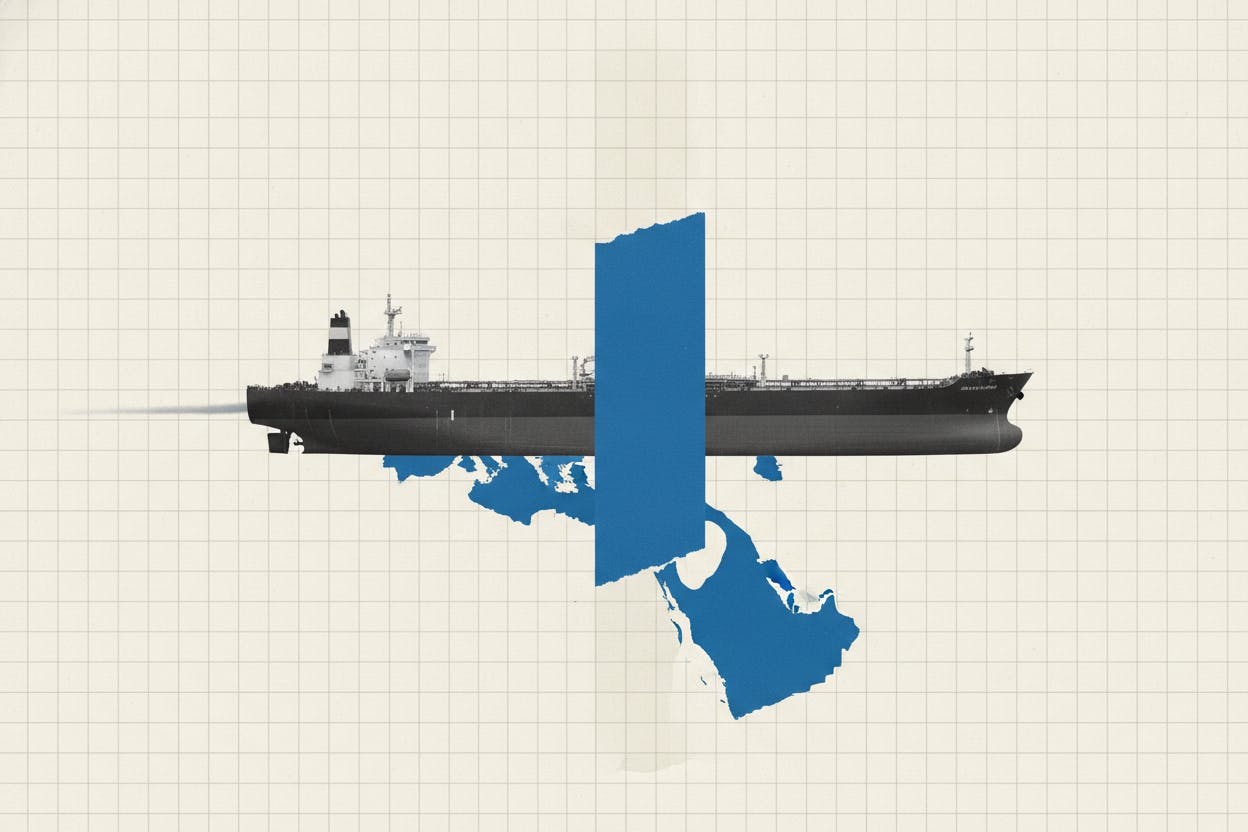
Stock markets in the United Arab Emirates edged lower on Monday as escalating tensions between the United States and Iran disrupted shipping through one of the world's most critical oil transit chokepoints. Tanker traffic through the Strait of Hormuz has essentially stopped, according to energy consultancy Rystad Energy, stoking fears of supply disruptions that could ripple through global energy markets.
Abu Dhabi's FTSE ADX General Index fell 0.033%, while Dubai's DFM General Index dropped 0.184%. Though the moves were modest in percentage terms, they reflect a broader unease among investors who are pricing in the risk of a prolonged disruption to oil flows from the region.
What's at Stake in the Strait of Hormuz
The Strait of Hormuz is a narrow waterway between Iran and Oman that connects the Persian Gulf to the Gulf of Oman and the open sea. Roughly one-fifth of the world's oil passes through it daily, making it a vital artery for global energy supplies. Any significant disruption there can quickly push up oil prices and rattle markets worldwide.
While no formal policy change has been announced by Washington or Tehran, the effective halt in tanker traffic signals that shipping companies and insurers are already treating the route as too risky. This is what analysts call a 'tail risk' event — a low-probability, high-damage scenario that markets often ignore until it starts to materialize.
The situation echoes past episodes of Gulf tension, such as the 2019 attacks on Saudi oil facilities and periodic US-Iran standoffs, which have historically led to short-lived spikes in oil prices and volatility in regional stock markets.
What It Means for Investors
For everyday investors, the immediate takeaway is that geopolitical risk in the Middle East remains a live factor for portfolios. Even small moves in Gulf indexes can be a warning signal: markets are repricing the odds of a supply shock, even if no official disruption has been declared.
Oil prices are likely to be the main transmission mechanism. If tensions escalate further, higher crude costs could feed into inflation and affect everything from transport stocks to consumer goods. Conversely, a quick de-escalation could reverse the move just as fast.
Investors with exposure to energy stocks or funds that track Gulf markets should watch for further developments. The broader context also includes ongoing uncertainty around US monetary policy and global growth, as highlighted in our recent coverage of Stocks Hold Steady as US-Iran Strikes and Fed Split Keep Markets on Edge.
For those with diversified portfolios, a single geopolitical event like this is rarely a reason to make sudden changes. But it does underscore the importance of understanding where your investments are exposed — especially to regions and commodities that can be disrupted by events beyond any company's control.
What to Watch Next
Markets will be closely watching for any official statements from the US or Iranian governments, as well as updates from shipping companies and insurers on whether they resume normal operations through the strait. Oil inventory data and any signs of supply tightness will also be key.
In the meantime, the Gulf stock moves serve as a reminder that even small percentage declines can carry outsized significance when they reflect a sudden repricing of risk. As we noted in our analysis of Singapore's STI Rises 1.2% as Oil Surge on Gulf Tensions Tests REITs, the impact of such tensions can spread well beyond the immediate region.
For now, the story is one of caution rather than panic. But the Strait of Hormuz remains a flashpoint that investors cannot afford to ignore.



