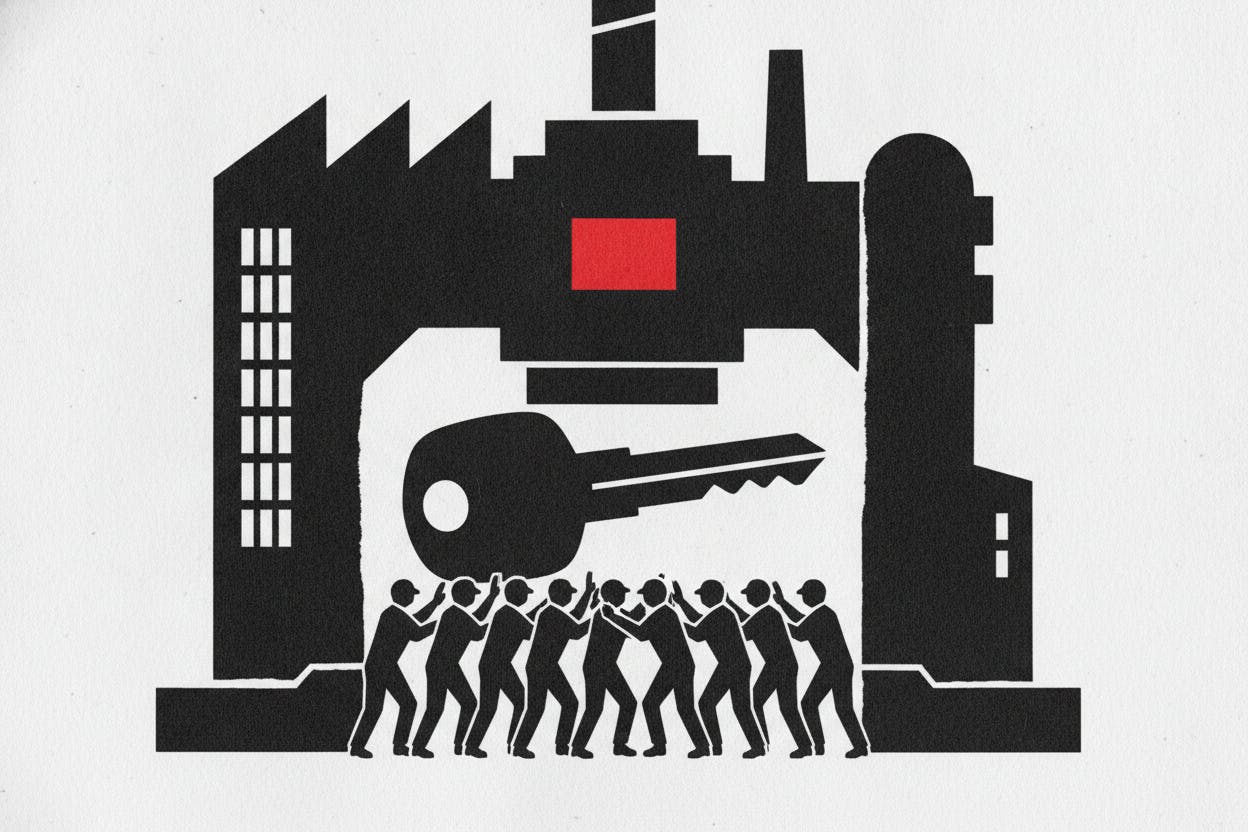
Volkswagen's German workforce is pushing back. IG Metall, Germany's largest industrial union, rallied at more than a dozen Volkswagen sites on Monday, just ahead of a supervisory board meeting where the automaker's future in its home market is expected to be a central topic.
The protests come after reports emerged that Volkswagen is weighing up to 100,000 job cuts and the closure of four factories in Germany. While the company has not confirmed those numbers, the reports have intensified tensions between management and labor at Europe's largest automaker.
What's driving the unrest
IG Metall organized the demonstrations to send a clear message before the supervisory board convenes. That board, which includes representatives from both shareholders and labor, typically debates and often approves major strategic decisions. The reported plan would significantly shrink Volkswagen's manufacturing footprint in its home market.
For context, Volkswagen employs roughly 300,000 people in Germany alone. A reduction of up to 100,000 jobs would be one of the largest restructuring efforts in the company's history. The potential factory closures would also ripple through the broader German economy, affecting parts suppliers, logistics firms, and local communities that depend on the plants.
This is not the first time Volkswagen has faced labor pushback. Earlier this year, the company's board faced a showdown over plant closures and job cuts, highlighting the ongoing struggle between cost-cutting pressures and worker protections.
Why Volkswagen is cutting
Volkswagen is under pressure from multiple directions. The shift to electric vehicles requires massive investment in new technology and production lines, while competition from Chinese automakers and Tesla has intensified. At the same time, Germany's industrial sector has been grappling with weak demand, as seen in recent data showing Germany's services sector shrinking for a third month.
Higher energy costs and supply chain disruptions have also squeezed margins. Volkswagen's namesake brand has struggled with lower profitability compared to its premium Audi and Porsche divisions. The company has been trying to cut costs to free up funds for its electric vehicle transition, but labor agreements in Germany make layoffs difficult and expensive.
The broader German economy adds to the challenge. While industrial output rose 0.9% in May, driven partly by the auto sector, the recovery remains fragile. Germany's DAX index has also been volatile, recently falling 1.37% as Middle East tensions drove oil prices higher, adding to the uncertain backdrop for manufacturers.
What it means for investors
For investors, the labor unrest at Volkswagen is a reminder of the risks facing legacy automakers as they navigate the electric vehicle transition. Cost-cutting plans, while necessary for long-term competitiveness, can trigger strikes and production disruptions that hurt short-term earnings.
Volkswagen's stock could face volatility as the situation develops. If the company reaches a compromise with unions, it may avoid prolonged disruptions but could end up with less aggressive cost savings. If tensions escalate, production delays could weigh on revenue.
The outcome of the supervisory board meeting will be closely watched. Investors should look for signals on how quickly Volkswagen can implement its restructuring and whether it can maintain its dividend policy while funding the EV transition.
Beyond Volkswagen, the situation highlights broader challenges for German industry. Companies like RWE could benefit from Germany's nearing capacity auction rules, but the overall manufacturing sector faces headwinds from weak demand and high costs.
For everyday investors, this story underscores the importance of understanding labor dynamics when investing in industrial companies. Strong unions can protect workers but may also limit a company's ability to adapt quickly to changing markets. Volkswagen's ability to balance these pressures will be key to its future performance.