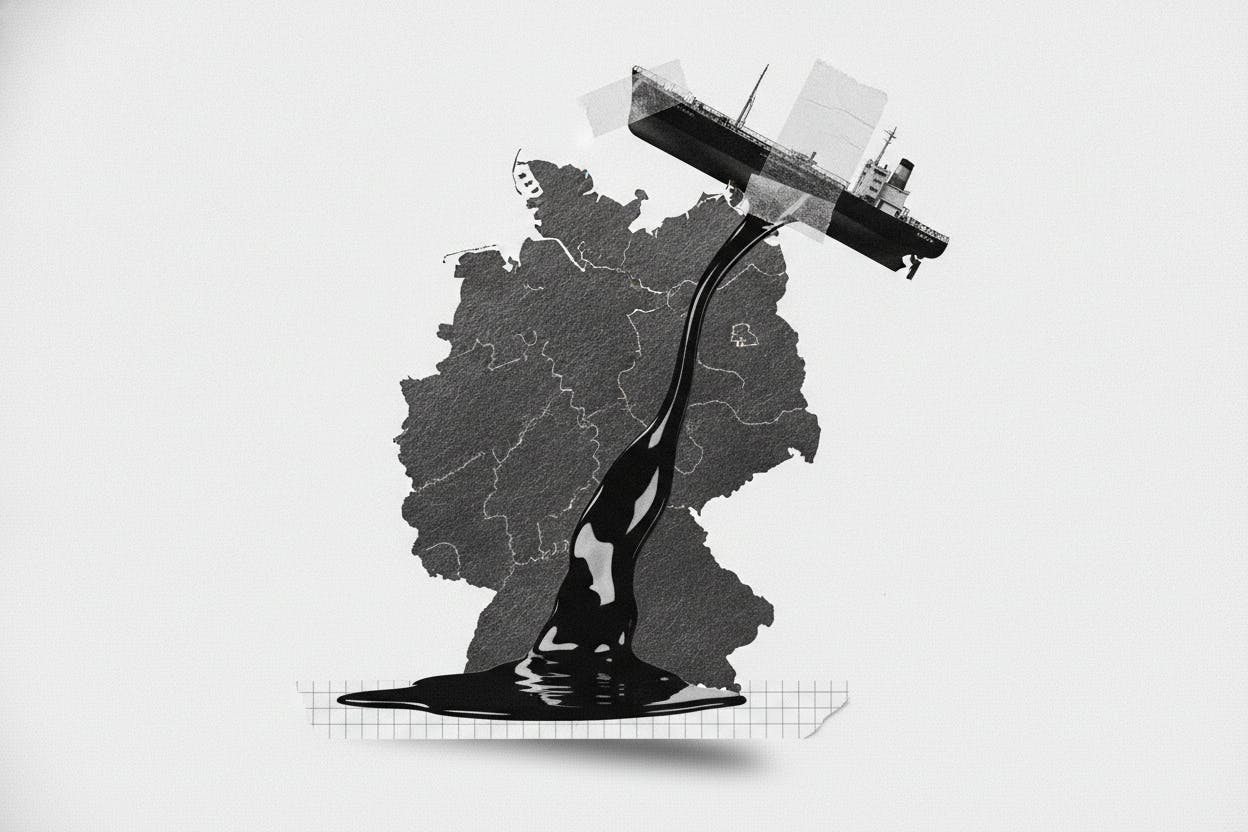
Germany's benchmark DAX index slipped 1.37% on Tuesday, as rising oil prices from Middle East tensions overshadowed better-than-expected industrial production data. The decline shows how quickly geopolitical risk can outweigh domestic economic improvements for investors.
Industrial output beats expectations
Germany's statistics office Destatis reported that industrial output rose 0.9% month over month in May, well above analyst forecasts. The data suggested that the country's factory sector, which has been struggling with weak global demand and high energy costs, may be starting to stabilize. The auto sector was a key driver of the gain, according to the report.
For context, Germany's industrial sector accounts for about a quarter of the country's economy, making it a crucial indicator of overall health. The May increase followed a 0.3% decline in April, offering a glimmer of hope after months of contraction.
Oil prices surge on Strait of Hormuz tensions
However, investors quickly shifted focus to energy markets after reports emerged of missile damage to ships in the Strait of Hormuz, a narrow waterway that handles about 20% of the world's oil supply. The reports pushed oil prices higher, with Brent crude rising sharply on Tuesday.
Higher oil prices are a particular concern for European manufacturers like those in Germany, which rely heavily on imported energy. When oil rises, companies face higher costs for power, fuel, and shipping, which can squeeze profit margins and slow economic activity. This dynamic often hits stock markets quickly, as traders price in the potential impact on corporate earnings.
For more on how these tensions are affecting markets globally, see our coverage of Oil Price Bounce on Strait of Hormuz Tensions Lifts Canadian Futures Ahead of Fed Minutes and Tech Futures Slide as Strait of Hormuz Missile Reports Push Oil Higher.
What it means for investors
For everyday investors, the DAX's move illustrates a key lesson: good news on the economy doesn't always translate into higher stock prices, especially when external risks loom. The industrial output data was genuinely positive, but the market's reaction shows that energy costs can hit corporate profits faster than production gains can lift them.
European manufacturers, particularly in sectors like chemicals, metals, and automotive, are sensitive to oil prices. When crude rises, their input costs go up, and they may not be able to pass those costs on to customers immediately. This can lead to lower earnings and, in turn, lower stock prices.
The broader market context matters too. Central banks in Europe and the US are still grappling with inflation, and higher oil prices could complicate their efforts to bring it down. If energy costs stay elevated, it could delay interest rate cuts, which markets have been hoping for.
Investors should also watch how the situation in the Middle East evolves. The Strait of Hormuz is a critical chokepoint for global oil supplies, and any disruption there can have ripple effects across markets. For a look at how other regions are reacting, see UAE Stocks Edge Higher as Oil Rises on Strait of Hormuz Missile Reports and Malaysia Stocks End Winning Streak as Middle East Tensions Rattle Regional Markets.
Looking ahead
Germany's industrial output data was a positive sign, but it may take more than one month of gains to confirm a sustained recovery. Meanwhile, oil prices are likely to remain volatile as long as geopolitical tensions persist. Investors will be watching for any further developments in the Middle East, as well as upcoming economic data from Europe and the US, to gauge the direction of markets.
For now, the DAX's slip serves as a reminder that markets are forward-looking and often react more to risks than to past data. Diversification across sectors and regions can help manage such volatility, but no investment is immune to global shocks.