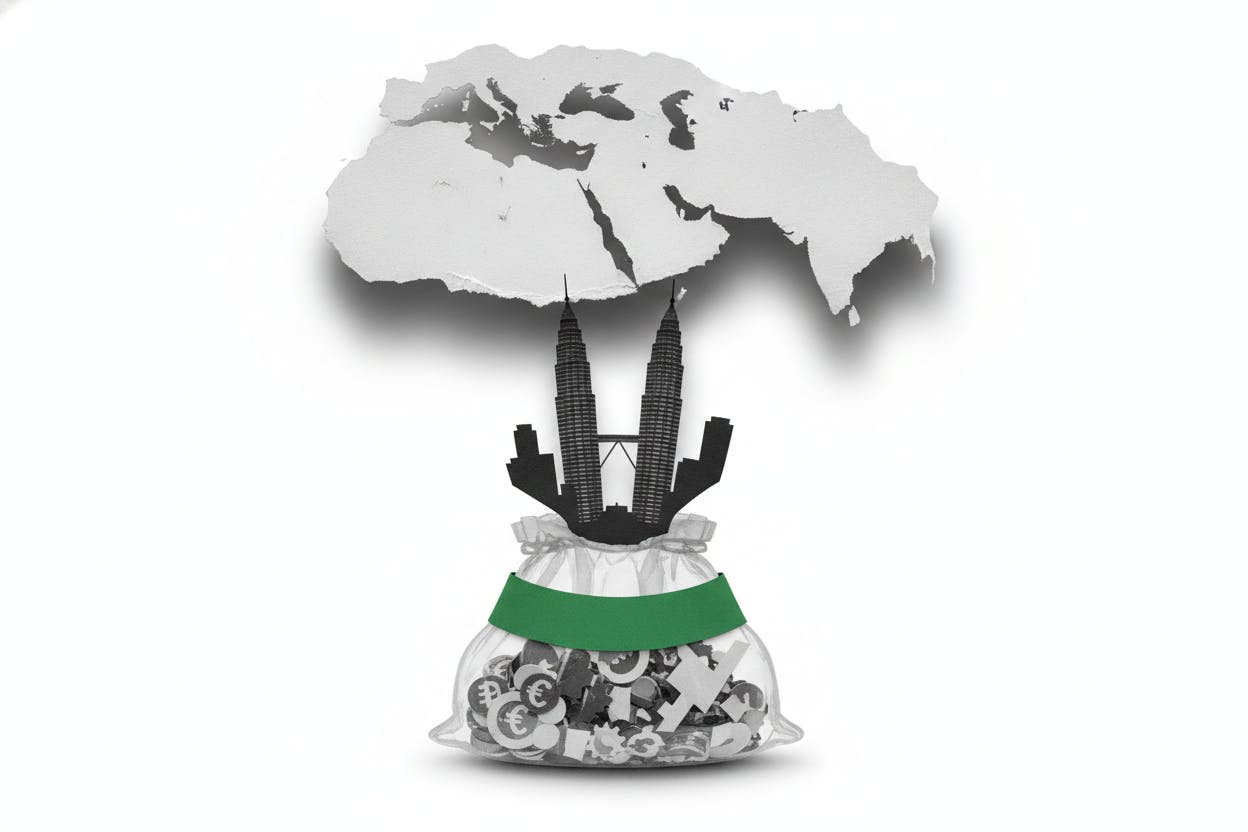
Malaysian equities ended a recent run of gains on Tuesday as escalating Middle East tensions prompted a broad retreat from riskier assets across Asia. The FTSE Bursa Malaysia KLCI slipped 0.04% to close at 1,682.93, essentially flat but enough to break its winning streak.
The move was part of a wider regional pullback. Investors turned cautious after geopolitical risks in the Middle East flared up, pushing money out of emerging-market stocks and into traditional havens like the US dollar and gold. The KLCI's modest decline mirrored similar moves in other Asian bourses, where the mood was dominated by fear rather than fundamentals.
Geopolitics Overshadows Local News
While individual company announcements still moved some stocks, the bigger story was the macro backdrop. When geopolitical tensions spike, global investors often cut exposure to emerging markets first, viewing them as riskier bets. Malaysia, with its open capital account and reliance on foreign portfolio flows, is particularly sensitive to such shifts.
The KLCI had been on a steady climb in recent sessions, buoyed by optimism around domestic policy and global tech demand. But the latest headlines from the Middle East reminded markets how quickly sentiment can turn. The index's near-flat close suggests that while selling pressure was not severe, buyers were unwilling to step in aggressively.
This pattern is not unique to Malaysia. Similar risk-off moves have hit other regional markets, as seen in Australia's ASX 200 and Hong Kong stocks, both of which dipped on the same geopolitical concerns.
Central Bank's $132.6 Billion War Chest
In the background, Bank Negara Malaysia released its latest international reserves data, showing the central bank held $132.6 billion at the end of June. The bulk of that — $117.2 billion — sits in foreign-currency reserves, with smaller allocations to gold ($5.8 billion) and assets linked to the International Monetary Fund.
For everyday investors, the size of a central bank's reserves matters because it acts as a shock absorber. When global markets turn risk-averse, emerging-market currencies often come under pressure as foreign investors pull money out and dollar funding becomes more expensive. A large reserve pile gives Bank Negara more firepower to intervene — either by selling dollars to support the ringgit or by providing local liquidity — without letting the currency swing destabilise the broader financial system.
This backstop reduces what economists call "tail risk" — the chance of extreme, disorderly moves. When investors know the central bank has ample reserves, they demand less of a risk premium to hold Malaysian assets. That typically translates into less volatile trading in the ringgit, the KLCI, and local government bond yields.
What It Means for Investors
For Malaysian investors, the immediate takeaway is that the KLCI's winning streak was always vulnerable to external shocks. Geopolitical events are notoriously hard to predict, but their impact on portfolio values can be swift. The index's near-flat close suggests the market is not panicking, but it is also not ignoring the risks.
The central bank's reserve data offers a longer-term comfort. At $132.6 billion, Malaysia's reserves are ample by historical standards and relative to short-term external debt. That gives policymakers room to manage any currency volatility without resorting to drastic measures like capital controls or emergency rate hikes.
Still, investors should keep an eye on how the situation in the Middle East evolves. If tensions escalate further, the risk-off mood could deepen, dragging the KLCI and the ringgit lower. Conversely, any de-escalation could quickly reverse the selling, as the underlying fundamentals of the Malaysian economy — steady growth, manageable inflation, and a stable banking system — remain intact.
The broader lesson is one that applies across emerging markets: in a world of sudden geopolitical shocks, a strong reserve buffer is a valuable asset. It does not prevent losses, but it can limit their severity and speed up the recovery.