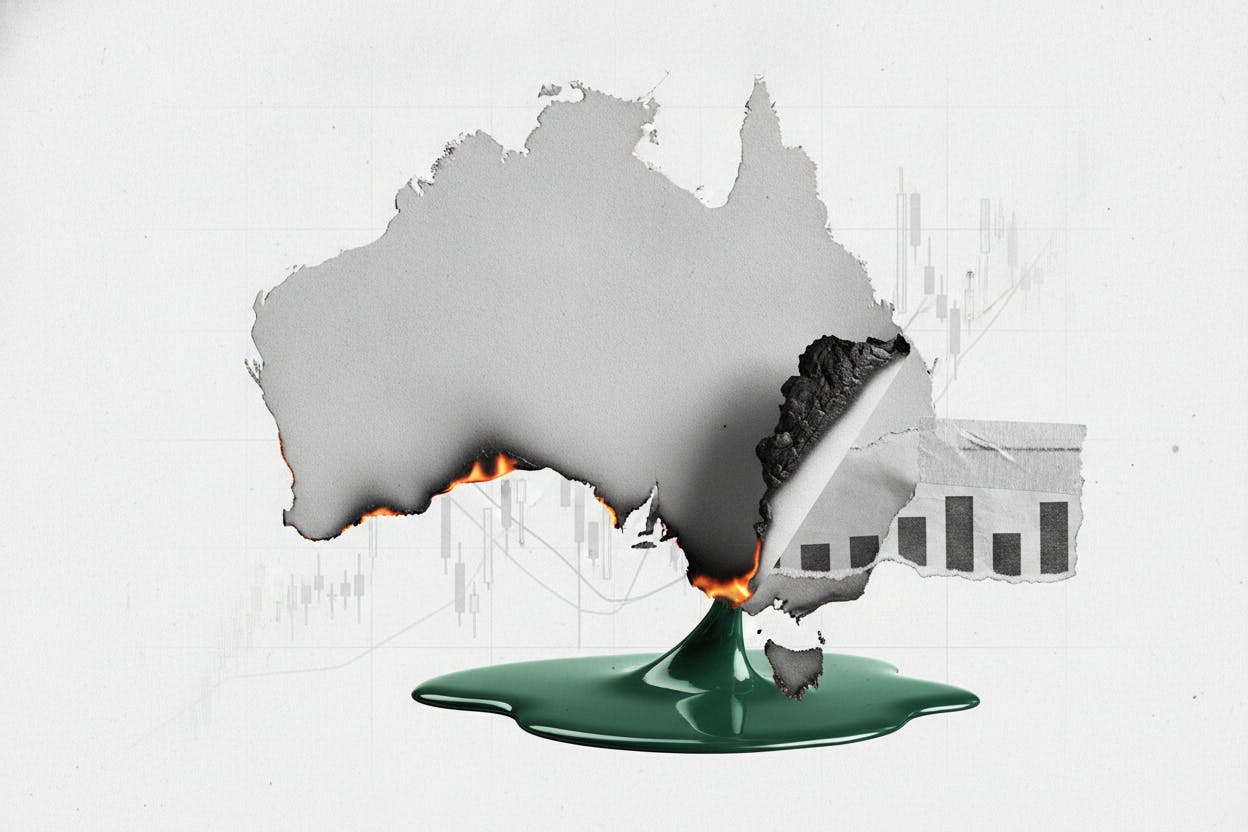
Australian stocks edged lower on Tuesday as geopolitical tensions in the Strait of Hormuz pushed oil prices higher, making investors cautious. The S&P/ASX 200 closed down 0.31% at 8,803.90, while Brent crude traded near $72 a barrel following reports of attacks on shipping in the key waterway.
What's Driving the Move?
The Strait of Hormuz is a narrow passage between the Persian Gulf and the Gulf of Oman, through which about 20% of the world's oil passes. When there are reports of disruptions there, markets add a "risk premium" to oil prices — essentially, traders price in the possibility that supply could be interrupted. That pushes up the cost of crude, which then ripples through the economy.
For Australia, higher oil prices mean more expensive fuel and shipping costs. That can feed into broader inflation, which is something the Reserve Bank of Australia (RBA) watches closely. If inflation stays sticky, the RBA may keep interest rates higher for longer, which tends to weigh on stock prices.
The ASX 200's decline came even as US indexes rose — the Dow Jones Industrial Average gained 0.3%, the S&P 500 added 0.7%, and the Nasdaq climbed 1.1% — showing that the sell-off was largely driven by local concerns about energy costs and inflation.
RBA Payments Data Shows Strong Spending
Separately, the RBA released its payments data for May, which showed that the total value of transactions rose nearly 30% compared to the same month last year. That's a big jump, and it suggests that Australian consumers are still spending at a healthy clip, despite higher interest rates and cost-of-living pressures.
Strong spending can be a double-edged sword for investors. On one hand, it signals a resilient economy and supports corporate earnings. On the other, if the RBA sees spending as too strong, it might worry that inflation won't come down as quickly as hoped, and could keep rates higher. That tension is a key reason why markets have been choppy lately.
The payments data covers credit and debit card transactions, as well as other electronic payments, and is a real-time gauge of consumer activity. The nearly 30% year-over-year increase is notable, though some of that may reflect price increases rather than just more purchases.
What It Means for Investors
For everyday investors, the combination of rising oil prices and strong consumer spending creates an uncertain backdrop. Higher energy costs can squeeze profit margins for companies that rely on fuel or shipping, such as airlines, logistics firms, and retailers. At the same time, if the RBA keeps rates elevated, it can make borrowing more expensive for both companies and households, potentially slowing economic growth.
Investors will be watching for any further developments in the Strait of Hormuz. If tensions ease, oil prices could fall back, which would be a relief for the ASX. But if the situation escalates, the risk premium could grow, pushing oil higher and adding to inflation concerns.
On the other hand, the strong payments data suggests that the Australian consumer is still spending, which is a positive sign for sectors like retail and hospitality. However, investors should keep an eye on whether this spending is sustainable, especially if interest rates stay high.
For context, the ASX 200 has been trading in a relatively narrow range recently, as investors weigh mixed signals from the economy. The index is still up for the year, but gains have been modest. The oil price move and the RBA data are just the latest factors adding to the uncertainty.
Looking ahead, the market will also be watching for cues from the US Federal Reserve and other central banks, as well as any further data on Australian inflation and employment. The interplay between global energy markets and local economic data will likely continue to drive short-term moves.
In summary, Tuesday's dip on the ASX reflects a cautious mood as geopolitical risks push up oil prices, even as domestic spending remains strong. For investors, the key takeaway is that higher energy costs and sticky inflation could keep the RBA on hold, which may limit upside for stocks in the near term.