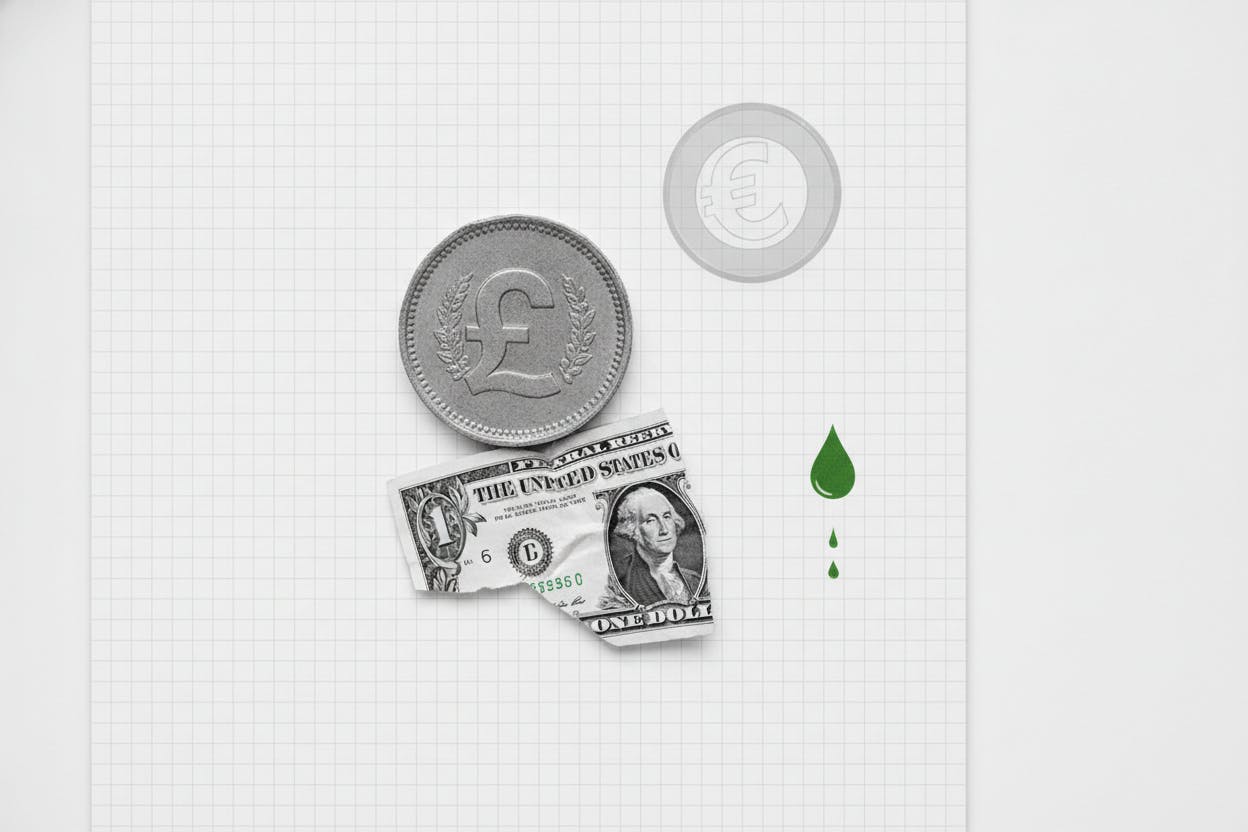
The British pound climbed to its strongest level in three weeks against the US dollar on Tuesday, trading near $1.34, and reached a one-year high versus the euro. The moves came as a weaker-than-expected US jobs report and a sharp drop in oil prices prompted traders to scale back bets on aggressive interest rate increases from the Federal Reserve and the European Central Bank.
What drove sterling higher?
Currency markets are a two-way street, and sterling’s gains were as much about the weakness of its rivals as about the UK economy itself. The dollar had been on a firm footing in recent weeks as investors priced in a more hawkish Fed, but Friday’s US jobs data—which showed softer hiring than forecast—pushed traders to dial back those expectations. That took some shine off the greenback, giving the pound room to rise.
At the same time, oil prices fell sharply after news of a framework agreement between the US and Iran, raising the prospect of increased global supply. Lower energy costs can reduce US inflation pressures, further diminishing the case for aggressive Fed rate hikes. For context, the dollar had strengthened ahead of the data as markets awaited Fed minutes, but the jobs miss reversed that trend.
Across the Atlantic, eurozone inflation came in lower than expected, leading investors to trim their expectations for European Central Bank rate increases. That weighed on the euro and gave sterling an additional lift against the single currency.
Why falling oil matters for the UK
The UK is a net importer of energy and has relatively low natural gas storage capacity compared to some European peers. That makes it particularly sensitive to swings in global energy prices. When oil drops, the country pays less for the fuel it brings in, which can quickly feed through to lower gasoline prices and home energy bills.
Over time, cheaper energy also reduces shipping and production costs across the economy, helping to cool inflation. If inflation looks less sticky, markets often expect a lower peak for interest rates from the Bank of England. Those expectations, in turn, influence the cost of mortgages, business loans, and other borrowing. While domestic factors like wage growth and political uncertainty still matter, energy prices can move the dial quickly.
The recent slide in oil has also weighed on energy stocks, as noted in our coverage of energy stocks splitting as oil slips to $68.42. Lower crude prices can pressure the profits of oil producers, but for the broader UK economy, the net effect is often positive.
What it means for everyday investors
For UK investors, a stronger pound has mixed implications. On the one hand, it makes overseas holidays and imports cheaper, which can help contain inflation. On the other hand, it reduces the value of foreign earnings for UK companies that do a lot of business abroad, potentially weighing on the FTSE 100, which is heavily weighted toward multinationals.
The bigger story here is the shift in interest rate expectations. If the Fed and ECB slow their pace of rate hikes, global borrowing costs may not rise as much as feared. That could support riskier assets like stocks, especially in sectors that benefit from lower rates, such as technology and real estate. However, it also means that the era of high yields on cash and bonds may be shorter-lived than some investors hoped.
For those with mortgages or other variable-rate debt, the outlook is cautiously positive. If inflation continues to ease and central banks soften their stance, the pressure on rates could ease. But as always, the path depends on data—especially jobs and inflation figures in the coming months.
Meanwhile, the Canadian dollar has also been affected by the oil price drop, as we reported in Canadian dollar loses oil support as US yields rise. And broader currency dynamics continue to shift, with the Aussie dollar edging higher as the yen weakens, as covered in Aussie dollar edges higher.
What to watch next
Investors will be closely watching upcoming US inflation data and the next set of jobs numbers to see if the softening trend continues. Any signs that the Fed might pause or reverse its rate hikes could further weaken the dollar and support sterling. In the UK, the Bank of England’s next policy meeting will be key, as markets look for clues on how policymakers view the impact of lower energy prices on inflation.
For now, the pound’s rally reflects a broader recalibration of global rate expectations—one that could have lasting implications for currency markets, borrowing costs, and portfolio returns.