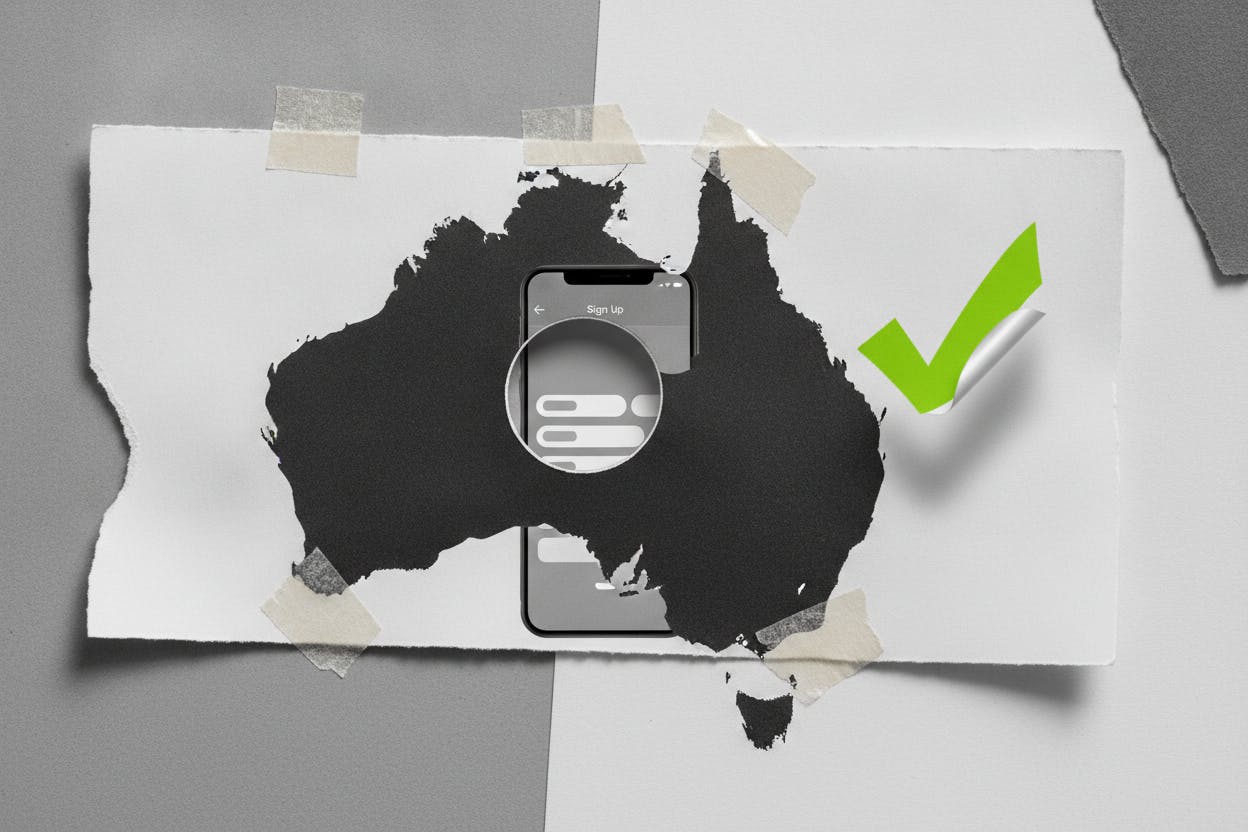
Australia's landmark ban on under-16s holding social media accounts has run into a familiar digital roadblock: age verification is easier said than done. Testing firm KJR told Reuters it opened 50 accounts on major platforms after the law took effect without being asked to prove its users' ages, exposing a gap between policy and practice.
What the Law Requires
Since December, Australia has required platforms including Facebook, TikTok, X, Instagram, Snapchat, and YouTube to prevent under-16s from creating or maintaining accounts. The rule is among the strictest globally, but its effectiveness hinges on a single question: how do you reliably confirm a user's age online?
KJR, an Australian testing firm that advised the government on the legislation, put that question to the test. Its findings suggest the answer, for now, is not very well. The company's ability to open accounts without any age check points to a fundamental enforcement problem.
The Age Verification Challenge
Age assurance online is technically complex. Options range from self-declaration (easily faked) to government ID uploads (privacy-invasive) to biometric estimates (inaccurate and controversial). Each approach carries trade-offs between accuracy, user privacy, and friction at sign-up.
Platforms have long resisted hard age gates, arguing they deter legitimate users and raise data security concerns. The KJR test suggests that even under legal compulsion, many companies have not yet implemented robust checks. The result is a law that exists on paper but is not yet fully enforced in practice.
What It Means for Investors
For shareholders in ad-reliant tech companies, the KJR test highlights a potential revenue risk. If Canberra tightens enforcement, platforms will likely need to introduce higher-friction onboarding: stronger age checks, additional verification steps, or third-party services. These measures cost money and can discourage sign-ups, reducing the user base and, ultimately, ad inventory in Australia.
Companies most exposed include Meta Platforms (Facebook, Instagram), Alphabet (YouTube), Snap (Snapchat), and ByteDance (TikTok). While Australia is a relatively small market for these global giants, the precedent matters. If other countries adopt similar under-16 bans, the compliance-versus-growth trade-off could spread, amplifying the impact on user acquisition and engagement metrics.
Broader market sentiment in Australia has been cautious recently, with consumer confidence dipping again amid economic pessimism. Regulatory uncertainty adds another layer for investors tracking the region.
What to Watch Next
Investors should monitor three developments. First, any announcements from Australian regulators about enforcement actions or fines for non-compliant platforms. Second, platform earnings calls where executives discuss compliance costs or user impact from age verification. Third, legislative moves in other countries—particularly the EU, UK, and US states—that could replicate Australia's approach.
The KJR test is a reminder that regulation and reality often diverge. For now, Australia's under-16 ban is a rule without reliable enforcement. How quickly that changes will determine whether it becomes a genuine headwind for social media companies or just another compliance footnote.