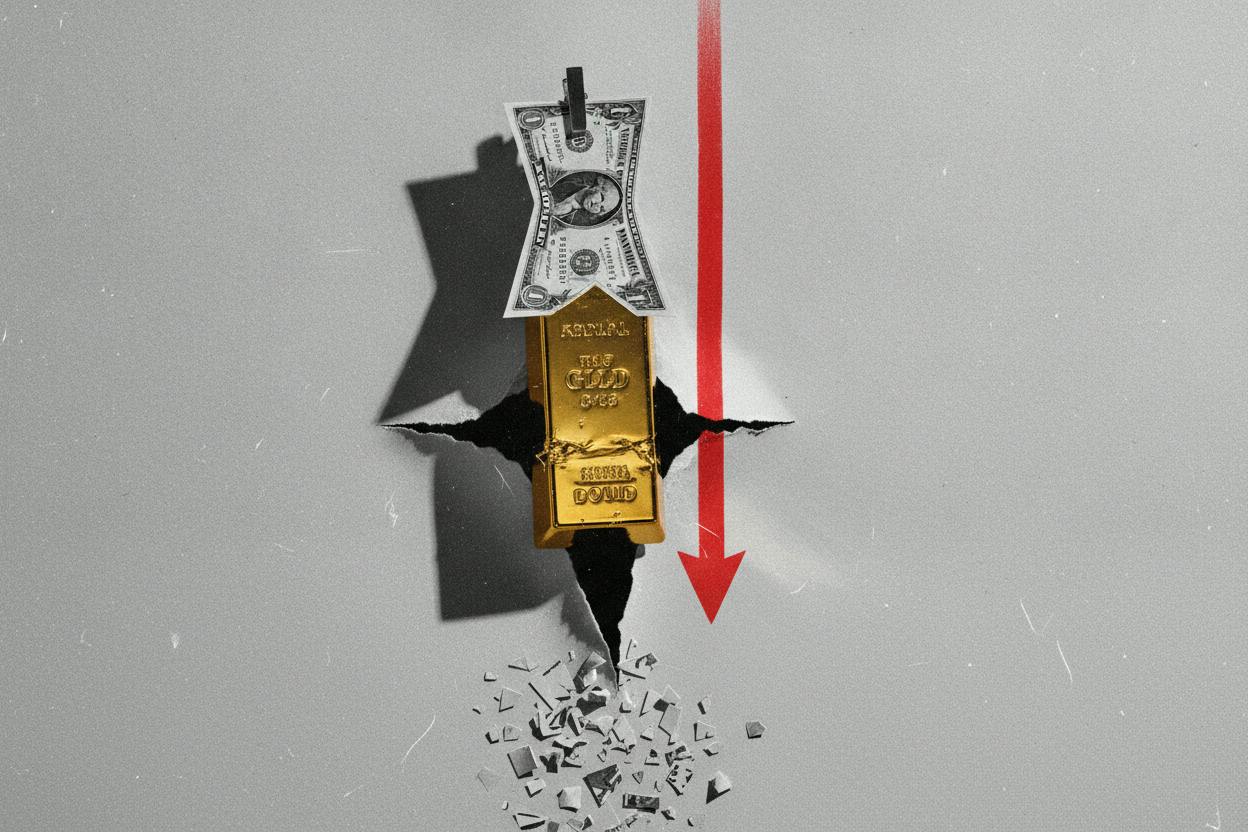
Gold is having its roughest week in eight months, with spot prices down about 8.5% as a surging US dollar and growing conviction that the Federal Reserve will raise interest rates in December combine to batter the precious metal.
The selloff marks a sharp reversal for gold, which had been supported earlier in the year by expectations that the Fed might soon pivot to cutting rates. Instead, resilient economic data and sticky inflation have pushed those expectations back, and traders now see a December hike as nearly certain.
Why gold is falling
Gold is often seen as a hedge against inflation and economic uncertainty, but it pays no interest or dividend. That makes it less attractive when yields on cash and bonds are rising. When the Fed hikes rates, real yields—returns after inflation—tend to climb, and that raises the opportunity cost of holding gold.
The US dollar, meanwhile, has been on a tear, hovering near a 19-month high. Because gold is priced in dollars, a stronger dollar makes it more expensive for buyers using other currencies, which tends to dampen demand. The dollar's strength has been fueled by the same forces pressuring gold: expectations of higher US rates and a flight to safety amid a pullback in AI-related stocks.
This dynamic is not unique to gold. Other dollar-priced commodities have also felt the squeeze—copper recently hit an eight-month low as doubts about AI-driven demand and the strong dollar weighed on industrial metals.
What a Fed hike means for gold
The Federal Reserve's policy path is the single biggest driver for gold in the near term. When the central bank raises its benchmark rate, it typically strengthens the dollar and pushes bond yields higher—both headwinds for gold.
Investors have been recalibrating their expectations for months. Earlier, many hoped the Fed would start cutting rates by mid-2024. But with inflation still above the Fed's 2% target and the labor market showing resilience, those hopes have faded. A December hike would mark another step in the Fed's fight against inflation, and traders are pricing in a high probability of that move.
For everyday investors, the key takeaway is that gold's recent weakness is largely a function of monetary policy, not a sign that the metal has lost its long-term role as a store of value. Gold has historically been volatile in the short term, especially around Fed meetings.
What it means for investors
If you hold gold—either directly or through funds—this week's drop is a reminder that the metal can be just as volatile as stocks. While gold is often touted as a safe haven, it is not immune to the same forces that move other assets, particularly interest rates and the dollar.
For those considering adding gold to a portfolio, the current environment may present a more attractive entry point than a few months ago, but it's important to remember that timing the market is difficult. Gold's price is influenced by a complex mix of real interest rates, dollar strength, geopolitical risk, and investor sentiment.
Looking ahead, the market will be watching the Fed's December meeting closely. If the central bank follows through with a hike, gold could face further pressure. But if inflation cools faster than expected or the Fed signals a pause, gold could rebound just as quickly as it fell.
The broader picture is also worth noting: a strong dollar has ripple effects across global markets. It can hurt emerging-market currencies and commodities, as seen in recent pressure on African currencies and the Australian dollar sliding to an 11-month low. For US investors, a strong dollar can also reduce the value of overseas investments when converted back to dollars.
In short, gold's worst week in eight months is a textbook example of how monetary policy and currency moves can upend even the most traditional of investments. While the metal's long-term appeal remains intact for many, the near-term outlook hinges on the Fed's next move.