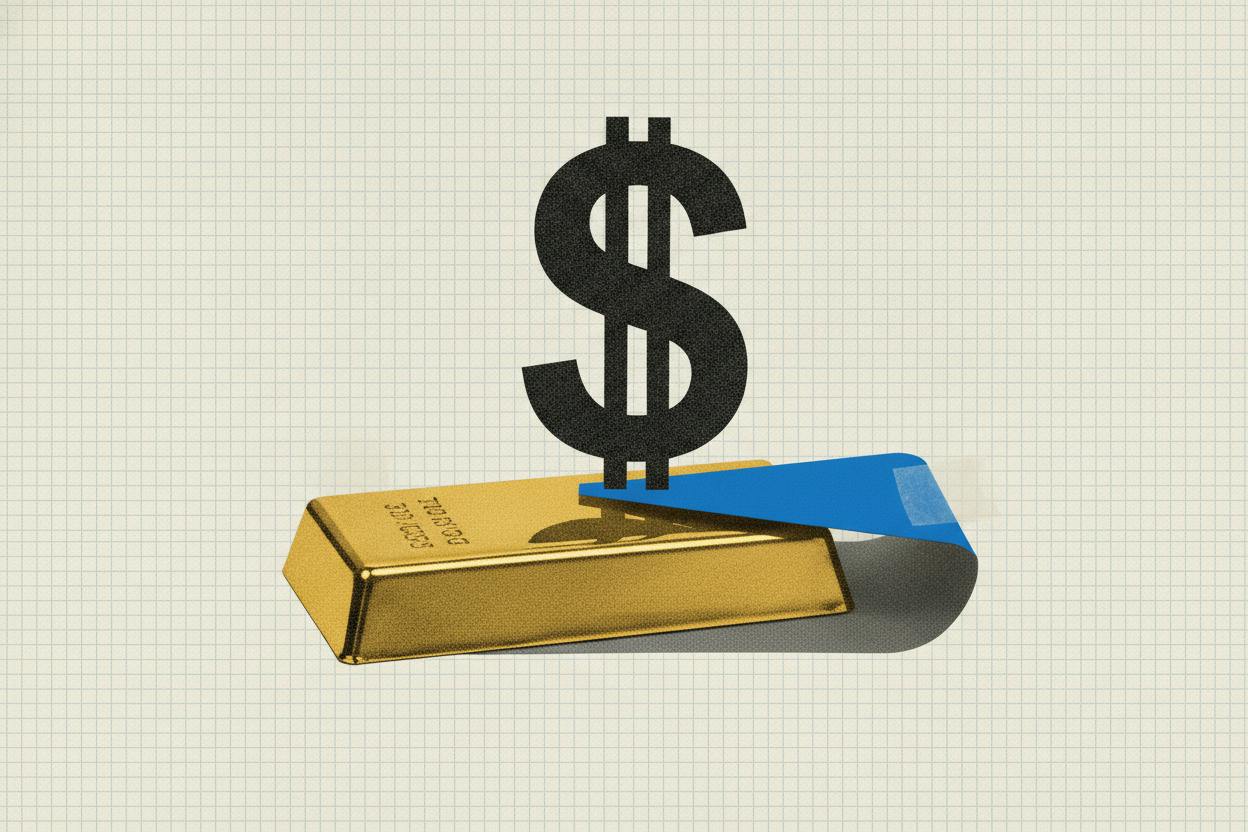
Gold prices snapped back on Friday, with spot bullion climbing 2.7% from its lowest level since August 2025. The rebound came after a quiet US holiday session, when thin trading volumes can exaggerate price swings in either direction. Investors are now refocusing on the forces that have driven gold for much of the past year: interest rates and the US dollar.
Why gold moves with rates and the dollar
Gold is a unique asset because it pays no interest or dividend. That means when investors can earn a decent return from bonds or savings accounts, gold becomes less attractive. The opportunity cost of holding bullion rises as interest rates go up.
This week, a hotter-than-expected US inflation reading and stronger-than-forecast third-quarter growth reinforced expectations that the Federal Reserve could keep rates higher for longer. That outlook tends to push up “real rates” — interest rates adjusted for inflation — and support the US dollar. Both are typically headwinds for gold.
A firmer dollar makes gold more expensive for buyers using other currencies, which can dampen demand. Higher real rates, meanwhile, increase the appeal of yield-bearing assets relative to gold. These two forces often move together, and they were the main swing factors behind Friday’s bounce, according to VT Markets’ Ross Maxwell. He pointed to real rates and the greenback as the key variables for whether the rally holds once normal liquidity returns after the holiday.
A broader precious-metals move
The rebound wasn’t limited to gold. Silver, platinum, and palladium all rose sharply as well. That broad strength suggests the move was driven more by positioning and short-term flows than by gold-specific fundamentals. In other words, traders who had bet against gold may have been forced to cover their positions, amplifying the upward move.
Such positioning resets can reverse quickly, especially around major US economic releases or shifts in Fed policy expectations. For everyday investors, this means Friday’s jump should be viewed with some caution. Holiday-thinned markets can exaggerate moves, and the underlying drivers — rates and the dollar — remain the ones to watch.
What it means for investors
For those holding gold as part of a diversified portfolio, the recent volatility is a reminder that gold’s price is closely tied to macroeconomic signals. If incoming US data continues to point to a strong economy and sticky inflation, markets may keep pricing in higher-for-longer rates. That could keep pressure on bullion by lifting real rates and the dollar simultaneously.
On the other hand, any signs of economic weakness or a shift toward Fed rate cuts could ease those headwinds and support gold. Investors should also keep an eye on the broader precious-metals complex. When silver, platinum, and palladium move in tandem with gold, it often signals a market-wide repositioning rather than a change in gold’s fundamentals.
Related reading: dollar and Treasury yield moves often set the tone for gold, and Treasury yields near 4.8% could act as a floor for borrowing costs. For a broader view of how rates affect commodities, see our coverage of why energy stocks lag oil price gains.
As always, gold is not a one-way bet. Its price will continue to hinge on the data and the Fed’s reaction. For now, Friday’s bounce is a reminder that even in quiet markets, gold can move sharply — and that the real drivers are often the ones that don’t make headlines.