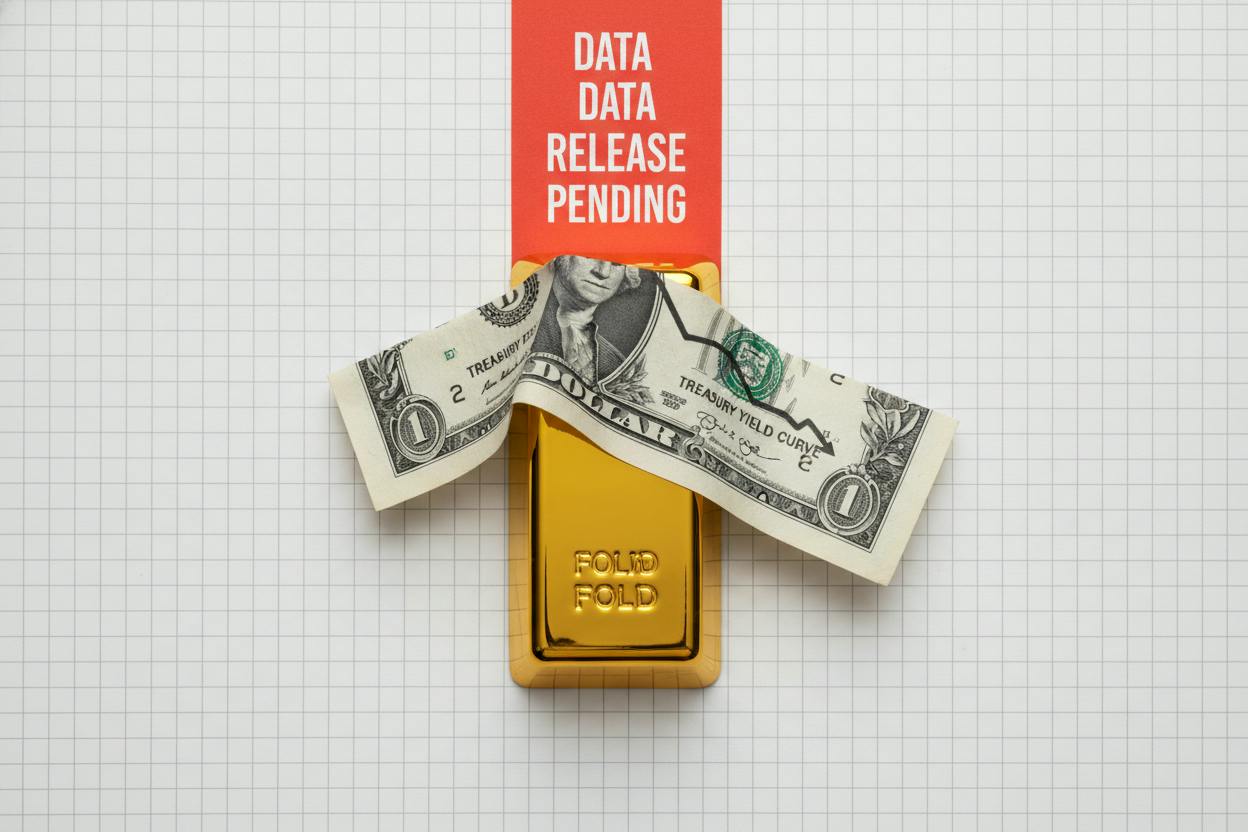
Gold prices rebounded this week, climbing to their highest level since October 20, as a softer US dollar and lower Treasury yields made the precious metal more attractive to investors. The move comes as traders position ahead of Friday's US non-farm payrolls report, which is widely seen as the next major catalyst for Federal Reserve policy expectations.
Bullion's rise toward the $4,100 level reflects a familiar dynamic: gold typically moves inversely to the dollar and interest rates. When the dollar weakens, gold becomes cheaper for overseas buyers, and when yields fall, the opportunity cost of holding a non-yielding asset like gold diminishes. This week, both forces worked in gold's favor, with the 10-year Treasury yield hovering near a two-month low.
What's driving the move?
The immediate trigger for gold's rebound was a pullback in the US dollar and a decline in bond yields. After a period of strength, the dollar index eased, and yields retreated as investors digested recent economic data and comments from Federal Reserve officials. This created a more favorable backdrop for gold, which had been under pressure earlier in the year as the Fed raised interest rates aggressively.
According to CME's FedWatch tool, traders are currently pricing in about an 80% chance of a December rate hike. That expectation has been a key driver of gold's recent moves, as higher rates tend to weigh on the metal. However, with the hike largely priced in, the focus has shifted to what comes next.
Friday's payrolls report is critical because it provides a direct read on the health of the labor market, which is a key input for Fed policy decisions. A strong jobs number could reinforce the case for further tightening, while a weak one could raise doubts about the Fed's path.
Why the jobs report matters
The non-farm payrolls report is one of the most closely watched economic indicators, and its impact on markets can be swift and significant. For gold, the report matters less for where rates are today and more for whether it forces investors to rethink the trajectory of monetary policy.
If payrolls come in above expectations, short-term Treasury yields and the dollar could rise quickly, increasing the "missed interest" cost of holding gold and making it more expensive for non-US buyers. That could put downward pressure on bullion. Conversely, a disappointing jobs number could reinforce gold's rebound by lowering expectations for future rate hikes.
This is why volatility often clusters around key data releases, even when longer-term yields appear calm. The jobs report is a fast-moving catalyst that can shift the entire outlook for Fed policy in a matter of hours.
What it means for investors
For everyday investors, gold's recent rebound is a reminder of how interconnected global markets are. The metal's price is not just about supply and demand for the physical commodity; it's also a barometer of expectations for interest rates, inflation, and the dollar.
When the Fed is expected to hike rates, gold often struggles because it doesn't pay interest or dividends. But when those expectations soften, gold can quickly regain its appeal as a store of value and a hedge against uncertainty.
Investors should also note that gold's moves can be amplified by data releases like the payrolls report. Even if you don't directly invest in gold, these dynamics can influence other assets, including stocks and bonds. For example, a strong jobs report could boost the dollar and weigh on commodities, while a weak one could lift risk appetite and support equities.
As always, it's important to keep a long-term perspective. Gold's price can be volatile in the short term, but its role as a diversifier and a hedge against inflation remains unchanged. Whether you hold gold directly or through funds, understanding the factors that drive its price can help you make more informed decisions.
In the meantime, all eyes will be on Friday's payrolls report. The data will not only shape gold's next move but also provide clues about the broader economic outlook and the Fed's next steps. For now, traders are bracing for potential volatility, and gold's rebound could be just the beginning of a larger trend if the data supports a pause in rate hikes.