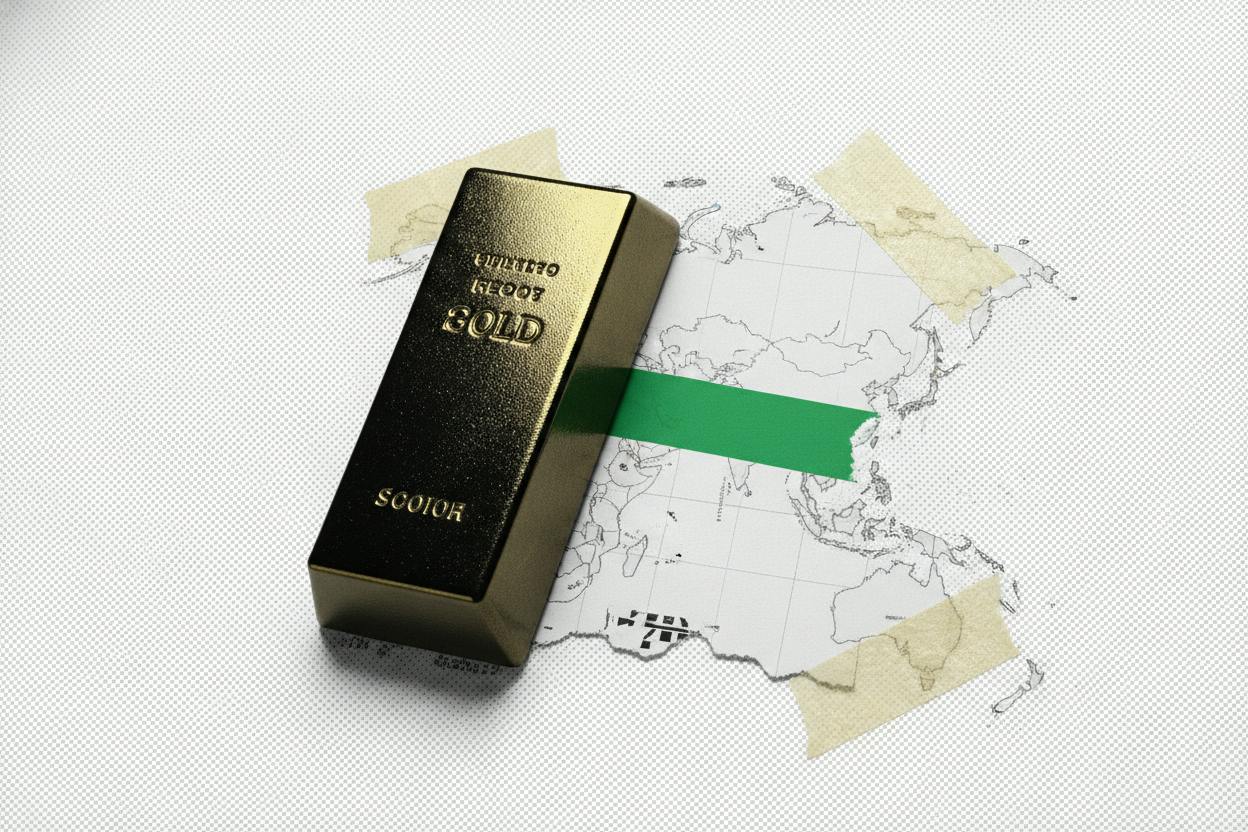
Gold buyers across Asia stepped back this week, with shoppers in India and China holding off as prices slipped and local premiums eased, according to Reuters. The pullback in the region's two biggest gold markets removes a key source of support for the metal, leaving its price more exposed to moves in US interest-rate expectations.
What the premium tells us
Physical demand for gold shows up in what are known as local premiums — the extra cost, in dollars per ounce, that buyers pay for gold bars in a particular country compared with the global benchmark price. When premiums are high, it signals dealers are scrambling to secure supply, and traders have an incentive to ship metal into those hubs. When they shrink, it suggests demand is soft and that incentive fades.
That is exactly what Reuters described in India and China. India's premium eased to as much as $7 an ounce over official domestic prices, down from up to $9 last week, as buyers waited for even lower prices after a holiday-related bump in purchases. China's market was flat to a $9 an ounce premium, slightly softer than last week, with dealers describing demand as subdued.
Why buyers are waiting
In both countries, the pattern is similar: shoppers are not in a hurry. After any festive or seasonal burst of buying, consumers often step back and wait for prices to fall further before restocking. That is a normal rhythm in the gold market, but it matters because India and China together account for a large share of global physical gold demand.
When those buyers are less urgent, the "marginal" driver of gold prices can shift back to financial markets. Reuters noted spot gold was on track for a second straight monthly fall as hotter US inflation lifted expectations that the Federal Reserve could raise interest rates later this year. Higher rates usually weigh on gold because it does not pay interest, so holding it looks less attractive when cash and bonds offer more.
What it means for investors
For markets, the fading premiums are a quick read on real-world buying. When they are high, physical demand can help put a floor under prices by pulling metal into India and China through arbitrage trading. When they fade, that pull weakens, and gold tends to trade more like a "rates" asset — moving in response to Fed policy expectations, the US dollar, and "real yields" (bond yields after inflation).
So until those premiums widen again, gold's next move is more likely to follow shifts in Fed-rate expectations, the dollar, and real yields than a wave of restocking from Asia. Investors watching gold should keep an eye on US inflation data and central bank signals, as those will likely drive the metal's direction in the near term.
For context, gold has been under pressure this year as the Fed has kept rates elevated to fight inflation. While physical buying from Asia has at times provided support, that support is now less visible. The recent rise in gold sales by miners reflects the higher prices seen earlier, but the current demand lull suggests the market is in a wait-and-see mode.
In India, the broader market has also been affected by rising oil prices, which can feed into inflation and influence the central bank's policy stance. Oil's jump threatens India's bond rally, and that could spill over into gold demand if it pushes domestic prices higher. Similarly, Indian shares have been mixed as IT gains offset oil worries, but the gold market remains focused on price levels.
The bigger picture
Gold's dual nature — part physical commodity, part financial asset — means its price is always a tug of war between these forces. When physical demand is strong, it can cushion falls. When it is weak, the metal becomes more sensitive to macro signals.
For now, the Asian buyers are on the sidelines, and that leaves gold's fate in the hands of the Fed and the dollar. Investors should watch for any signs of a pickup in physical buying, such as a widening of premiums, as that could signal a floor under prices. Until then, gold is likely to remain a follower of interest-rate news.